

Beyond Durability: Why High-Performance Lithium Silicates are Redefining Modern Architectural Flooring in 2026
2026-02-04 17:48As the global construction industry shifts towards sustainable and low-maintenance infrastructure, the demand for advanced chemical treatments has reached a new peak. Today, Lithium Silicate stands at the forefront of this evolution, offering a superior alternative to traditional sodium-based solutions.
The Shift to Lithium Concrete Densifiers
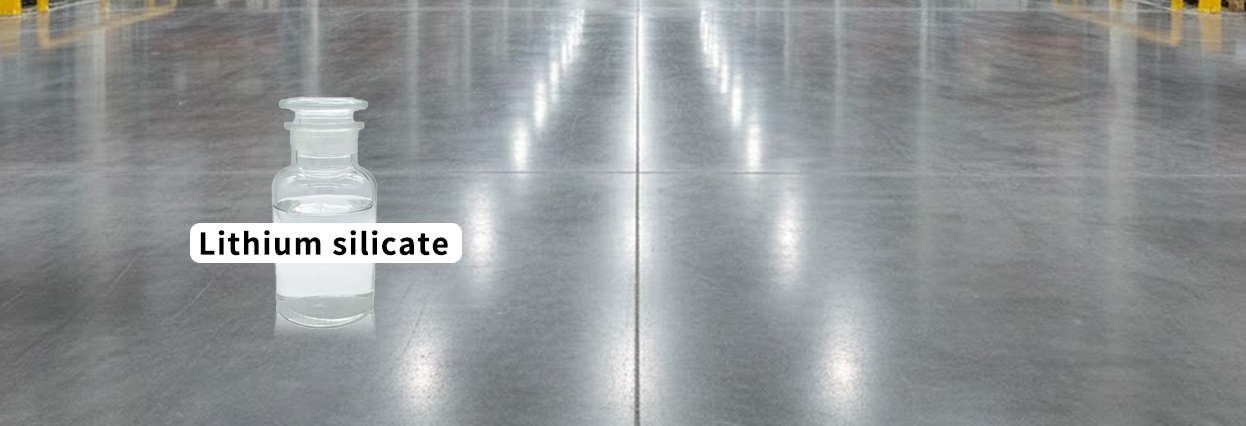
In the realm of polished concrete, the choice of densifier determines the floor's lifespan. Unlike larger-molecule alternatives, a Lithium Concrete Densifier penetrates deep into the concrete's micro-pores. It reacts chemically with calcium hydroxide to form a permanent, insoluble Calcium Silicate Hydrate (CSH) structure. This internal reinforcement doesn't just harden the surface; it transforms the concrete matrix from within.
Solving the "Whitening" Problem
One of the most significant breakthroughs in 2026 is the widespread adoption of Efflorescence-free concrete hardeners. Traditional potassium or sodium silicates often leave a white, powdery residue (salt deposits) on the surface, ruining the aesthetic of architectural floors. Our high-modulus lithium silicate solution eliminates this risk, ensuring a crystal-clear finish that enhances the natural beauty of the stone and cement.
Sustainability and the Green Building Mandate
With stricter environmental regulations, the search for a Low-VOC Silicate Binder for Green Building has intensified. Lithium silicate is inorganic, non-flammable, and emits zero volatile organic compounds. Its ability to extend the service life of a building by decades significantly reduces the carbon footprint associated with floor replacements and repairs.
Professional Grade Results
For large-scale industrial warehouses and high-traffic retail spaces, a Reactive Concrete Floor Treatment is no longer optional—it is a requirement. By utilizing a High-Modulus Lithium Silicate Solution, contractors can achieve a higher Mohs hardness and superior gloss with fewer application steps, saving both time and labor costs on the job site.
FAQ
Q1: Why should I choose Lithium Silicate over cheaper Sodium Silicate options?A: Cost-effectiveness is about the lifecycle, not just the price per gallon. Sodium silicates require rinsing after application to prevent white residue, which adds labor costs and creates wastewater. Lithium silicate requires no rinsing, penetrates deeper (due to smaller ions), and will not cause efflorescence (whitening), making it much cheaper in terms of total project cost.
Q2: Can Lithium Silicate be used on old, dusty concrete floors?A: Yes! It is an excellent Reactive Concrete Floor Treatment for renovation. It reacts with the "free lime" in old concrete to re-bind the surface, effectively eliminating "dusting" (concrete powdering) and turning a weak surface into a dense, abrasion-resistant floor.
Q3: Is Lithium Silicate compatible with LEED or green building certifications?A: Absolutely. As a Low-VOC Silicate Binder, it meets the most stringent indoor air quality standards. It helps projects earn LEED credits by increasing building durability and using non-toxic, water-based chemistry.
Q4: Does it make the floor slippery?A: No. Unlike surface coatings (like wax or epoxy), lithium silicate works inside the concrete. It increases hardness and shine through polishing but does not create a film that becomes slippery when wet.