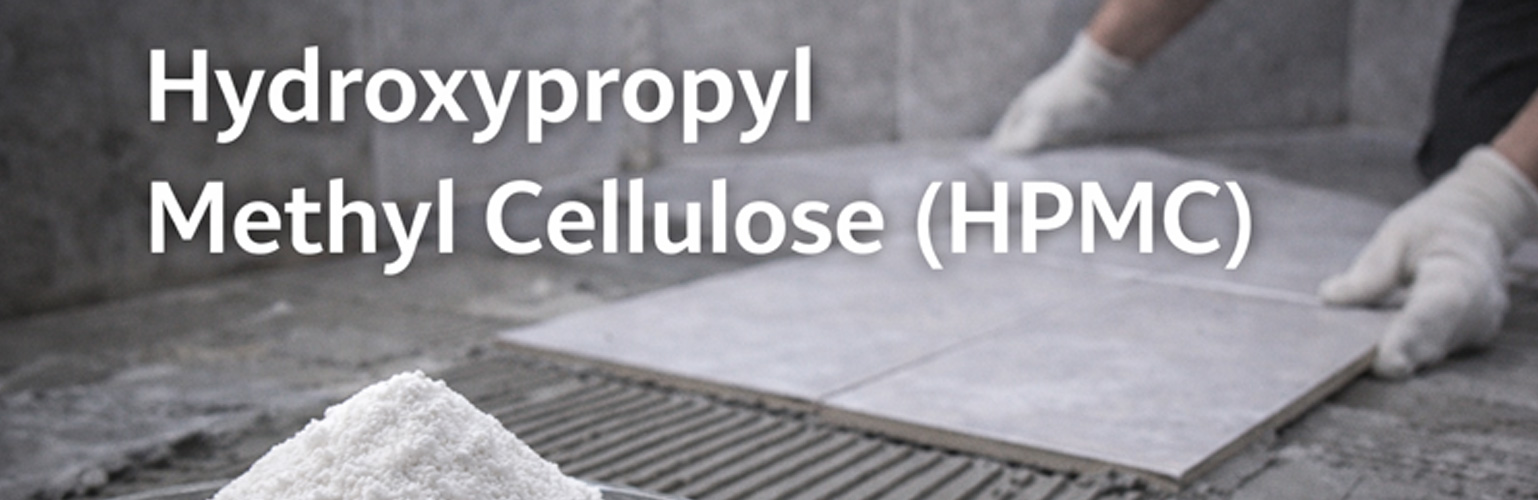


Hydroxypropyl Methyl Cellulose (HPMC) for Construction Applications
2026-01-22 18:29Hydroxypropyl Methyl Cellulose (HPMC) is a widely used cellulose ether in the construction industry. It plays a vital role in improving workability, water retention, and consistency of cement-based and gypsum-based materials.
As a key HPMC for construction, it is commonly applied in tile adhesive, dry mix mortar, wall putty, plastering mortar, and self-leveling systems.
What Is Hydroxypropyl Methyl Cellulose?
Hydroxypropyl Methyl Cellulose is a non-ionic cellulose ether derived from natural cellulose through chemical modification.
In construction materials, HPMC cellulose ether for mortar functions mainly as a rheology modifier and water-retaining agent.
It dissolves in water to form a stable solution, providing controlled viscosity and excellent compatibility with other dry-mix additives.
Why Use HPMC in Construction Mortar?
Without proper cellulose ether modification, cement-based mortars often face problems such as:
Rapid water loss
Poor workability
Insufficient open time
Uneven surface finish
Using hydroxypropyl methyl cellulose for dry mix mortar effectively solves these issues and ensures stable on-site performance.
Key Performance Benefits of HPMC
1. Excellent Water Retention
HPMC for construction significantly improves water retention, allowing cement to hydrate fully and enhancing final strength and adhesion.
2. Improved Workability and Consistency
As a functional HPMC additive for cement mortar, it provides smooth application, better sag resistance, and easier troweling.
3. Extended Open Time
In applications such as tile adhesive, hydroxypropyl methyl cellulose for tile adhesive helps extend open time, improving construction efficiency and reducing tile repositioning issues.
4. Good Compatibility with Other Additives
HPMC works synergistically with PCE superplasticizers, RDP polymer powder, and defoamers, making formulation design more flexible.
Typical Applications in Construction
Hydroxypropyl Methyl Cellulose is widely used in:
Tile adhesive
Wall putty and skim coat
Plastering mortar
Self-leveling mortar
Repair mortar
In these systems, HPMC cellulose ether for mortar ensures stable rheology and consistent performance.
Recommended Grades and Dosage
Viscosity range: 30,000–200,000 mPa·s
Typical dosage: 0.2%–0.6% of dry mix
Appearance: White or off-white powder
Solubility: Cold water soluble
The selection of hydroxypropyl methyl cellulose for dry mix mortar should be based on application requirements and formulation design.
Why Choose Our HPMC for Construction?
Stable viscosity and batch consistency
Wide viscosity grades for different applications
Good compatibility with cement, gypsum, and additives
Technical support for formulation optimization
Export experience in global construction markets
We help customers optimize performance while controlling formulation cost.
Conclusion
As an essential HPMC additive for cement mortar, Hydroxypropyl Methyl Cellulose plays a key role in improving water retention, workability, and application performance in modern construction materials.
For manufacturers seeking reliable hydroxypropyl methyl cellulose for tile adhesive or HPMC cellulose ether for mortar, choosing a professional supplier with technical expertise ensures long-term success.