


Lithium Silicate CAS 10102-24-6 for Industrial Floor Treatment: Hardening, Dust Proofing, and Surface Protection in Warehouses and Factories
2026-07-23 17:40Industrial concrete floors in warehouses, logistics centers, manufacturing facilities, and food processing plants face operational demands that standard untreated concrete cannot meet over a practical service life. Forklift traffic, pallet jack loads, dropped equipment, chemical spillage, and continuous foot traffic progressively abrade the concrete surface, generating dust that contaminates products and machinery, creating surface defects that trap bacteria in food environments, and exposing aggregate that creates uneven surfaces hazardous to wheeled equipment operation. Lithium Silicate is the penetrating reactive hardener that addresses all of these failure mechanisms at the source, within the concrete matrix itself, without surface coatings that peel, chip, or require periodic reapplication.
What Is Lithium Silicate for Industrial Floor Treatment
Lithium Silicate CAS 10102-24-6, with molecular formula Li2SiO3, is an odorless, tasteless, transparent liquid with a pH value of approximately 11. It penetrates concrete as an inorganic densifier, reacting chemically with free calcium hydroxide within the concrete pore structure to form calcium silicate hydrate crystals. This reaction permanently increases the density, hardness, and abrasion resistance of the concrete surface layer without adding a film or coating on top of the substrate. The treated surface remains breathable, does not peel or delaminate under traffic, and does not require reapplication as long as the concrete substrate remains intact.
Compared to sodium silicate and potassium silicate densifiers, Lithium Silicate for construction offers three specific advantages for industrial floor applications. First, smaller molecular particle size allows deeper penetration into the concrete pore structure before surface saturation, producing a denser hardened layer over a greater depth. Second, the reaction product is more stable than sodium silicate reaction products, producing a calcium silicate hydrate network that resists dissolution under wet cleaning conditions. Third, Lithium Silicate leaves minimal efflorescing residue on the surface compared to sodium silicate, eliminating the white salt deposits that require additional cleaning steps in food processing and pharmaceutical floor applications.
For industrial floor treatment applications, the penetrating chemistry of Lithium Silicate provides advantages over surface coating systems. Epoxy and polyurethane coatings delaminate under sustained forklift traffic at the coating-substrate interface, particularly where point loads from forklift wheels create high shear stress. Lithium Silicate does not delaminate because it becomes part of the concrete matrix through chemical reaction. Retreatment is simple if surface wear occurs: clean the surface and reapply without grinding or coating removal.
Key Performance Benefits for Industrial Floors
Dust Elimination in Warehouse and Logistics Operations
Concrete floor dusting is the most operationally disruptive surface defect in warehouse and logistics environments. Dust generated by forklift traffic and goods movement contaminates packaged products, reduces visibility at rack picking levels, deposits on machinery and conveyor systems requiring frequent cleaning, and creates respiratory hazards for warehouse workers during high-activity periods.
The source of concrete floor dust is the weak, porous surface layer of concrete that forms during placement as bleed water rises and carries fine cement particles to the surface. A rare and valuable mineral Lithium Silicate penetrates this weak surface layer and converts it chemically into dense calcium silicate hydrate that resists abrasion and does not dust under normal warehouse traffic loading. Surface hardness increase of 45 to 50 percent after treatment eliminates ongoing dust generation without mechanical grinding or surface coating.
Abrasion Resistance for Forklift Traffic Floors
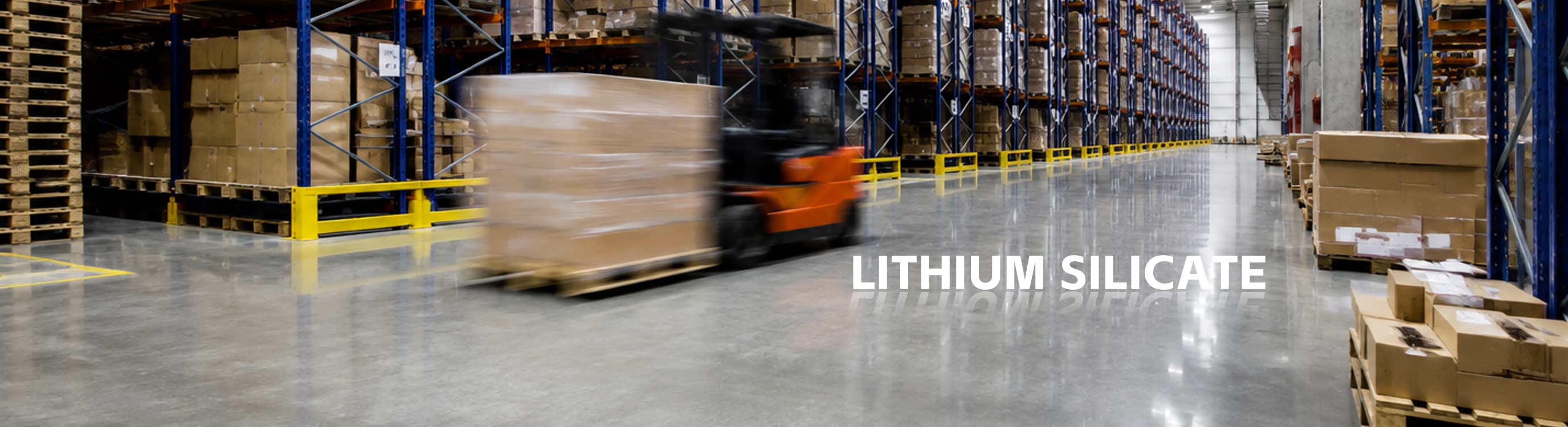
Warehouse and distribution center floors subject to continuous counterbalanced forklift traffic with wheel loads of 3 to 8 tonnes per axle require surface abrasion resistance well above what untreated concrete provides. Forklift solid rubber tires generate high shear stress at the concrete surface during turning and braking maneuvers, progressively wearing away the surface layer and creating rut marks in high-traffic aisle areas.
Concrete floor hardener for warehouse applications based on Lithium Silicate CAS 10102-24-6 increases surface abrasion resistance by densifying the concrete matrix at the surface layer. The densified surface requires significantly more energy per unit volume to abrade than untreated concrete, extending the surface life between resurfacing or re-treatment cycles by 3 to 5 times in typical forklift traffic environments across Southeast Asian and European warehouse operations.
Chemical Resistance for Manufacturing and Food Processing Floors
Manufacturing facility floors and food processing plant floors are exposed to chemical spillage including oils, cleaning agents, dilute acids and alkalis, and process fluids that penetrate untreated concrete, causing staining, surface deterioration, and in food environments, creating harborage sites for bacteria within the open pore structure of the concrete.
Lithium Silicate inorganic anti-corrosion treatment reduces concrete porosity by filling the capillary pore network with calcium silicate hydrate crystals, significantly reducing the absorption rate of spilled liquids. After the water in the solution evaporates and the reaction completes, the treated surface forms a stable film that is water-irreversible, providing lasting waterproof and chemical resistance performance. For food processing environments where floor hygiene standards require surfaces that can be effectively cleaned and sanitized, the reduced porosity of treated concrete provides a more hygienic surface baseline while avoiding the delamination risk of surface coatings under frequent wet cleaning and thermal cycling from hot water cleaning systems.
Surface Hardness for Heavy Equipment Foundations
Heavy equipment pads, machine bases, and loading dock approach slabs in industrial facilities experience sustained point loads from equipment legs, hydraulic outriggers, and repeated impact from loading operations. Untreated concrete at standard strength grades can develop surface crushing and cracking under these concentrated loads, creating surface irregularities that interfere with equipment leveling and create trip hazards at dock approaches. Lithium Silicate treatment of heavy equipment areas provides surface hardness improvement that reduces surface crushing under concentrated loads and maintains the flat, even surface profile required for accurate equipment leveling and safe forklift dock approach operations.
Application Process for Industrial Floor Lithium Silicate Treatment
New concrete floors should be allowed to cure for a minimum of 28 days before Lithium Silicate application to ensure adequate calcium hydroxide availability for the densification reaction. The floor surface should be cleaned of all curing compounds, release agents, oils, and dust before application. Apply Lithium Silicate CAS 10102-24-6 at 10 to 15 square meters per liter using a microfiber applicator or low-pressure flat fan sprayer, maintaining a wet film on the surface for 20 to 30 minutes to allow penetration and reaction. Burnish with a floor machine and white pad to work the reacting material into the surface. Remove any surface residue with a damp mop before it dries to a white powder. A second application after 4 to 6 hours provides additional densification on porous or highly absorbent new concrete. Available in 30kg drums, 250kg drums, and 1200kg ton drums. Store sealed in a ventilated dry room without direct sunlight at 5 to 35 degrees Celsius.
Existing industrial floors with surface wear, contamination, or carbonation should be prepared by light grinding or shot blasting to remove the carbonated surface layer and open the pore structure before application. This preparation step is critical for achieving adequate penetration and reaction on floors that have been in service for several years.
Why EastChem
EastChem is a trusted industrial floor densifier supplier providing Lithium Silicate CAS 10102-24-6 in standard and high concentration grades to construction chemical formulators, industrial floor treatment contractors, and building material distributors across global markets. Our manufacturing is certified under ISO 9001, ISO 14001, and ISO 45001 systems, and our products meet REACH compliance requirements for European market access. Solid content, pH, and particle size are tested on every production batch with per-batch certificates provided as standard. We support OEM requirements and can customize label and packaging to suit your market.
Contact EastChem today to request a sample, technical data sheet, or pricing for Lithium Silicate CAS 10102-24-6 for your industrial floor treatment requirements.
Email: info@eschemy.com
WhatsApp: +86 13504015521