


Lithium Silicate CAS 10102-24-6 in Polished Concrete Floor Systems: Application Sequence, Grade Selection, and Performance Standards
2026-07-10 21:40Lithium Silicate CAS 10102-24-6 in Polished Concrete Floor Systems: Application Sequence, Grade Selection, and Performance Standards
Polished concrete floors in retail stores, corporate offices, airports, hotels, and industrial facilities across Southeast Asia, Europe, and Asia are not produced by grinding alone. The grinding and polishing process that creates a reflective, durable concrete surface depends on Lithium Silicate densifier applied at the correct stage in the polishing sequence to harden the concrete matrix, increase surface hardness, and enable the fine polishing grits to produce a high-gloss finish that resists wear over years of heavy foot and vehicle traffic. Without Lithium Silicate, polished concrete surfaces wear prematurely, lose gloss under traffic, and dust continuously from the weak surface layer exposed by grinding.
What Is Lithium Silicate in Polished Concrete Systems
Lithium Silicate, carrying CAS number 10102-24-6, is a reactive inorganic densifier that penetrates the open pore structure of ground concrete and reacts with free calcium hydroxide to form calcium silicate hydrate crystals within the concrete matrix. This reaction fills the capillary pores of the concrete surface layer, increases surface density, and raises surface hardness by 45 to 50 percent compared to untreated ground concrete. The densified surface responds to fine diamond polishing grits by developing a reflective finish that is not achievable on soft, porous concrete regardless of polishing equipment or technique.
The lithium ion in Lithium Silicate provides smaller molecular size than sodium silicate, allowing deeper penetration into the tight pore structure of ground concrete before surface saturation. This deeper penetration produces a denser, harder surface layer over a greater depth than sodium silicate densifiers, which is the primary reason professional polished concrete systems specify Lithium Silicate CAS 10102-24-6 rather than lower-cost sodium silicate alternatives.
Where Does Lithium Silicate Fit in the Polishing Sequence
What stage of polishing requires lithium silicate densifier application?
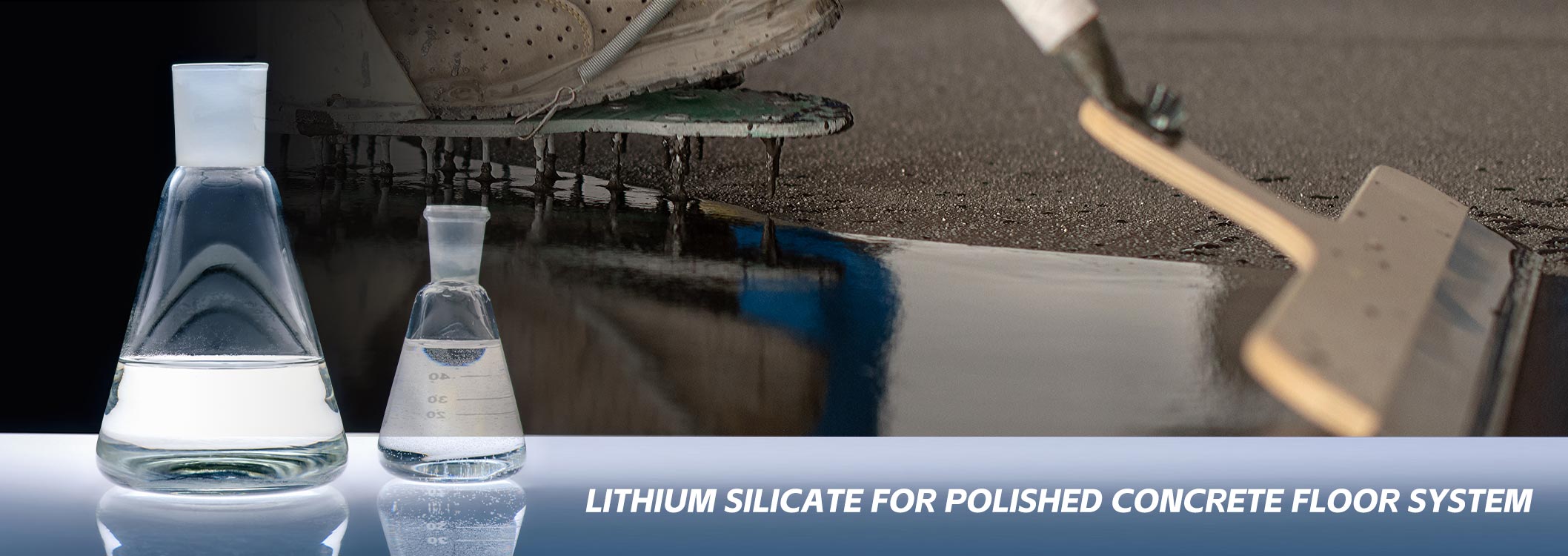
Lithium Silicate is applied after the 400 grit metal bond or resin bond grinding step, when the concrete surface is smooth enough for even densifier distribution but still porous enough to accept penetration before surface saturation. Applying densifier too early at coarse grits risks surface contamination that interferes with subsequent grinding. Applying too late at fine grits means the surface has been closed by polishing before the densifier can penetrate adequately.
Standard polished concrete floor system sequence:
| Stage | Grit | Process | Lithium Silicate Application |
|---|---|---|---|
| 1 | 30-50 metal | Scratch grinding, surface leveling | No |
| 2 | 100-150 metal | Profile refinement | No |
| 3 | 400 metal or resin | Surface smoothing | Yes, first application |
| 4 | Cure 2-4 hours | Allow reaction | Burnish surface |
| 5 | 800 resin | Fine polishing | Second application if needed |
| 6 | 1500-3000 resin | Gloss development | No |
| 7 | Final burnish | Surface finishing | Guard or sealer application |
How Much Lithium Silicate Is Applied Per Square Meter
Application rate for concrete floor densifier for polishing depends on concrete density and absorption rate. New concrete with an open pore structure at 400 grit stage typically absorbs Lithium Silicate at 10 to 15 square meters per liter at standard 20 percent solid content. Dense or previously treated concrete may absorb less, requiring application rates of 15 to 25 square meters per liter to avoid surface puddling and whitening from unreacted silicate residue.
The correct application technique is to apply Lithium Silicate evenly across the floor surface using a microfiber applicator or low-pressure sprayer, spread the solution to maintain a wet film for 15 to 20 minutes to allow penetration, then burnish with a floor machine and white pad to work the reacting material into the surface before it dries. Any surface residue remaining after burnishing should be removed with a damp mop before it dries to a white powder on the floor surface.
What Performance Standards Does Lithium Silicate Enable in Polished Concrete
Surface Hardness for High Traffic Retail and Commercial Floors
Retail floors, airport terminals, and commercial lobbies subject to continuous heavy foot traffic require surface hardness above the Mohs 3 to 4 range typical of untreated concrete to maintain polished appearance under traffic abrasion over years of service. Lithium Silicate for polished concrete floor system treatment increases surface hardness to Mohs 5 to 6 range through CSH crystal formation, enabling the polished surface to resist scratching and abrasion from foot traffic, trolley wheels, and cleaning equipment without progressive dulling of the polished finish.
Gloss Development and Reflectivity
The reflectivity of a polished concrete floor is directly related to surface hardness and density. Soft, porous concrete does not respond to fine polishing grits with gloss development because the surface material deforms and scratches under the polishing tool rather than reflecting light from a smooth, hard surface. Lithium Silicate densification is the step that converts a ground concrete surface from one that cannot develop gloss to one that responds progressively to finer polishing grits with increasing reflectivity. Gloss values above 60 GU on a 60-degree gloss meter, the standard benchmark for high-gloss polished concrete, require densifier treatment as a prerequisite regardless of polishing equipment or diamond tool selection.
Dust Suppression for Long Term Floor Performance
Untreated ground concrete surfaces dust continuously under traffic as the weak surface layer exposed by grinding abrades progressively. This dusting contaminates retail merchandise, clogs machinery in industrial facilities, and creates health risks in food processing environments. Lithium Silicate CAS 10102-24-6 fills the pore structure and binds loose surface particles into the densified concrete matrix, eliminating ongoing dusting from the polished floor surface throughout its service life.
What Grade of Lithium Silicate Should Be Used for Polished Concrete
For standard new concrete at the 400 grit polishing stage, 20 percent solid content Lithium Silicate applied at standard concentration is the correct specification. For dense, old, or previously treated concrete where absorption is limited, diluted application at 10 to 15 percent active content allows deeper penetration before surface saturation. For nano-particle colloidal grade Lithium Silicate, deeper penetration into fine-ground surfaces above 800 grit is achievable without surface whitening risk, making colloidal grade the premium specification for high-gloss commercial polished concrete programs.
Why EastChem
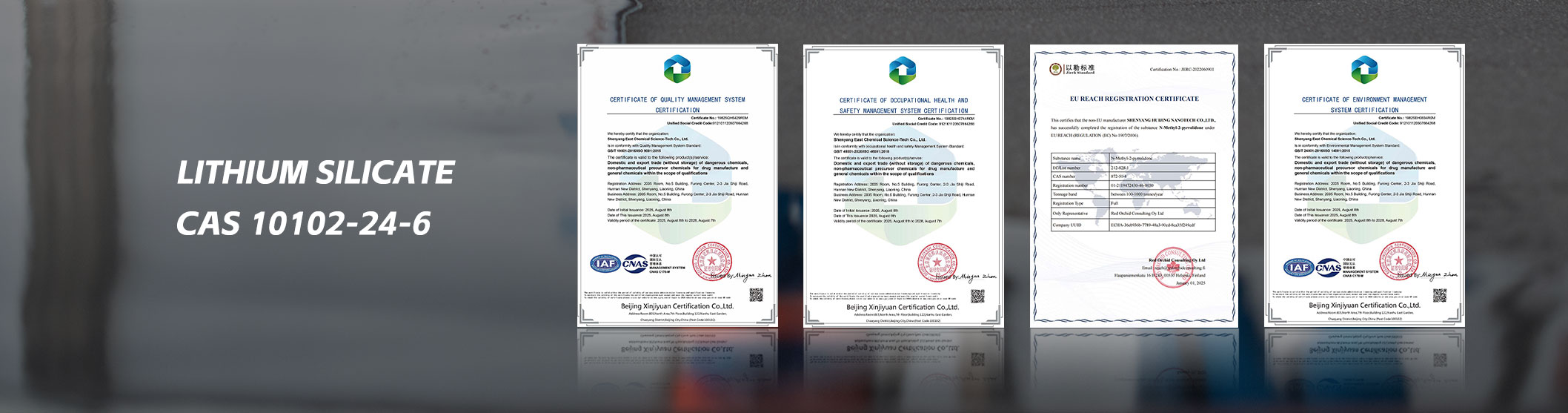
EastChem is a trusted lithium silicate densifier supplier for flooring providing Lithium Silicate CAS 10102-24-6 in standard and colloidal grades to polished concrete contractors, construction chemical formulators, and flooring material distributors across global markets. Our manufacturing is certified under ISO 9001, ISO 14001, and ISO 45001 systems, and our products meet REACH compliance requirements for European market access. Solid content, pH, and particle size are tested on every production batch with per-batch certificates provided as standard.
Contact EastChem today to request a sample, technical data sheet, or pricing for Lithium Silicate CAS 10102-24-6 for your polished concrete floor project or product formulation.
FAQ?
Why does polished concrete require lithium silicate rather than sodium silicate densifier?
Lithium Silicate molecules are smaller than sodium silicate molecules, penetrating deeper into the tight pore structure of ground concrete before surface saturation occurs. Lithium Silicate does not contribute to alkali silica reaction, which sodium silicate can trigger in reactive aggregate types. For polished concrete applications where surface clarity, hardness uniformity, and long-term gloss retention are performance requirements, Lithium Silicate consistently outperforms sodium silicate densifiers.
How long after lithium silicate application can polishing resume?
Allow 2 to 4 hours after Lithium Silicate application and burnishing before resuming polishing with the next grit sequence. This waiting period allows the calcium silicate hydrate reaction to proceed sufficiently to produce measurable surface hardness increase before fine polishing grits are applied. Polishing too soon after densifier application reduces the hardness benefit and may produce uneven gloss development across the floor surface.
Can lithium silicate be applied more than once during the polishing sequence?
Yes. Two applications are standard for high-gloss commercial polished concrete programs. The first application after 400 grit provides initial densification. A second application after 800 grit fine polishing provides additional surface hardening before final burnishing to maximum gloss. More than two applications on standard concrete does not produce additional hardness improvement and increases the risk of surface whitening from unreacted silicate residue.