

Lithium Silicate: Solving Key Problems in Concrete Floors
2026-01-13 16:19In industrial and commercial construction, concrete floors are widely used—but they also face common and costly problems: dusting, low surface strength, abrasion, and high maintenance requirements.
Lithium silicate–based solutions are specifically designed to address these issues at their root.
Problem 1: Concrete Dusting and Surface Powdering
Fresh or aged concrete floors often release fine dust due to unreacted calcium hydroxide and open capillary pores.
This dust affects hygiene, damages equipment, and increases cleaning costs—especially in warehouses, factories, and logistics centers.
How Lithium Silicate Solves It
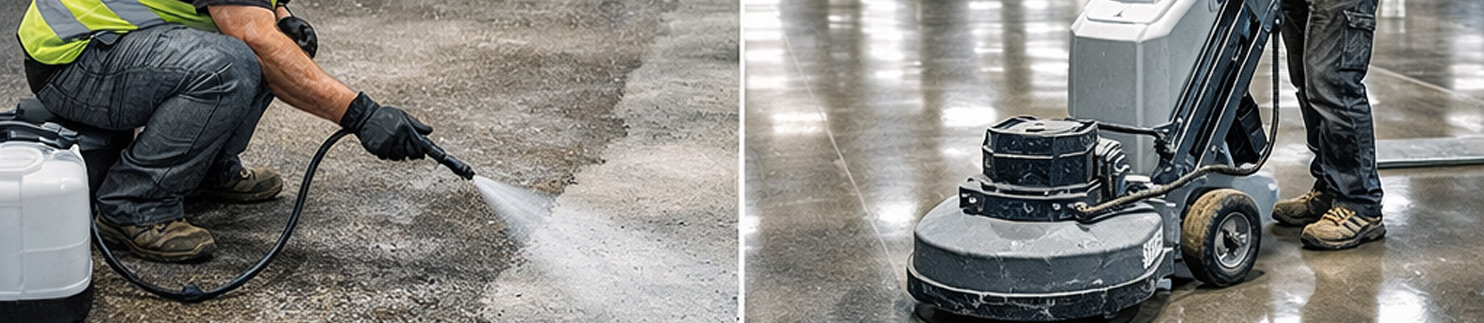
Lithium silicate penetrates deep into the concrete surface and reacts chemically with free calcium hydroxide to form insoluble C-S-H gel.
This reaction:
Densifies the concrete internally
Eliminates surface dusting permanently
Creates a cleaner, sealed floor surface
Problem 2: Low Abrasion Resistance and Short Floor Lifespan
Standard concrete floors are vulnerable to abrasion from forklifts, vehicles, and heavy foot traffic, leading to surface wear and early failure.
Lithium Silicate Floor Hardener Effect
As a concrete densifier and floor hardener, lithium silicate significantly:
Increases surface hardness
Improves wear resistance
Extends service life without adding coatings
This makes it ideal for industrial floors, parking garages, and high-traffic commercial spaces.
Problem 3: Alkali Efflorescence and Whitening Issues
Traditional sodium or potassium silicate treatments often cause surface whitening, efflorescence, or alkali residue, negatively impacting floor appearance.
Why Lithium Silicate Is Different
Smaller lithium ions allow deeper penetration
More stable chemical reaction
No surface crystallization or whitening
As a result, lithium silicate is widely preferred in high-end polished concrete systems.
Problem 4: High Maintenance Cost of Polished Concrete Floors
Waxing or coating systems require frequent reapplication, shutdown time, and ongoing labor costs.
Polished Concrete Chemical Hardener Advantage
Lithium silicate works as a permanent chemical hardener, not a film-forming coating.
Once applied and reacted:
No peeling or delamination
Minimal maintenance required
Compatible with mechanical polishing processes
This significantly reduces long-term operating costs.
Problem 5: Environmental and VOC Concerns
Modern construction increasingly demands low-VOC, environmentally friendly solutions, especially for enclosed spaces.
Lithium Silicate as a Green Solution
Water-based
Low VOC
Odorless and non-toxic after reaction
It meets sustainability requirements for industrial, commercial, and public buildings.
Typical Applications
Industrial factory floors
Warehouses and logistics centers
Shopping malls and supermarkets
Parking garages
Polished concrete flooring systems
Conclusion
Lithium silicate is not just a surface treatment—it is a long-term solution.
By addressing dusting, wear, efflorescence, and maintenance challenges at the chemical level, lithium silicate concrete densifiers deliver stronger, cleaner, and more durable concrete floors for demanding construction environments.
As a professional manufacturer of lithium silicate products, we offer stable quality, flexible specifications, and reliable supply.
Samples and technical information are available upon request. Feel free to contact us to discuss your project requirements.