

Polyvinyl Chloride Paste Resin in Construction: Solving Durability and Processing Challenges in PVC Flooring
2026-01-27 17:491. In modern construction projects, PVC flooring systems are widely used in commercial buildings, hospitals, schools, industrial plants, and public facilities. These applications demand materials that combine durability, flexibility, easy installation, and long service life.
However, many construction material manufacturers and flooring producers encounter recurring challenges during production and application:
Inconsistent viscosity during coating or spreading
Poor surface smoothness after curing
Insufficient flexibility leading to cracking over time
Weak resistance to wear, chemicals, or moisture
Difficult processing control in plastisol formulations
At the core of these issues is often the selection and performance of the base resin, particularly the Polyvinyl Chloride Paste Resin used in flooring formulations.
2. Role of Polyvinyl Chloride Paste Resin in PVC Flooring Systems
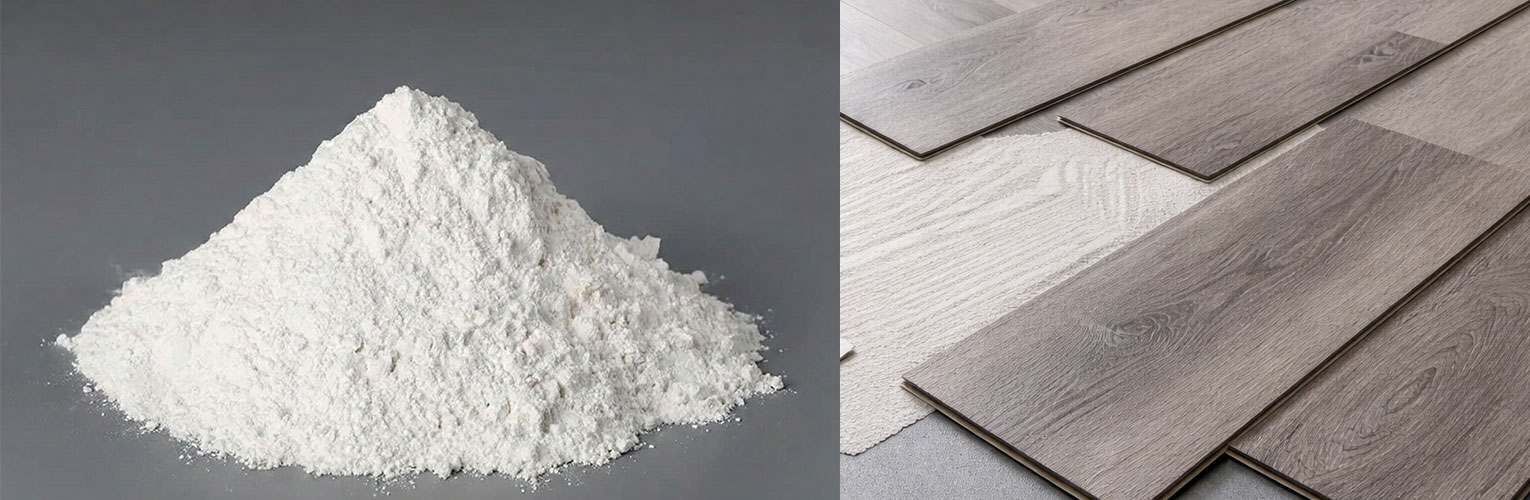
Polyvinyl Chloride Paste Resin is a fine-particle PVC resin designed specifically for plastisol applications. Unlike suspension PVC, paste resin can be mixed with plasticizers to form stable plastisols, enabling precise control over coating thickness, surface texture, and mechanical properties.
In PVC Paste Resin for Construction, especially flooring, the resin directly determines:
Plastisol rheology and flow behavior
Coating uniformity on substrates
Fusion temperature and curing efficiency
Final flexibility and abrasion resistance
When unsuitable resin grades are used, manufacturers may experience unstable processing windows and inconsistent product quality.
3. Key Problems Faced by PVC Flooring Manufacturers
3.1 Processing Instability in PVC Plastisol Resin
Many flooring producers report that during continuous coating or calendering, plastisols may show:
Rapid viscosity increase
Poor leveling behavior
Sedimentation during storage
These problems reduce production efficiency and increase scrap rates. A well-designed PVC Plastisol Resin with controlled particle size distribution and proper porosity is essential to ensure plastisol stability during long production runs.
3.2 Durability Requirements in Construction Applications
Construction-grade flooring must withstand:
Heavy foot traffic
Mechanical abrasion
Cleaning chemicals
Moisture and temperature fluctuations
Low-quality PVC Paste Resin for Flooring may lead to insufficient fusion or weak polymer networks, resulting in premature wear or surface degradation.
4. How PVC Paste Resin for Construction Addresses These Challenges
By selecting the appropriate PVC Paste Resin for Construction, manufacturers can significantly improve both processing and end-use performance.
Key performance benefits include:
Stable plastisol viscosity, enabling smooth coating and spreading
Lower fusion temperature, reducing energy consumption
Improved flexibility, preventing cracking during long-term use
Enhanced surface density, improving wear and stain resistance
These characteristics are particularly important for vinyl floor tiles, homogeneous flooring, and coated floor coverings used in demanding construction environments.
5. Application Overlap: Flooring and Artificial Leather in Buildings
In addition to flooring, PVC Paste Resin for Artificial Leather is also widely used in construction-related applications, such as:
Wall coverings
Decorative panels
Furniture surfaces in commercial buildings
In these applications, paste resin must balance softness, surface appearance, and adhesion to backing materials. Manufacturers who supply both flooring and artificial leather products often prefer versatile paste resin grades that perform well across multiple construction uses.
6. Why Material Selection Matters for Long-Term Project Success
From the perspective of contractors and building owners, flooring failures result in:
Increased maintenance costs
Operational downtime
Early replacement
From the manufacturer’s perspective, unstable resin performance leads to:
Production inefficiency
Quality complaints
Lost competitiveness
Choosing a reliable Polyvinyl Chloride Paste Resin is therefore not just a material decision, but a strategic quality control measure for construction material suppliers.
For manufacturers targeting flooring, wall coverings, and flexible construction materials, optimizing PVC Paste Resin for Flooring and PVC Plastisol Resin formulations is a proven way to solve common performance challenges and meet the evolving demands of the global construction market.