


What Is High Concentration Lithium Silicate and When Does Concrete Need It
2026-07-06 16:37High Concentration Lithium Silicate, carrying CAS number 10102-24-6, is a lithium silicate solution with solid content above 25 to 30 percent, significantly higher than standard grade lithium silicate products at 15 to 20 percent solid content. The higher active silicate concentration per liter of product delivers more reactive material into the concrete pore structure per application, making it the correct specification for dense, hard, low-absorption concrete surfaces where standard concentration densifiers penetrate too slowly or deliver insufficient reactive silicate to achieve the target surface hardness improvement.
For construction chemical formulators, polished concrete contractors, and industrial floor treatment specialists across Southeast Asia, Europe, and Asia, understanding when high concentration lithium silicate is required versus when standard concentration is adequate is the grade selection decision that determines whether a concrete floor treatment program achieves its performance targets.
Why Standard Lithium Silicate Is Insufficient for Dense Concrete
Standard lithium silicate densifier at 15 to 20 percent solid content performs well on new, porous concrete with an open pore structure that accepts and absorbs the solution readily. On dense, hard, or previously treated concrete, the situation is different. The pore structure is tighter, absorption rate is lower, and the amount of free calcium hydroxide available near the surface for reaction with the silicate is lower than in new concrete.
When standard concentration lithium silicate is applied to dense concrete, the solution reaches surface saturation before sufficient reactive silicate has penetrated to the depth required for meaningful hardness improvement. The result is surface residue that must be removed, minimal subsurface CSH crystal formation, and surface hardness improvement well below the 45 to 50 percent achievable on appropriately treated concrete.
High solids lithium silicate densifier addresses this by delivering a higher mass of reactive silicate per liter of absorbed solution. Because the solution carries more active material per unit volume, a smaller absorbed volume achieves the same reactive silicate delivery into the concrete matrix as a larger volume of standard concentration product. This efficiency is critical for dense concrete where total absorption volume is limited by the tight pore structure.
Key Applications for High Concentration Lithium Silicate
Polished Concrete in Commercial and Retail Environments
Polished concrete floors in retail stores, shopping centers, airports, and corporate lobbies require surface hardness that withstands continuous heavy foot traffic, wheeled trolleys, and cleaning equipment without surface wear or gloss reduction over time. The grinding and polishing process that produces the finished floor surface progressively closes the concrete pore structure, meaning the densifier applied after grinding at 400 grit is treating a surface with significantly lower absorption capacity than untreated concrete.
High concentration lithium silicate for dense concrete hardening at this stage delivers sufficient reactive silicate into the tightly ground surface to produce the CSH crystal reinforcement required for polished floor durability. Standard formulations may not achieve full penetration and reactivity on dense polished concrete surfaces, making high solid content grades the specification of choice for professional polished concrete programs targeting high-traffic commercial environments. Concrete Sealers USA
Industrial Floors with High Traffic and Chemical Exposure
Warehouse floors, manufacturing facilities, food processing plants, and logistics centers subject to heavy forklift traffic, pallet jack loads, and chemical spillage require surface hardness and chemical resistance beyond what standard density concrete and standard concentration densifier treatment can reliably provide. High concentration lithium silicate CAS 10102-24-6 delivers a denser CSH crystal network within the concrete surface layer, increasing surface hardness and reducing the open porosity that allows chemical penetration and staining.
Old and Carbonated Concrete Requiring Upgrade
Existing concrete floors that have been in service for several years develop a carbonated surface layer that reduces both porosity and the availability of free calcium hydroxide for reaction with silicate densifier. Standard concentration lithium silicate applied to heavily carbonated concrete achieves minimal reactive silicate delivery because the solution reaches surface saturation before enough active material has penetrated.
High solids lithium silicate densifier applied after light mechanical surface preparation by grinding or shot blasting to remove the carbonated layer delivers sufficient reactive silicate into the freshly exposed concrete matrix to achieve meaningful hardness and abrasion resistance improvement. For industrial floor upgrade programs where full slab replacement is not economically justified, this treatment approach extends service life significantly without the disruption and cost of replacement.
How High Concentration Lithium Silicate Differs from Standard Grade
| Parameter | Standard Lithium Silicate | High Concentration Lithium Silicate |
|---|---|---|
| Solid content | 15-20% | 25-30% |
| Reactive silicate per liter | Lower | Higher |
| Best suited concrete type | New, porous concrete | Dense, hard, or previously treated |
| Application rate | 10-15 m2 per liter | 15-25 m2 per liter |
| Dilution required | Sometimes | For very porous substrates |
| Surface whitening risk | Low at correct rate | Low when excess removed promptly |
What to Verify When Sourcing High Concentration Lithium Silicate
Solid content consistency between deliveries is the most critical quality parameter. A deviation of 2 to 3 percent in solid content changes the effective reactive silicate delivered per liter applied, altering penetration behavior and surface response across large floor areas. Suppliers who provide per-batch solid content certificates allow incoming quality verification before product is used on client projects.
pH stability between 11 and 12.5 throughout shelf life confirms that the lithium silicate solution has not undergone partial polymerization or precipitation that reduces reactivity and penetration performance. Products that show cloudiness or pH drop during storage should not be used.
Particle size in colloidal or nano-particle grades determines penetration depth into dense concrete pore structures. Smaller particle size enables deeper penetration before surface saturation, which is the primary performance advantage of high-quality high concentration lithium silicate over commodity grades in dense concrete applications.
Why EastChem
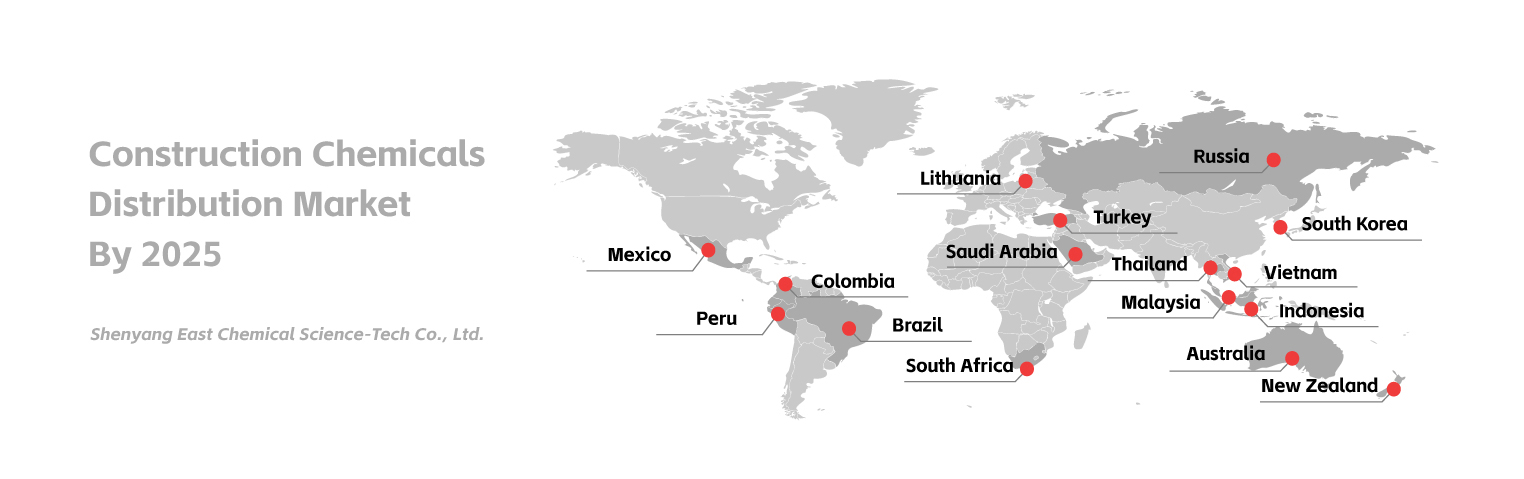
EastChem is a trusted high concentration concrete densifier supplier providing High Concentration Lithium Silicate CAS 10102-24-6 in standard and high solid content grades to construction chemical formulators, polished concrete contractors, and industrial floor treatment specialists across global markets. Our manufacturing is certified under ISO 9001, ISO 14001, and ISO 45001 systems, and our products meet REACH compliance requirements for European market access.
Solid content, pH, and particle size are tested on every production batch with per-batch certificates provided as standard. Technical data sheets and application guidance for specific concrete types and floor conditions are provided with every order.
Contact EastChem today to request a sample, technical data sheet, or pricing for High Concentration Lithium Silicate CAS 10102-24-6 for your concrete floor densification project.
Frequently Asked Questions
When should high concentration lithium silicate be used instead of standard grade?
High concentration lithium silicate is required when treating dense, hard, or previously treated concrete where standard grade products reach surface saturation before delivering sufficient reactive silicate for meaningful hardness improvement. Applications include polished concrete after fine grinding, old carbonated industrial floors, and any concrete surface with absorption rate below 0.1 ml per square centimeter per minute under standard test conditions.
Can high concentration lithium silicate be diluted for less dense concrete?
Yes. High concentration lithium silicate CAS 10102-24-6 can be diluted 1 to 1 with water for application on moderately porous concrete or as a first coat on new concrete before a full strength second application. Dilution reduces the reactive silicate concentration to a level appropriate for higher absorption substrates while allowing the same product to be used across a range of concrete densities on the same project.
How many coats of high concentration lithium silicate are required for polished concrete?
One to two coats is standard for polished concrete densification. Apply the first coat after 400 grit grinding, allow 2 to 4 hours for absorption and initial reaction, then apply a second coat if the surface still shows absorption. Allow 24 hours before continuing to finer polishing grits. Applying additional coats beyond two does not improve hardness and increases surface whitening risk from unreacted silicate residue.