


How a Construction Chemical Distributor in the Middle East Solved Tile Adhesive Open Time Failures with Hydroxypropyl Methyl Cellulose CAS 9004-65-3
A construction chemical distributor operating across Saudi Arabia and the UAE was supplying bagged tile adhesive products to tiling contractors working on large commercial and hospitality projects in Riyadh and Dubai. The distributor had been sourcing tile adhesive from a regional dry mix mortar manufacturer for two years. The product performed adequately during the cooler winter months from November to March but generated consistent contractor complaints during the summer construction season from May to September when ambient temperatures regularly exceeded 42 degrees Celsius and substrate surface temperatures on sun-facing walls reached 60 to 65 degrees Celsius.
The Challenge
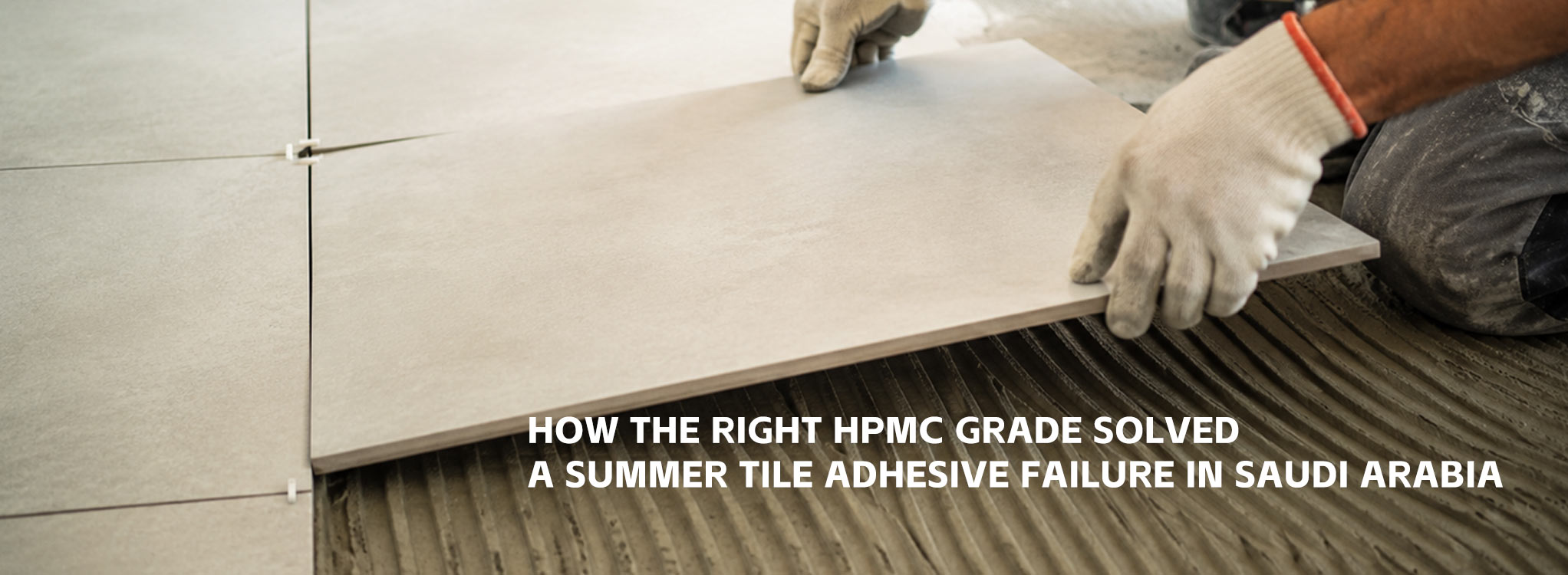
The complaints from tiling contractors across both markets described the same problem. Tile adhesive mixed to the manufacturer's recommended water ratio was skinning over within 7 to 9 minutes of application on heated substrates. Contractors working on large-format porcelain tile installations on hotel facade and lobby floor projects required a minimum open time of 18 to 20 minutes to place, adjust, and press tiles without bond failure at the adhesive-tile interface. At 7 to 9 minutes, only the most experienced and fastest workers could complete tile placement within the available window, and on complex geometry areas including column wraps and curved surfaces, the adhesive was setting before tiles could be correctly positioned.
The distributor escalated the complaint to the dry mix mortar manufacturer, whose technical team reviewed the formulation. The HPMC for tile adhesive open time performance was the identified root cause. The formulation used a standard 40000 mps HPMC grade at 0.25 percent dosage, a specification adequate for moderate European climates but significantly insufficient for the extreme summer conditions in the Arabian Peninsula. At substrate temperatures above 55 degrees Celsius, the water retention film formed by 40000 mps HPMC degrades rapidly, losing its ability to slow moisture evaporation from the adhesive surface and collapsing the open time window to less than half the value achievable at 25 degrees Celsius substrate temperature.
The manufacturer had not differentiated their tile adhesive formulation for hot climate markets, supplying the same product specification to both European and Middle Eastern distributors. The distributor was facing mounting contractor dissatisfaction and the loss of two significant project supply contracts to a competitor whose product maintained adequate open time in summer conditions.
The Solution
After contacting EastChem for technical support, the distributor received a detailed grade recommendation covering the use of Hydroxypropyl Methyl Cellulose CAS 9004-65-3 at 60000 to 75000 mps viscosity as a cellulose ether for hot climate construction applications, replacing the 40000 mps grade in the tile adhesive formulation. EastChem recommended a dosage increase from 0.25 to 0.35 percent by weight of dry blend to provide the additional water retention capacity required for substrate temperatures above 50 degrees Celsius.
Hydroxypropyl Methyl Cellulose at 60000 to 75000 mps viscosity forms a denser, more thermally stable water-retaining film within the tile adhesive matrix compared to standard 40000 mps grades. The higher molecular weight polymer chains provide greater resistance to thermal degradation of the film at elevated substrate temperatures, slowing moisture evaporation from the adhesive surface even under direct sun exposure and substrate temperatures above 55 degrees Celsius.
EastChem supplied trial quantities of HPMC powder for construction grade at 60000 mps alongside per-batch viscosity certificates. The dry mix mortar manufacturer reformulated the tile adhesive using the new grade at 0.35 percent dosage without changing any other component of the formulation.
Field trials conducted by two tiling contractors across active project sites in Riyadh and Dubai during peak summer temperatures confirmed open time extension from 7 to 9 minutes with the previous formulation to 19 to 23 minutes with the EastChem 60000 mps grade. Contractors reported that tile placement, adjustment, and pressing could be completed comfortably within the available window across all substrate types and orientations tested, including the most demanding west-facing facade surfaces in direct afternoon sun.
The Results
The manufacturer launched the reformulated hot climate tile adhesive under a dedicated product designation for Gulf and Middle Eastern markets within eight weeks of completing the field trials. The product was positioned as a premium summer-grade tile adhesive specifically engineered for substrate temperatures above 40 degrees Celsius, a differentiation that no competing product in the distributor's market had previously offered.
The two project supply contracts that had been at risk were retained following confirmation of the reformulated product's performance. The distributor expanded the hot climate tile adhesive into their Kuwait and Qatar distribution network in the following season, establishing EastChem as the HPMC supplier for Middle East market requirements across their full cellulose ether procurement.
A twelve-month supply agreement covering HPMC with water retention and thickening effect in 60000 mps grade for the hot climate tile adhesive, and building material additive HPMC for ready dry mix mortar in 40000 mps grade for standard product lines, was established with EastChem, consolidating the full HPMC requirement across both product grades under a single supply relationship.
What the Customer Said
"Our contractors in Saudi Arabia and UAE had been complaining about open time every summer for two years. Switching to EastChem 60000 mps HPMC solved the problem completely in the first season. We now have a dedicated hot climate product that our competitors cannot match and our contractor relationships have recovered fully."
Procurement Manager, Construction Chemical Distributor, Riyadh, Saudi Arabia
Why EastChem
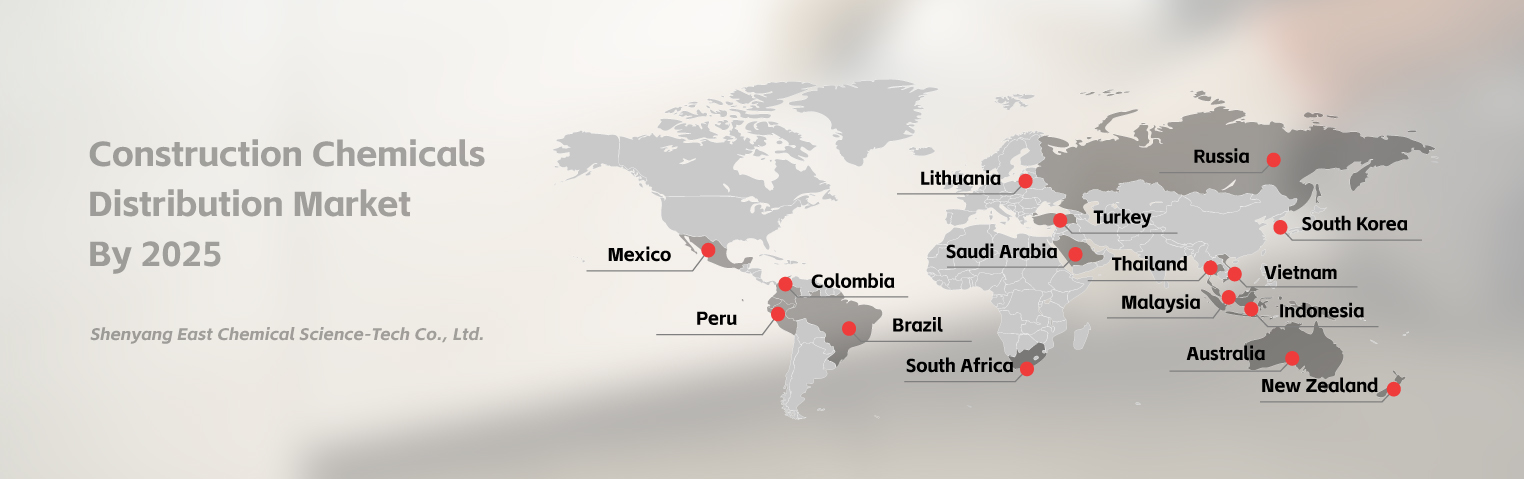
EastChem is a trusted HPMC supplier for Middle East market construction chemical distribution, providing Hydroxypropyl Methyl Cellulose CAS 9004-65-3 in viscosity grades from 15000 to 75000 mps to dry mix mortar manufacturers, construction chemical distributors, and building material formulators across global markets. Our manufacturing is certified under ISO 9001, ISO 14001, and ISO 45001 systems, and our products meet REACH compliance requirements for European market access. Viscosity consistency within 10 percent of stated grade, moisture content, and particle size are tested on every production batch with per-batch certificates provided as standard.
Contact EastChem today to request a free sample of Hydroxypropyl Methyl Cellulose CAS 9004-65-3 for your hot climate tile adhesive or dry mix mortar formulation, technical data sheet, or pricing for your Middle Eastern or Southeast Asian market requirements.
Email: info@eschemy.com
WhatsApp: +86 13504015521
FAQ
What HPMC viscosity grade maintains tile adhesive open time above 18 minutes at substrate temperatures above 50 degrees Celsius?
For tile adhesive applied to substrates above 50 degrees Celsius in Middle Eastern and tropical markets, HPMC for tile adhesive open time performance requires viscosity grades of 60000 to 75000 mps at dosage of 0.3 to 0.45 percent by weight of dry blend. Standard grades of 40000 mps at 0.2 to 0.3 percent provide open time of only 7 to 10 minutes at these substrate temperatures, which is insufficient for large-format tile installation at professional working pace.
Why does the same tile adhesive perform well in winter but fail in summer in hot climate markets?
Tile adhesive open time depends on the rate of moisture evaporation from the adhesive surface after application. At winter substrate temperatures of 20 to 30 degrees Celsius, 40000 mps HPMC provides adequate water retention for 18 to 25 minutes open time. At summer substrate temperatures of 50 to 65 degrees Celsius in Middle Eastern markets, the same grade retains water for only 7 to 10 minutes because thermal degradation of the HPMC water retention film accelerates at elevated temperatures. Specifying cellulose ether for hot climate construction applications at 60000 to 75000 mps viscosity is the correct solution for year-round performance consistency in these markets.
Can the same HPMC grade be used in both summer and winter seasons in hot climate markets?
Yes. Specifying 60000 to 75000 mps HPMC for the tile adhesive formulation produces adequate open time in both summer and winter conditions in hot climate markets. In winter, the higher viscosity grade provides slightly longer open time than required, which is not operationally problematic. The alternative of maintaining two seasonal formulations adds production and inventory complexity that outweighs any minor performance optimization benefit from using a lower grade in cooler months.