


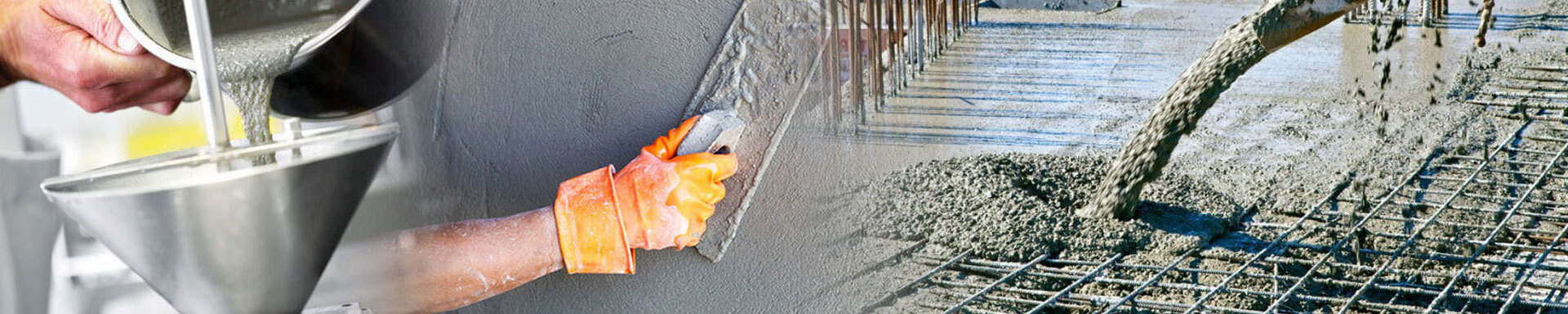
Solving Floor Screed Cracking and Debonding with VAE Redispersible Polymer Powder CAS 24937-78-8
A dry mix mortar manufacturer based in Surabaya, Indonesia was producing a range of floor screed and floor leveling products for distribution across residential and commercial construction projects in East Java and Bali. Demand for factory-produced dry mix floor screed had grown significantly as developers shifted away from site-mixed sand and cement screed toward bagged products with consistent performance and faster installation. The manufacturer had established a product line covering bonded floor screed, unbonded screed, and self-leveling floor topping, all based on the same base formulation with minor adjustments between product grades.
The Challenge
Six months after the floor screed product launch, the manufacturer began receiving warranty claims from two flooring contractors who had installed the bonded floor screed on large commercial floor areas in office buildings and retail spaces across Surabaya. The complaints described two distinct failure patterns occurring on different project sites.
The first failure pattern was surface cracking appearing within 14 to 21 days of screed installation on floor areas above 30 square meters. The cracks appeared in irregular patterns across the screed surface, typically running parallel to the longest floor dimension and concentrated in the central area of large bays rather than at perimeter edges. This crack pattern indicated shrinkage cracking driven by restrained drying, where the bond to the concrete subfloor prevented the screed from contracting freely during moisture loss, generating tensile stress that exceeded the tensile strength of the screed layer.
The second failure pattern was hollow sounding areas identified by knock testing during floor covering installation, indicating that the screed had debonded from the concrete subfloor across significant areas in the weeks following installation. The hollow areas were concentrated in the central zones of large floor bays where shrinkage forces were highest, consistent with screed that had developed adequate initial bond but lost bond integrity as cumulative shrinkage stress exceeded the bond strength of the screed-to-substrate interface.
The manufacturer's technical team reviewed the base formulation and identified that the floor screed products contained no polymer modification. The formulation relied entirely on cement hydration for both cohesive strength and substrate bond, with no flexible polymer network to accommodate the shrinkage stress generated by drying in large floor areas under the high ambient temperatures of East Java construction sites where average temperatures during the dry season regularly exceeded 32 degrees Celsius.
The root cause was straightforward: unmodified cement floor screed in large bay applications generates shrinkage forces that exceed both the tensile strength of the screed layer and the bond strength to the subfloor, particularly in hot climates where rapid drying accelerates shrinkage stress development before the cement matrix has developed sufficient tensile strength to resist cracking.
The Solution
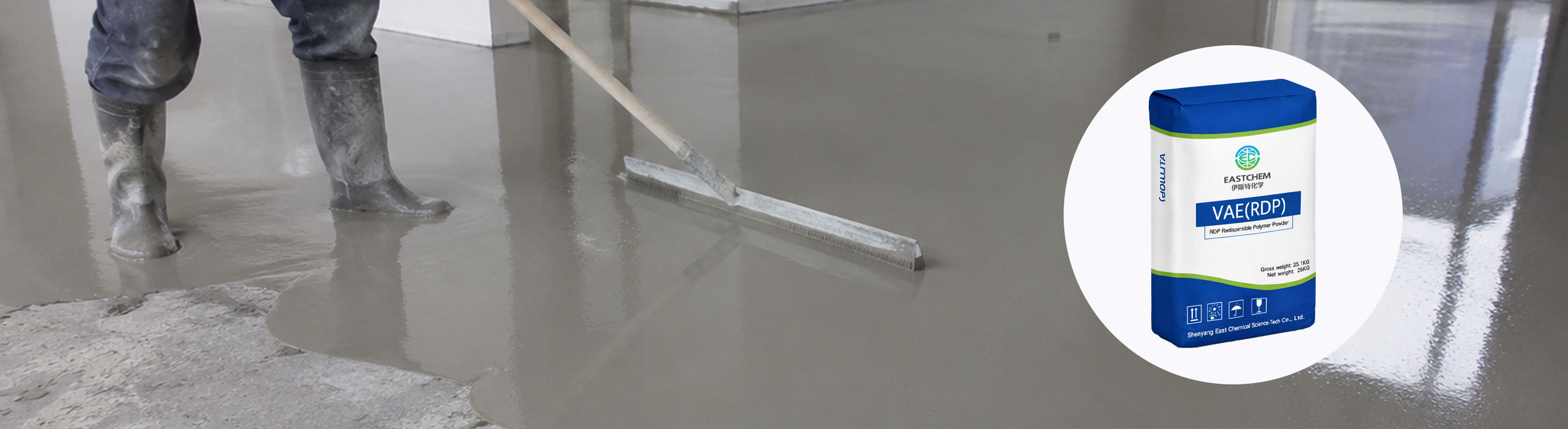
After contacting EastChem, the manufacturer received a technical proposal recommending incorporation of VAE Redispersible Polymer Powder CAS 24937-78-8 into the bonded floor screed and unbonded screed formulations at different dosage levels and grades suited to each application.
For bonded floor screed, EastChem recommended semi-flexible grade RDP powder for floor screed formulation with glass transition temperature between 10 and 20 degrees Celsius at dosage of 1.5 percent by weight of dry blend. This grade and dosage combination provides the bond strength improvement required to resist shrinkage debonding while maintaining adequate compressive strength for commercial floor loading applications.
For unbonded and floating screed over polythene membrane or insulation board, EastChem recommended flexible grade RDP powder with Tg between 0 and 10 degrees Celsius at dosage of 2 to 2.5 percent to provide the crack bridging capacity required across the unsupported screed span in the absence of full subfloor bond.
EastChem supplied trial quantities of both grades with per-batch test certificates covering Tg, ash content, redispersibility, and moisture content. The manufacturer reformulated all three floor products incorporating the recommended RDP grades and conducted full scale installation trials on test bays of 40 square meters, monitored over eight weeks for cracking and bond integrity.
Trial results confirmed complete elimination of surface cracking across all three polymer modified screed formulations at the recommended dosage levels. Bond strength testing on the bonded screed trial installation showed tensile bond to concrete subfloor of 1.1 MPa after 28 days curing, significantly above the 0.5 MPa minimum required for bonded screed in commercial floor applications. Knock testing across the full trial bay area at eight weeks showed no hollow areas, confirming that the polymer modified screed had maintained full bond to the subfloor throughout the drying and shrinkage period.
The Results
The manufacturer reformulated all floor products with EastChem RDP powder within ten weeks of completing the trials. The reformulated bonded screed was supplied to the two contractors who had submitted warranty claims, and both confirmed that installation on subsequent projects produced no cracking or debonding failures over a six-month monitoring period.
The manufacturer introduced a premium polymer modified floor screed designation across the product range, differentiating the reformulated products from commodity site-mixed alternatives on technical performance rather than price. The premium positioning allowed a modest price increase that more than offset the additional raw material cost of RDP incorporation, improving product margin while reducing warranty claim exposure.
The polymer modified screed cracking solution provided by EastChem also enabled the manufacturer to extend their product warranty period from six months to twelve months on all floor screed products, which became a commercial differentiator in the Indonesian construction chemical market where most competitors offered no formal product warranty.
A twelve-month supply agreement covering RDP powder supplier for dry mortar manufacturer requirements across the bonded screed, unbonded screed, and floor leveling product lines was established with EastChem, with technical support included for new product development as the manufacturer expanded into tile adhesive and waterproofing product categories.
What the Customer Said
"We launched floor screed without polymer modification because we thought it was only needed for tile adhesive. The warranty claims taught us that large floor areas need polymer modification more than tile adhesive does. EastChem explained the mechanism clearly and the reformulation solved the problem completely."
Product Development Manager, Dry Mix Mortar Manufacturer, Surabaya, Indonesia
FAQ
What RDP powder dosage prevents floor screed cracking in large bay applications above 30 square meters?
For bonded floor screed in large bay applications above 30 square meters in hot climates, semi-flexible grade RDP powder at dosage of 1.5 to 2 percent by weight of dry blend provides the crack resistance and bond strength required to resist shrinkage cracking and debonding during the drying period. Dosage below 1 percent provides insufficient polymer network density to bridge the shrinkage cracks that develop in large restrained floor areas under tropical drying conditions.
Why does floor screed debond from concrete subfloor in the weeks after installation rather than immediately?
Screed debonding typically occurs 2 to 6 weeks after installation because shrinkage stress accumulates progressively as the screed continues to lose moisture over this period. Initial bond strength is adequate to resist early shrinkage forces, but cumulative shrinkage stress over weeks of continued drying eventually exceeds the bond strength of unmodified cement screed to concrete subfloor. Polymer modified screed with RDP powder at 1.5 to 2 percent dosage provides both higher initial bond strength and sufficient flexibility to accommodate the cumulative shrinkage movement without bond failure.
Can the same RDP powder grade be used for both bonded and floating floor screed?
Semi-flexible grade RDP with Tg between 10 and 20 degrees Celsius is appropriate for bonded screed where subfloor bond strength and compressive strength are the priorities. Floating screed over insulation or membrane requires flexible grade with Tg between 0 and 10 degrees Celsius to provide adequate crack bridging across the unsupported screed span. Using semi-flexible grade in floating applications produces insufficient flexibility for the combined shrinkage and deflection loading that floating screed experiences in service.