



Not every procurement problem is a product problem. Sometimes the product specification is wrong for the application. Sometimes the supplier cannot meet the packaging requirement. Sometimes the lead time is the issue and everything else is secondary. In this case, all three problems existed simultaneously — and resolving them required a supplier who could do more than quote a price on a standard product.
The Enquiry
A polycarboxylate superplasticizer producer contacted us with a straightforward initial request: they needed HPEG monomer for an upcoming production run. Delivery date was the first thing they mentioned. It was also the last thing they mentioned. The message was clear — technical fit mattered, but on-time delivery was the non-negotiable requirement.
This is a more common situation than most admixture producers acknowledge. Monomer selection is often made based on what is available from the nearest supplier rather than what is technically optimal for the synthesis target. The performance gap between using the right monomer and the convenient monomer shows up as admixture that almost meets specification — not catastrophically wrong, but consistently a few percentage points short of where it should be.
Matching the Right Product
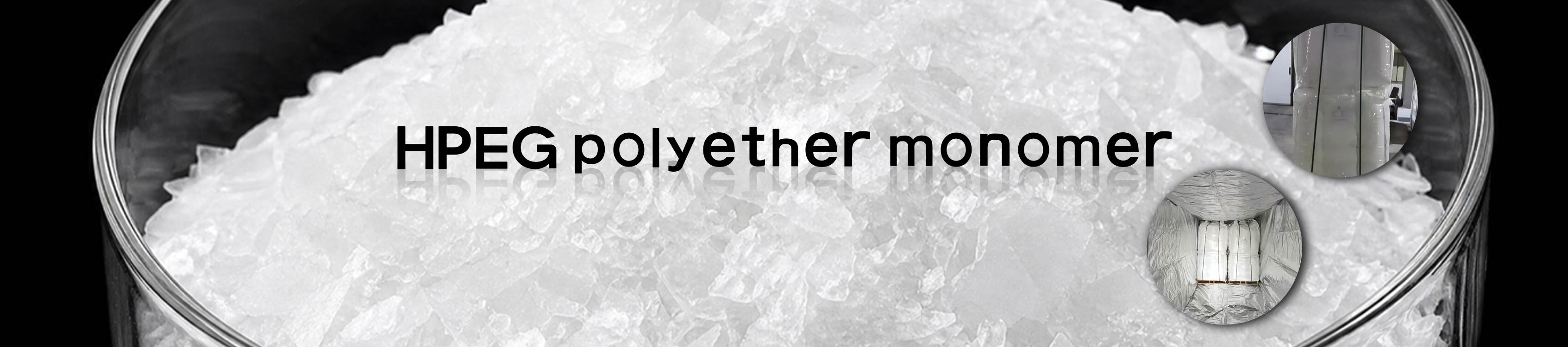
After reviewing their synthesis parameters, target PCE molecular weight, and the performance specifications their concrete customers were requiring, we recommended HPEG polyether monomer at 2400 Da molecular weight. The higher reactivity of HPEG in free-radical polymerization suited their synthesis temperature and initiator system, and the resulting PCE architecture would deliver the initial water reduction efficiency their high-strength concrete customers required without sacrificing the workability window their ready-mix customers needed.
We supply a complete polyether monomer product line — TPEG, HPEG, EPEG, VPEG — which meant the grade recommendation was made based on their actual application requirements, not on what we happened to have available. For producers whose synthesis requirements change with product line or cement type, having a supplier who can provide different monomer types from a single source without minimum order constraints per grade simplifies procurement significantly.
The Packaging Requirement That Ruled Out Standard Suppliers
The customer's packaging requirement was specific: tonne bags, with two tonne bags per pallet stacked in a configuration that fit their warehouse racking and minimised handling on receipt. Their previous suppliers had offered 25kg bags only — the standard format for the market. On a production run requiring several tonnes of monomer, unpacking, handling, and disposing of dozens of 25kg bags adds meaningful labour cost and time to every production cycle.
We executed the order in tonne bags stacked two per pallet exactly as specified. This is not a technically complex requirement — but it requires a supplier who is willing to accommodate non-standard packaging rather than defaulting to whatever format their warehouse operates. For the customer, it eliminated the unpacking labour cost and reduced the handling steps between goods receipt and production line — a practical operational improvement that compounds across every subsequent order.
Product Form: Flake or Powder
The customer required flake-form monomer. Their production process for solid PCE powder used flake HPEG monomer directly in the synthesis reactor — powder form would have required process modification. We supply both flake and powder forms of our polyether monomer range, selectable based on the customer's production process without minimum order premiums for either format.
For producers manufacturing liquid PCE superplasticizer, powder form dissolves faster in the aqueous synthesis medium. For producers manufacturing solid PCE powder through spray drying or direct synthesis, flake form handles more easily in solid-state processing. Neither format is universally correct — the right choice depends on the synthesis process, and a supplier who offers both removes a constraint that should not exist.
Delivery
The order was processed, packed to the customer's specification, and delivered within the agreed timeline. No partial shipment, no substitution of packaging format, no request to accept 25kg bags while tonne bags were arranged. The timeline the customer stated as their core requirement was the timeline we committed to and met.
What This Order Illustrates
Four things that apply to any PCE admixture producer evaluating monomer supply:
First, the monomer grade in use is not always the optimal grade for the synthesis target — it is often simply the grade that was available. A technical discussion with a supplier who carries TPEG, HPEG, EPEG, VPEG polyether monomer range takes less than an hour and occasionally identifies a meaningful performance improvement.
Second, packaging requirements are legitimate operational requirements. A supplier who cannot accommodate tonne bag format is adding hidden labour cost to every order.
Third, product form — flake versus powder — should be matched to the synthesis process, not dictated by supplier stock format.
Fourth, delivery date is a hard constraint, not a preference. A supplier who treats it as a preference is not a reliable supply partner regardless of product quality.
Contact us to discuss your HPEG monomer PCE superplasticizer synthesis requirements, packaging preferences, and delivery timeline.