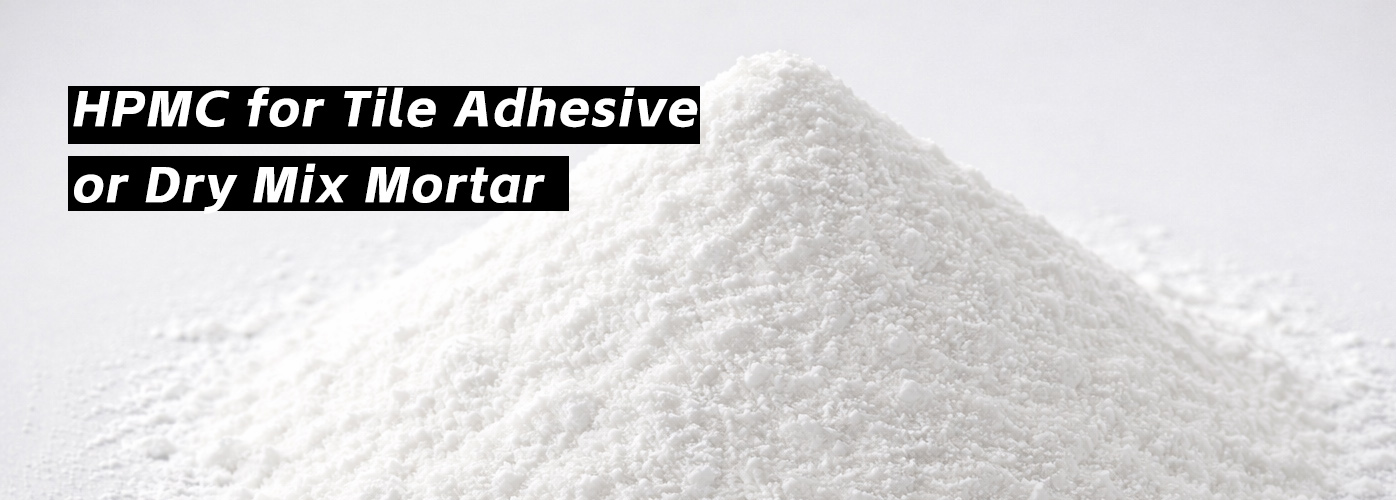


HPMC in Construction: Expanding Applications in Global Dry Mix Mortar Industry
2026-02-24 17:30With the rapid development of infrastructure projects, residential housing, and commercial buildings worldwide, the demand for high-performance dry mix mortar additives continues to increase.
Among these additives, HPMC (Hydroxypropyl Methyl Cellulose) plays a critical role in improving workability, water retention, and construction efficiency.
In Southeast Asia, the Middle East, Africa, and South America, construction-grade HPMC has become a core raw material for mortar manufacturers.
1. HPMC in Tile Adhesive Production
Tile adhesive is currently one of the largest application areas for HPMC for Construction.
In tile adhesive systems, HPMC provides:
Excellent water retention
Improved open time
Enhanced workability
Anti-sag performance
Smooth spreading properties
For large-format tile installation, stable water retention ensures proper cement hydration and bonding strength.
Export-oriented tile adhesive manufacturers increasingly require consistent viscosity and stable quality from their HPMC supplier.
2. HPMC in Wall Putty and Skim Coat
In wall putty formulations, Hydroxypropyl Methyl Cellulose improves:
Smooth application
Surface leveling
Crack resistance
Reduced shrinkage
In tropical climates, such as Southeast Asia, high water retention performance is especially important to prevent rapid drying.
HPMC also improves sag resistance during vertical application, ensuring a uniform finish.
3. HPMC in Cement Plaster and Rendering Mortar
In cement plaster applications, HPMC acts as a water retention agent and rheology modifier.
Benefits include:
Reduced water separation
Improved adhesion
Better workability
Enhanced consistency
For export markets, stable performance across different cement types is essential. A reliable HPMC supplier ensures compatibility with local cement conditions.
4. HPMC in Self-Leveling Compounds
In self-leveling mortar systems, flowability and stability must be carefully balanced.
HPMC for Construction helps:
Control viscosity
Prevent bleeding
Maintain uniform thickness
Improve surface smoothness
When used in combination with PCE-based superplasticizers, HPMC ensures a stable and high-performance leveling system.
5. HPMC in EIFS and Insulation Mortar
Exterior insulation finishing systems (EIFS) require:
Strong bonding
Flexible performance
Stable workability
Hydroxypropyl Methyl Cellulose improves water retention and enhances bonding between insulation boards and base coats.
With global energy-efficiency standards increasing, EIFS demand is growing, driving further HPMC consumption.
Technical Factors Buyers Should Consider
When sourcing HPMC for Tile Adhesive or Dry Mix Mortar, key technical parameters include:
Viscosity grade
Methoxy and hydroxypropyl content
Gel temperature
Moisture content
Particle size
Different applications require different viscosity levels. For example:
Tile adhesive: medium to high viscosity
Self-leveling: lower viscosity
Putty powder: customized grade
Choosing the correct grade directly impacts mortar performance.
Market Outlook
As dry mix mortar production continues to expand in developing markets, the demand for reliable HPMC suppliers is increasing.
Manufacturers are looking for:
Stable viscosity performance
Consistent batch quality
Export-ready packaging
Competitive pricing
Technical support
HPMC remains one of the most essential Dry Mix Mortar Additives in the global construction industry.
Conclusion
From tile adhesive to self-leveling compounds and insulation systems, Hydroxypropyl Methyl Cellulose (HPMC) plays a central role in modern construction materials.
As infrastructure projects accelerate worldwide, the application scope of HPMC continues to expand.
For mortar manufacturers seeking stable quality and long-term supply, selecting a professional HPMC supplier is critical to ensuring product performance and market competitiveness.