


Lithium Silicate: The One Treatment That Makes Concrete Floors Permanently Harder, Denser, and Easier to Maintain
2026-05-27 16:15Concrete floors are specified for their strength and durability. The reality on most construction sites is that the finished floor surface — the zone that actually contacts traffic, chemicals, and cleaning equipment — is significantly weaker than the concrete below it. This surface weakness is not a quality control failure. It is chemistry. And Lithium Silicate is the chemical solution.
What You Are Actually Dealing With When a Concrete Floor Dusts or Stains
Every concrete slab has a weak surface zone formed during casting. Bleed water rises through the fresh concrete and concentrates at the top, producing a porous, calcium hydroxide-rich layer called laitance. This layer is softer and more absorbent than the concrete below it — and it is the layer that every vehicle wheel, foot, forklift tine, and cleaning chemical contacts directly.
Under traffic, laitance abrades. The fine particles it releases are concrete dust — the grey powder that accumulates on products, clogs equipment filters, and reappears on freshly cleaned floors within hours regardless of how frequently the floor is swept. Under liquid contact, laitance absorbs. Oils, acids, cleaning chemicals, and water penetrate faster than any surface sealer can block them, producing staining that cannot be removed because it has soaked into the concrete structure itself.
Coatings applied over laitance bond to the weakest layer of the floor. When laitance abrades from below, the coating delaminates from above. This is not a coating failure. It is a substrate failure — and the only permanent fix is to address the substrate.
How Lithium Silicate Works — and Why It Works Permanently
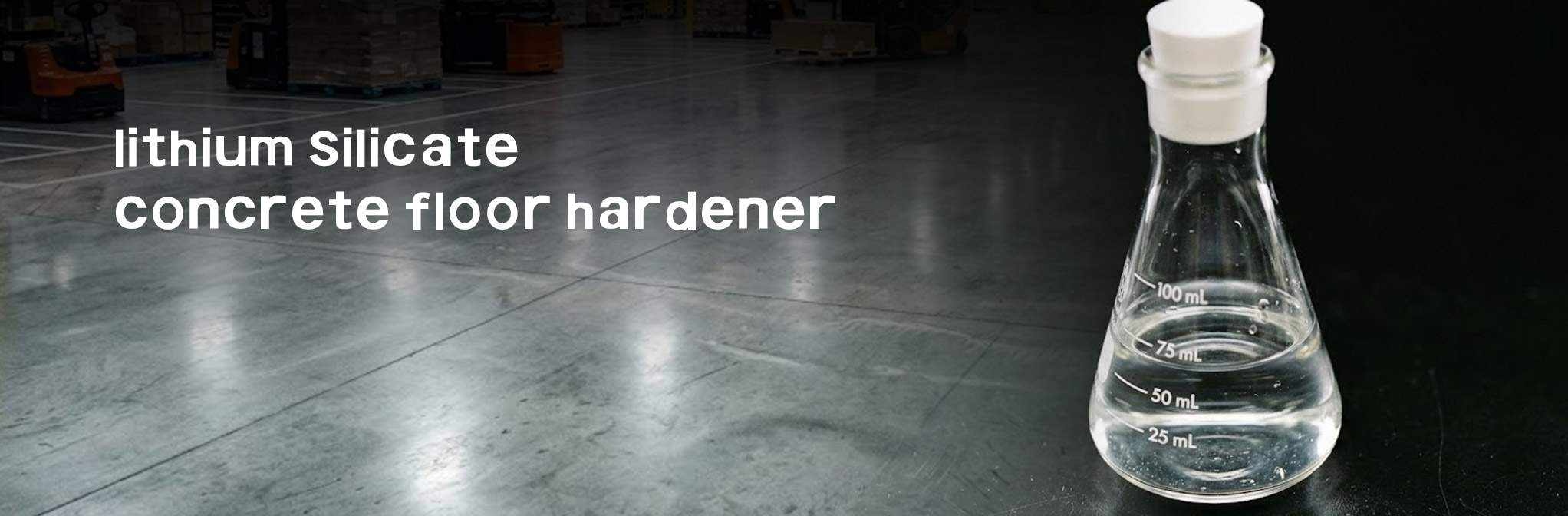
Lithium silicate densifier penetrates the capillary pore network of the concrete surface and reacts chemically with the calcium hydroxide present in the laitance zone. This reaction produces additional calcium silicate hydrate — C-S-H gel — within the pores themselves. The same compound responsible for concrete's structural strength is formed inside the surface zone, filling pores, displacing the weak laitance chemistry, and producing a dense, hardened surface that is chemically integrated with the concrete below.
This is not a surface coating. It cannot peel, delaminate, or wear through — because there is no layer to remove. The hardened zone is the concrete surface, permanently modified from within.
Colloidal lithium silicate solution achieves this more effectively than sodium or potassium silicate alternatives because its smaller particle size allows deeper penetration before the reaction occurs. Sodium silicate reacts near the surface, producing a shallow hardened zone. Lithium silicate reacts 3 to 6mm deep — producing a hardened zone that remains structurally effective long after surface wear would have removed a sodium silicate treatment entirely.
What Building Chemistry Clients Actually Need to Know
Will it work on my existing floor? Yes — lithium silicate concrete floor hardener is effective on existing concrete from 28 days old onward, provided the surface is clean and free of existing coatings or curing compounds that would block penetration. For floors with existing coating residue, mechanical preparation is required before application.
How long before the floor can be used? Application takes 2 to 4 hours for a standard industrial floor area. Light foot traffic is possible within 4 to 6 hours of application. Full vehicle traffic is typically safe at 24 hours. There is no curing compound, no drying time for a film-forming product, and no risk of traffic damage to a wet coating.
Will it change the appearance of the floor? No significant change to surface color or texture. Polished concrete applications show a modest increase in surface sheen as porosity reduces — this is intentional and is the basis for polished concrete systems that use lithium silicate densification between grinding passes.
How does it compare to epoxy coating in cost over ten years? Epoxy coating on a 5,000m² industrial floor costs significantly more per application and requires reapplication every 3 to 7 years under heavy traffic. Lithium silicate densifier supplier grade treatment is a one-time application at substantially lower cost per square meter, with no reapplication required under normal conditions. The ten-year cost comparison consistently favors lithium silicate by a significant margin on high-traffic industrial floors.
Technical Parameters
| Parameter | Specification |
|---|---|
| Active Component | Lithium silicate (Li₂SiO₃) |
| Appearance | Clear to slightly opalescent liquid |
| Solid Content | 15–25% |
| SiO₂/Li₂O Molar Ratio | 4.0–5.0 |
| pH | 11–12 |
| Penetration Depth | 3–6 mm |
| Coverage Rate | 5–15 m²/L |
| Surface Hardness Increase | 40–60% |
| Water Absorption Reduction | 70–85% |
| Shelf Life | 12 months (sealed, above 5°C) |
The Supplier Question
For contractors and facility managers specifying lithium silicate for the first time, supplier consistency matters more than most buyers anticipate. SiO₂/Li₂O molar ratio determines the balance between penetration depth and reaction rate — ratios outside the 4.0 to 5.0 range produce either inadequate penetration or premature surface reaction that limits the depth of hardening achieved. Solid content variation between batches changes coverage rate calculations and produces inconsistent hardening across a floor area.
Every batch of our colloidal lithium silicate solution ships with a COA confirming solid content, SiO₂/Li₂O ratio, pH, and density — the four parameters that determine field performance — verified on that specific production batch.