


- Home
- >
News
Concrete floors are specified for their strength and durability. The reality on most construction sites is that the finished floor surface — the zone that actually contacts traffic, chemicals, and cleaning equipment — is significantly weaker than the concrete below it. This surface weakness is not a quality control failure. It is chemistry. And Lithium Silicate is the chemical solution.
Most concrete floor problems get treated with coatings. Epoxy, polyurethane, acrylic sealer — layer after layer applied over a surface that was never properly hardened in the first place. The coatings wear through. The floor dusts again. Another contractor is called, another coating is specified, and the cycle repeats every three to five years at significant cost. If this is your situation, the coating is not the problem. The surface is. And Lithium Silicate is the solution that addresses it permanently — from the inside out, not the surface down.
Concrete floors fail in predictable ways. Dusting under forklift traffic. Surface abrasion in high-footfall retail environments. Moisture vapor transmission causing adhesive failure under flooring finishes. In every case, the underlying cause is the same: a porous, under-dense surface layer that lacks the hardness and impermeability the application demands. Lithium silicate concrete densifier addresses all three failure modes through a single penetrating treatment — and unlike surface coatings, it does so permanently.
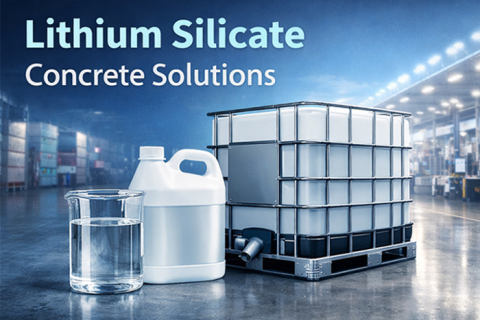
In industrial and commercial construction, concrete floors are widely used—but they also face common and costly problems: dusting, low surface strength, abrasion, and high maintenance requirements. Lithium silicate–based solutions are specifically designed to address these issues at their root.
This article will explore how lithium silicate empowers various types of floors and has become the preferred choice in the floor hardener market.