


- Home
- >
News
Lithium silicate is the preferred concrete densifier and floor hardener for polished concrete, industrial flooring and infrastructure. Expert guide to chemistry, grades, application and global sourcing.
If your concrete floor is dusting, cracking, absorbing water, or losing surface strength under traffic and load, you are not dealing with a cosmetic problem. You are dealing with a structural vulnerability that gets worse over time and more expensive to fix with every month you wait. Lithium Silicate is the chemical solution that addresses all three of these problems at once, permanently, from within the concrete itself.
Concrete floors are specified for their strength and durability. The reality on most construction sites is that the finished floor surface — the zone that actually contacts traffic, chemicals, and cleaning equipment — is significantly weaker than the concrete below it. This surface weakness is not a quality control failure. It is chemistry. And Lithium Silicate is the chemical solution.
Most concrete floor problems get treated with coatings. Epoxy, polyurethane, acrylic sealer — layer after layer applied over a surface that was never properly hardened in the first place. The coatings wear through. The floor dusts again. Another contractor is called, another coating is specified, and the cycle repeats every three to five years at significant cost. If this is your situation, the coating is not the problem. The surface is. And Lithium Silicate is the solution that addresses it permanently — from the inside out, not the surface down.
Concrete floors fail in predictable ways. Dusting under forklift traffic. Surface abrasion in high-footfall retail environments. Moisture vapor transmission causing adhesive failure under flooring finishes. In every case, the underlying cause is the same: a porous, under-dense surface layer that lacks the hardness and impermeability the application demands. Lithium silicate concrete densifier addresses all three failure modes through a single penetrating treatment — and unlike surface coatings, it does so permanently.
Modern construction increasingly demands durable, high-performance concrete and flooring solutions. Traditional curing and surface treatment methods often fail to prevent dusting, cracking, or early surface wear. Lithium Silicate has emerged as a high-performance solution, providing chemical hardening, sealing, and protective benefits. In particular, products like Lithium Silicate Concrete Hardener, Floor Treatment, and Sealer are widely used to improve concrete longevity, floor durability, and coating performance.
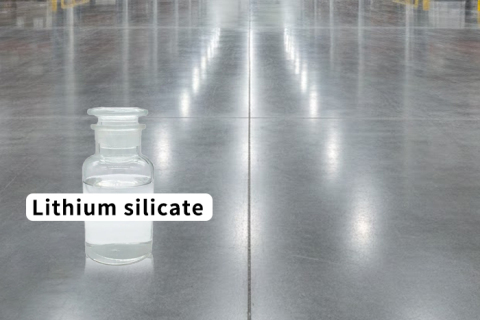
As the global construction industry shifts towards sustainable and low-maintenance infrastructure, the demand for advanced chemical treatments has reached a new peak. Today, Lithium Silicate stands at the forefront of this evolution, offering a superior alternative to traditional sodium-based solutions.
Industrial buildings, warehouses, logistics centers, and parking structures rely on durable concrete floors to withstand heavy traffic, mechanical loads, and long-term use. Yet, many projects face recurring problems:
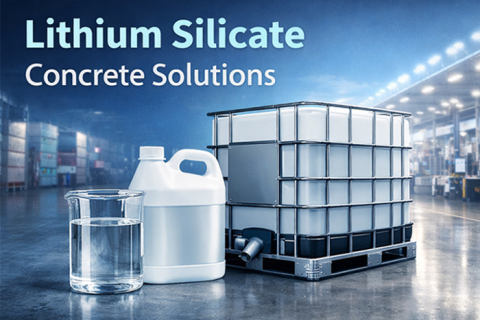
In industrial and commercial construction, concrete floors are widely used—but they also face common and costly problems: dusting, low surface strength, abrasion, and high maintenance requirements. Lithium silicate–based solutions are specifically designed to address these issues at their root.
Lithium silicate is an essential inorganic chemical widely used in the construction materials industry. As a chemical materials supplier integrating both manufacturing and trade, our company provides high purity lithium silicate with stable quality and consistent performance for global customers.
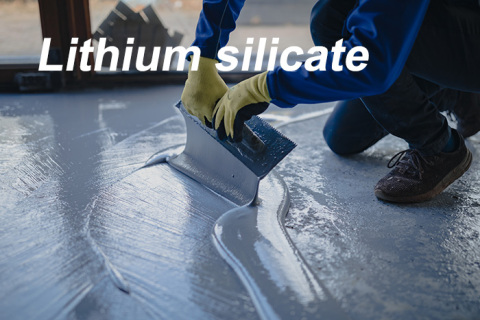
Lithium Silicate is a next-generation concrete densifier that enhances flooring durability by reducing porosity, preventing dusting, abrasion, and stains, thus lowering maintenance costs in industrial, commercial, and public buildings.
This article will explore how lithium silicate empowers various types of floors and has become the preferred choice in the floor hardener market.