


- Home
- >
News
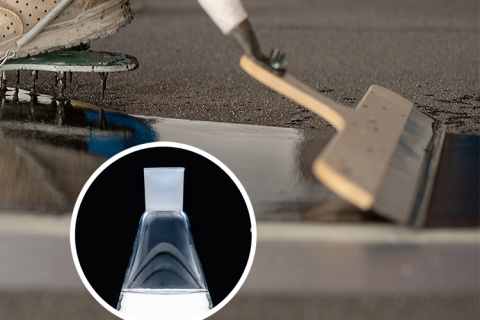
Polished concrete floors in retail stores, corporate offices, airports, hotels, and industrial facilities across Southeast Asia, Europe, and Asia are not produced by grinding alone. The grinding and polishing process that creates a reflective, durable concrete surface depends on Lithium Silicate densifier applied at the correct stage in the polishing sequence to harden the concrete matrix, increase surface hardness, and enable the fine polishing grits to produce a high-gloss finish that resists wear over years of heavy foot and vehicle traffic. Without Lithium Silicate, polished concrete surfaces wear prematurely, lose gloss under traffic, and dust continuously from the weak surface layer exposed by grinding.
Concrete floors are specified for their strength and durability. The reality on most construction sites is that the finished floor surface — the zone that actually contacts traffic, chemicals, and cleaning equipment — is significantly weaker than the concrete below it. This surface weakness is not a quality control failure. It is chemistry. And Lithium Silicate is the chemical solution.
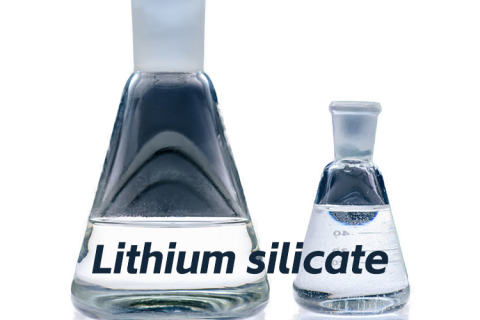
Concrete floors fail in predictable ways. Dusting under forklift traffic. Surface abrasion in high-footfall retail environments. Moisture vapor transmission causing adhesive failure under flooring finishes. In every case, the underlying cause is the same: a porous, under-dense surface layer that lacks the hardness and impermeability the application demands. Lithium silicate concrete densifier addresses all three failure modes through a single penetrating treatment — and unlike surface coatings, it does so permanently.