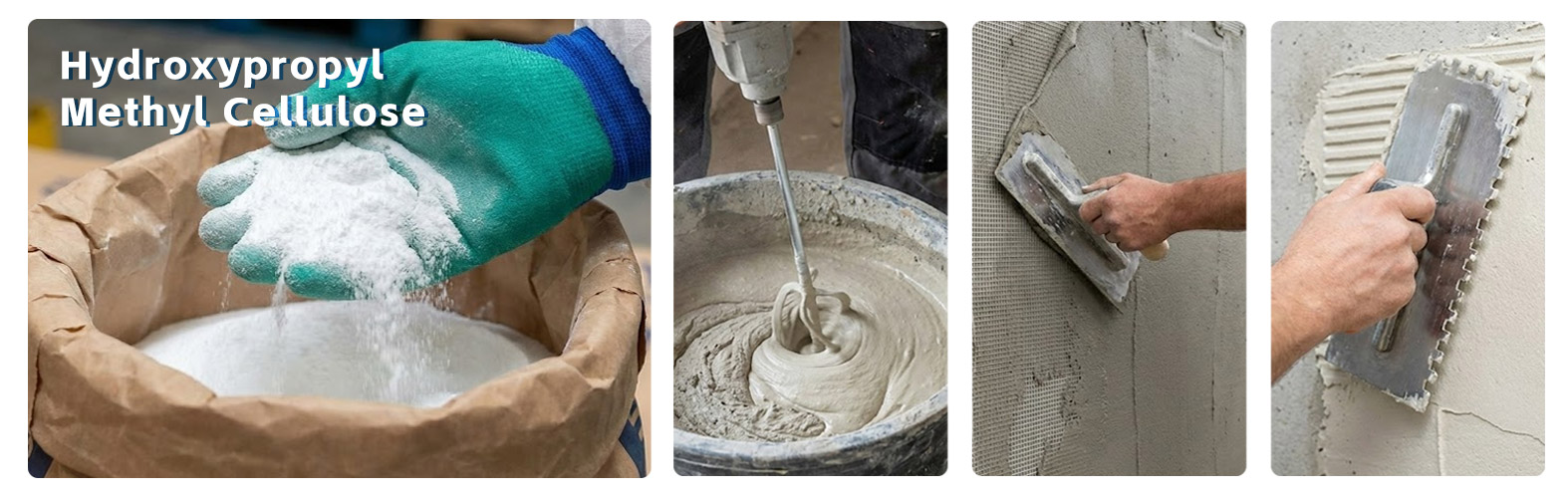


Hydroxypropyl Methyl Cellulose in Construction Applications
2025-12-24 17:42Hydroxypropyl Methyl Cellulose (HPMC) is a key cellulose ether widely used in modern construction materials, especially in dry-mix mortar systems. Acting primarily as a water retention agent and rheology modifier, HPMC plays a critical role in improving application performance, consistency, and final quality of cement-based products.
In today’s construction industry, where efficiency, stability, and surface quality are increasingly important, HPMC has become an indispensable additive in tile adhesive, plaster, wall putty, and self-leveling compounds.
Role of HPMC as a Cellulose Ether in Dry-Mix Mortar
As a cellulose ether, Hydroxypropyl Methyl Cellulose dissolves quickly in water and forms a uniform colloidal solution. When added to dry-mix mortar, HPMC significantly improves water distribution throughout the system. This controlled water retention slows down premature water loss, ensuring proper cement hydration and stable mortar performance.
In dry-mix mortar production, HPMC also contributes helps stabilize formulation consistency, making factory-controlled mortar products more reliable across different climates and construction conditions.
HPMC in Tile Adhesive Systems
Tile adhesive is one of the most important application areas for Hydroxypropyl Methyl Cellulose. In cement-based tile adhesive formulations, HPMC acts as a water retention agent that prevents water from being absorbed too quickly by substrates or tiles.
This results in:
Improved open time during tile installation
Better wetting of tile backs and substrates
More consistent bonding performance
HPMC also contributes to smoother application, allowing installers to spread tile adhesive evenly and achieve uniform thickness.
Water Retention Agent for Construction Performance
As a water retention agent, HPMC ensures that sufficient water remains available for cement hydration. This is especially important in hot, dry, or windy environments where rapid moisture loss can lead to poor adhesion and surface defects.
By regulating water movement inside dry-mix mortar, Hydroxypropyl Methyl Cellulose helps reduce surface cracking, improves curing behavior, and enhances overall construction reliability.
Compatibility and Application Flexibility
Hydroxypropyl Methyl Cellulose is compatible with common construction additives such as redispersible polymer powder, starch ether, and other functional admixtures. This makes it highly adaptable to a wide range of dry-mix mortar and tile adhesive formulations.
Whether used in interior wall putty, exterior plaster, or tile adhesive, HPMC provides stable performance and predictable results, supporting both manual and machine application methods.
Conclusion
Hydroxypropyl Methyl Cellulose is a core cellulose ether for the modern construction industry. Through its function as a water retention agent, HPMC enhances dry-mix mortar stability, improves tile adhesive workability, and ensures consistent construction quality. Its wide compatibility and proven performance make it an essential ingredient in high-quality cement-based building materials.