


MPC vs Portland Cement vs Epoxy: Which Concrete Repair Material Is Right for Your Project
2026-07-07 19:39When a structural concrete repair specification lands on your desk, three material options typically appear in the comparison: Portland cement based repair mortar, epoxy resin repair compound, and Magnesium Phosphate Cement. Each has legitimate applications. Each has performance limitations that make it the wrong choice in certain conditions. Choosing incorrectly means either paying for performance your project does not need or specifying a material that fails the application requirements and generates rework. This article compares all three on the parameters that matter most to infrastructure contractors, maintenance engineers, and construction chemical distributors across Southeast Asia, Europe, and Asia.
What Is Each Material
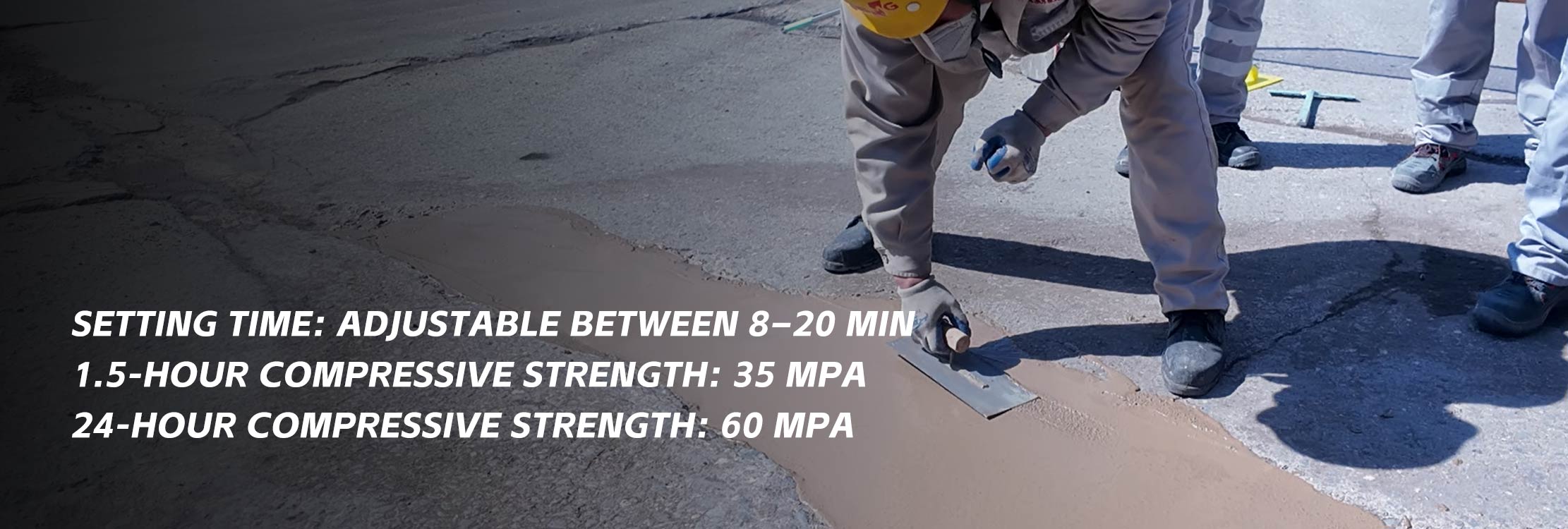
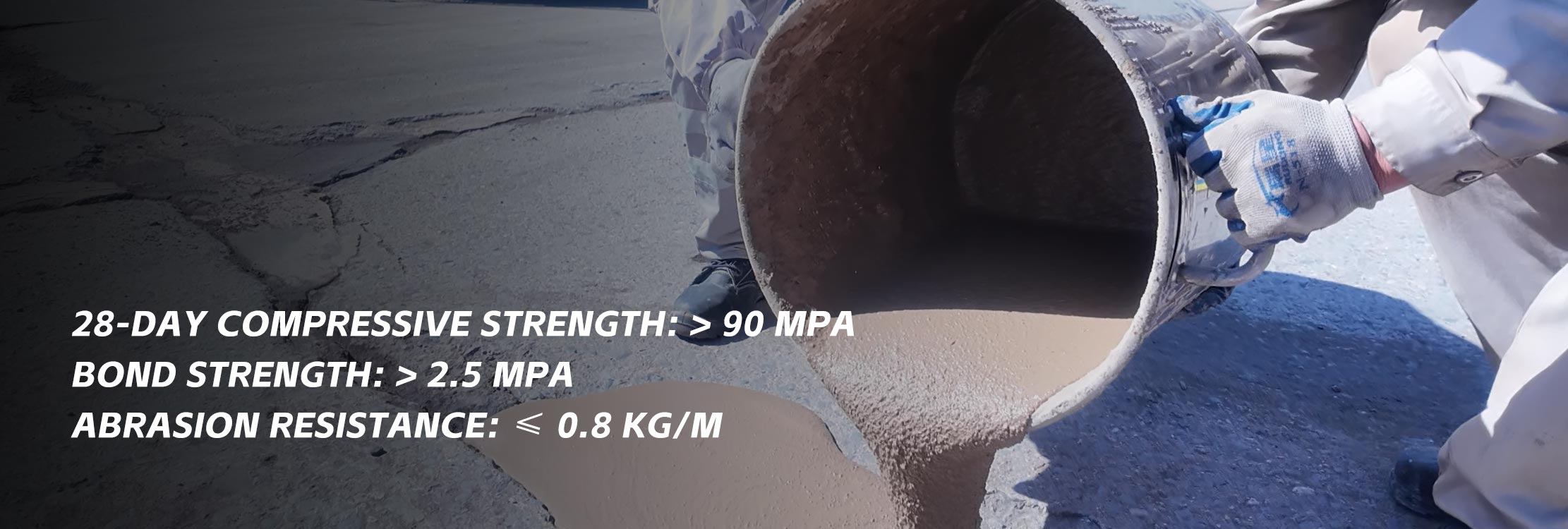
Magnesium Phosphate Cement is an inorganic rapid hardening concrete repair material formed by the acid-base reaction between magnesium oxide and monopotassium phosphate. It reaches 35 MPa at 1.5 hours, 75 MPa at 28 days, bonds to concrete at 3.5 MPa, and hardens normally at temperatures as low as minus 20 degrees Celsius.
Portland cement repair mortar is a conventional cementitious repair material based on ordinary Portland cement, sand, and polymer modifiers. It reaches 20 MPa in 24 to 48 hours and achieves bond strength of 1.0 to 1.5 MPa to existing concrete under standard conditions.
Epoxy resin repair compound is a two-component organic polymer system that cures through chemical reaction between resin and hardener. It achieves very high compressive strength of 60 to 80 MPa and bond strength to concrete of 2.0 to 3.5 MPa, but requires temperatures above 10 degrees Celsius for proper cure and softens significantly above 60 degrees Celsius.
Full Performance Comparison
| Parameter | MPC | Portland Cement Mortar | Epoxy Repair Compound |
|---|---|---|---|
| Compressive strength at 1.5 hours | 30 MPa | 2-5 MPa | 10-20 MPa |
| Compressive strength at 28 days | 75-85 MPa | 30-45 MPa | 60-80 MPa |
| Bond strength to concrete | 3.5 MPa | 1.0-1.5 MPa | 2.0-3.5 MPa |
| Minimum application temperature | -20°C | 5°C | 10°C |
| Traffic reopening time | 0.5-3 hours | 24-48 hours | 4-12 hours |
| Shrinkage behavior | Slight expansion 0.1% | Shrinks 0.04-0.08% | Low shrinkage |
| High temperature performance | Stable above 100°C | Stable | Softens above 60°C |
| Material cost | Medium-high | Low | High |
| Application complexity | Low | Low | Medium-high |
When Portland Cement Repair Mortar Is the Right Choice
Portland cement repair mortar is the correct specification when project scheduling allows 24 to 48 hours before the repaired surface returns to service, when repair volumes are large and material cost is the primary driver, and when the repair is in a protected interior environment without extreme temperature exposure or dynamic loading.
For large-volume concrete repairs on building structures, non-traffic bearing surfaces, and planned maintenance shutdowns where extended curing time is acceptable, Portland cement mortar with polymer modification delivers adequate performance at the lowest material cost of the three options. Its limitations become critical only when traffic reopening time, cold weather performance, or bond strength to the existing substrate are project constraints.
When Epoxy Repair Compound Is the Right Choice
Epoxy resin repair compound is the correct specification for thin section repairs where very high compressive and tensile strength is required in a small repair volume, for repairs to heavily loaded machine bases and equipment foundations where vibration resistance and chemical resistance are both requirements, and for bonding applications where maximum adhesive strength to steel or concrete is the primary performance criterion.
The critical limitation of epoxy in the context of MPC vs Portland cement repair mortar comparison is temperature sensitivity. Epoxy softens at temperatures above 60 degrees Celsius, which disqualifies it from repairs exposed to radiant heat, industrial process heat, or direct sun on dark surfaces in hot climates. Its two-component mixing requirement introduces application complexity and pot life constraints that slow repair operations compared to single-component MPC or Portland cement systems.
When Magnesium Phosphate Cement Is the Right Choice
Magnesium Phosphate Cement as a rapid hardening concrete repair material is the correct specification in four specific conditions where neither Portland cement nor epoxy can perform adequately.
Time-critical repairs where traffic must reopen within 1 to 3 hours are the primary application driver for MPC. Airport runways, urban highways, bridge decks, and port pavements where closure time is measured in hours rather than days require a repair material that reaches structural strength within the operational window. MPC reaches 30 MPa in 1.5 hours, allowing runway and road reopening within the time available for overnight maintenance windows.
Cold weather repair programs where ambient temperatures fall below 5 degrees Celsius eliminate Portland cement from consideration and limit epoxy to the upper end of the acceptable temperature range. MPC hardens normally at minus 20 degrees Celsius without heating equipment, making it the only practical repair material for winter maintenance operations in Northern Europe, Central Asia, and high-altitude construction markets across Asia.
High bond strength requirements for structural repairs where load transfer between new and existing concrete is critical favor MPC over Portland cement at 3.5 MPa versus 1.0 to 1.5 MPa. For bridge deck patching, expansion joint repair, and post-installed rebar anchoring in reinforced concrete structures, MPC bond performance reduces the risk of repair edge debonding under repeated dynamic loading.
Volume stable repair systems that must not shrink away from patch edges in restrained repair geometries benefit from MPC slight expansion of approximately 0.1 percent after hardening. Portland cement shrinkage of 0.04 to 0.08 percent in restrained patches generates tensile stress at patch edges that opens gaps for water entry and accelerates re-deterioration.
What epoxy vs magnesium phosphate cement comparisons consistently show is that MPC is preferable wherever the repair must be exposed to elevated temperatures, where single-component mixing simplicity matters for field operations, and where the repair substrate may have contamination that limits epoxy adhesion. Epoxy retains the advantage in applications requiring maximum chemical resistance and where temperatures remain below 50 degrees Celsius throughout service life.
Why EastChem
EastChem is a trusted fast setting structural repair material supplier providing Magnesium Phosphate Cement to infrastructure contractors, road maintenance companies, airport facility operators, and industrial maintenance teams across global markets. Our manufacturing is certified under ISO 9001, ISO 14001, and ISO 45001 systems, and our products meet REACH compliance requirements for European market access.
We supply MPC in standard and high-strength grades with complete technical documentation. Qualified buyers can request a product sample and technical data sheet before committing to a supply contract.
Contact EastChem today to request a sample, technical data sheet, or pricing for Magnesium Phosphate Cement for your structural repair requirements.
Frequently Asked Questions
Can MPC be used as a direct replacement for epoxy in all repair applications?
No. Epoxy retains performance advantages over MPC in applications requiring maximum chemical resistance, very thin section repairs below 5 mm, and bonding to steel substrates where tensile bond above 3.5 MPa is specified. MPC is preferable where high temperature resistance, single-component simplicity, cold weather performance, or rapid traffic reopening are the primary requirements.
Is MPC more expensive than Portland cement repair mortar?
MPC carries a higher material cost per kilogram than standard Portland cement repair mortar. However, total project cost comparison should include labor cost for extended traffic management, cost of repeat repairs when Portland cement fails prematurely under dynamic loading or in cold weather, and the value of reduced closure time on high-traffic infrastructure. On time-critical projects, MPC total cost is frequently lower than Portland cement when all project cost components are considered.
What surface preparation is required before MPC application?
The repair area should be saw-cut to clean vertical edges, all loose and deteriorated concrete removed by mechanical means, and the substrate dampened but not saturated with water immediately before MPC placement. Unlike epoxy, MPC does not require primer, bonding agent, or dry substrate conditions, which simplifies field preparation and reduces the number of application steps compared to epoxy repair systems.