

Case Study: Improving Tile Adhesive Performance with RDP Redispersible Polymer Powder
A tile adhesive manufacturer in Southeast Asia contacted us seeking to upgrade their C1-grade tile adhesive to meet higher bonding strength requirements while maintaining competitive production costs.
The customer was producing approximately 8,000 tons per month of dry mix tile adhesive and targeting export markets with stricter performance standards.
Their main challenge was achieving stable bonding strength without significantly increasing formulation cost.
Customer Challenges
Before optimization, the customer faced several technical issues:
Inconsistent bonding strength results
Insufficient adhesion for large-format tiles
Surface cracking after curing
High dependence on cement dosage
Increasing raw material cost pressure
Their existing formulation included a low-dosage redispersible polymer powder, but performance was unstable.
Technical Analysis
After reviewing the formulation and laboratory test data, we identified the following issues:
RDP quality variation affecting film formation
Insufficient flexibility in the mortar matrix
High water-cement ratio
Poor compatibility between RDP and other additives
It became clear that optimizing the RDP Redispersible Polymer Powder was the most efficient way to improve performance without redesigning the entire formula.
Proposed Solution
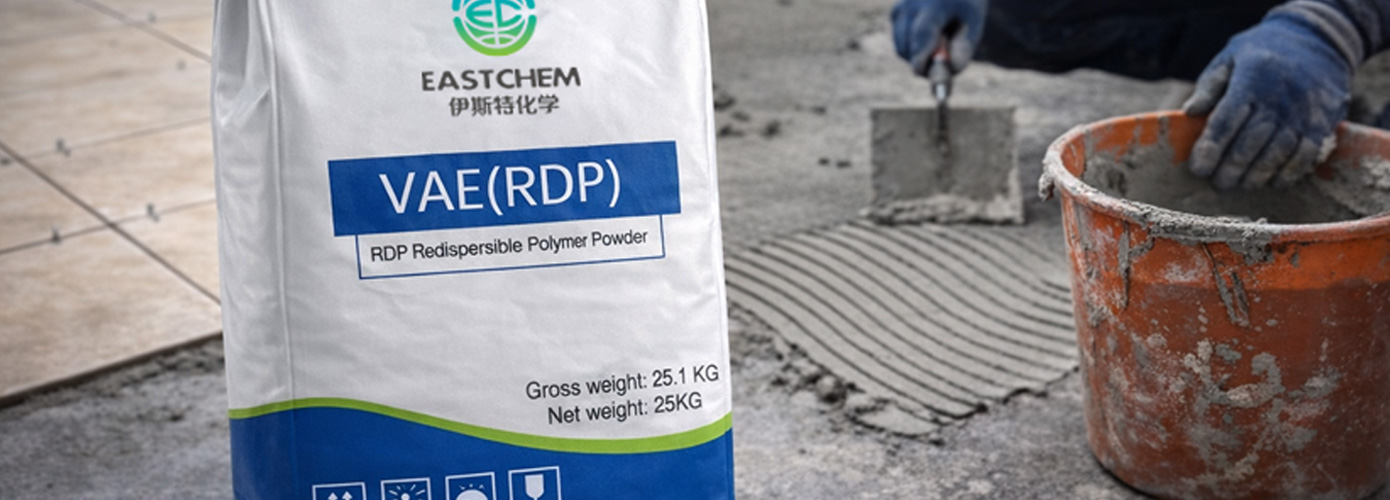
We recommended replacing their existing polymer with our high-performance RDP Redispersible Polymer Powder for Tile Adhesive, designed specifically for enhanced adhesion and flexibility.
Key technical adjustments included:
Upgrading to a higher bonding-strength RDP grade
Fine-tuning dosage level
Improving compatibility with cellulose ether
Slight reduction of cement content
No major production line modifications were required.
Performance Comparison
After reformulation and testing, the results were as follows:
| Property | Before Optimization | After Using Our RDP |
|---|---|---|
| Tensile Adhesion Strength | 0.6–0.7 MPa | 1.0–1.2 MPa |
| Open Time Adhesion | Unstable | Stable & Improved |
| Flexibility | Moderate | Significantly Improved |
| Cracking Risk | Occasional | Reduced |
| Cement Dosage | Higher | Optimized |
The new formulation successfully met higher-grade performance standards.
Field Application Results
The improved tile adhesive was applied in:
Residential housing projects
Commercial flooring installations
Large-format wall tile applications
Contractor feedback included:
Easier spreading
Better tile positioning
Reduced sagging
Improved bonding reliability
The manufacturer reported a significant reduction in customer complaints.
Economic Impact
By optimizing the RDP system:
Cement dosage was slightly reduced
Performance grade upgraded
Market selling price increased
Profit margin improved
Instead of competing on price, the customer began competing on quality.
Within six months, their monthly production increased by 20%.
Why RDP Quality Matters
This case demonstrates that Redispersible Polymer Powder quality directly affects tile adhesive performance.
High-quality RDP provides:
Stronger adhesion
Better film formation
Enhanced flexibility
Crack resistance
Long-term durability
Choosing the right RDP Supplier is not only a technical decision — it is a strategic business decision.
Conclusion
For tile adhesive manufacturers aiming to upgrade product performance while controlling cost, optimizing RDP Redispersible Polymer Powder can deliver measurable results.
This case confirms that professional technical support and stable polymer quality are key to achieving high-performance dry mix mortar systems.
If you are looking to improve your tile adhesive formulation, our technical team is ready to provide customized RDP solutions and testing support.