

Polyether Polyol Application Case in Crack-Resistant Polyurethane Coatings
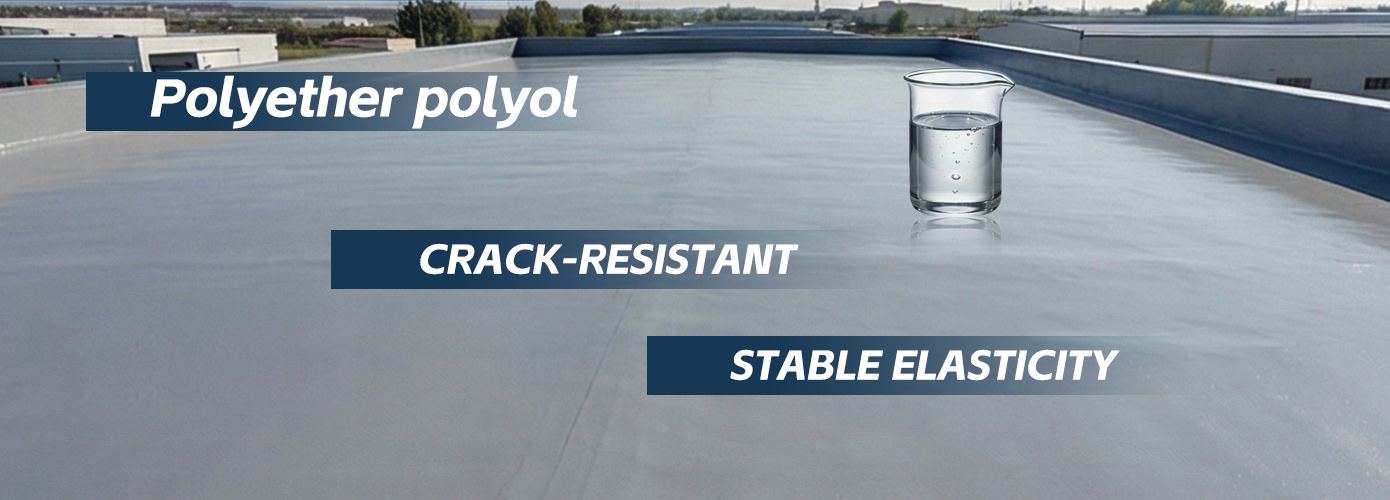
Polyether Polyol is a key raw material in polyurethane coating systems, widely used to improve flexibility, elasticity, and long-term stability. In construction coatings, one of the most common challenges is cracking caused by thermal expansion and contraction, especially in environments with large day–night or seasonal temperature differences. This case from Southeast Asia demonstrates how Polyether Polyol helps solve this issue in real projects.
Project Background
A construction coatings manufacturer in Southeast Asia was supplying polyurethane coatings for industrial roofs and exterior concrete surfaces. These structures were exposed to strong sunlight during the day and rapid cooling at night, leading to repeated thermal expansion and contraction.
Before optimization, the coating system showed:
Micro-cracks after temperature cycling
Reduced adhesion at joints and corners
Shortened service life under outdoor exposure
The manufacturer needed a formulation adjustment that could absorb thermal stress without sacrificing coating strength.
Role of Polyether Polyol in the Coating System
By adjusting the formulation and increasing the proportion of Polyether Polyol, the coating system achieved better balance between flexibility and mechanical performance.
Key technical contributions included:
Elastic Modulus Control
Polyether Polyol introduces flexible molecular chains into the polyurethane network. This lowers internal stress during expansion and contraction, allowing the coating to deform slightly instead of cracking.Improved Thermal Expansion Resistance
The flexible structure helps the coating adapt to substrate movement caused by temperature changes, significantly reducing stress concentration.Enhanced Crack Resistance Coating Performance
Even after repeated heat–cool cycles, the coating maintained surface integrity without visible cracking or peeling.Stable Adhesion to Concrete and Metal Substrates
The modified polyurethane coating maintained strong bonding, especially at edges and high-stress areas.
Application Results
After field application and seasonal exposure:
Surface cracking was visibly reduced
Coating elasticity remained stable over time
Maintenance intervals were extended
Overall coating durability improved under thermal stress
The manufacturer reported smoother application behavior and more consistent coating performance across different project conditions.
Why Polyether Polyol Matters in Thermal-Stress Coatings
In construction environments where temperature fluctuation is unavoidable, Polyether Polyol plays a critical role in designing crack-resistant polyurethane coatings. It allows coatings to “move with the substrate” rather than fail under stress, making it especially suitable for exterior walls, roofs, industrial floors, and concrete protection systems.
Our Supply Advantage
As an integrated manufacturing and trading supplier, we provide Polyether Polyol with:
Stable molecular weight distribution
Consistent reactivity for coating formulations
Reliable batch-to-batch performance
Technical support for formulation optimization
We help coating manufacturers develop polyurethane systems that perform reliably under real-world thermal expansion conditions.