


- Home
- >
News
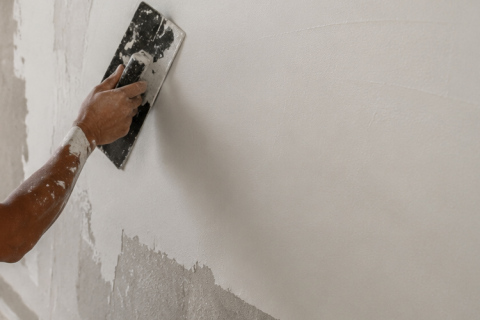
Wall putty is one of the highest-volume dry mix mortar products in residential and commercial construction markets across Southeast Asia, South Asia, and Europe. It is also one of the most competitive, with dozens of local and regional brands competing on price, workability, and surface finish quality. For wall putty manufacturers, the difference between a product that builds contractor loyalty and one that loses market share to a competitor often comes down to a single ingredient: Hydroxypropyl Methyl Cellulose.
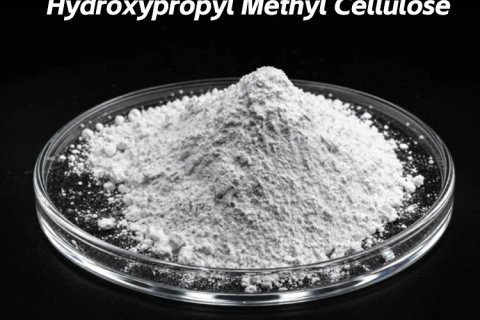
Most wall putty manufacturers select HPMC on two criteria: viscosity and price. This is understandable — viscosity is the most visible specification on any HPMC cellulose ether datasheet, and price is always a factor in a cost-sensitive product category. The problem is that viscosity alone predicts wall putty performance only partially — and in the cases where it fails to predict it, the failure shows up on a customer's wall, not in a laboratory. This article is for wall putty producers who want to understand what actually drives field performance, and what to look for in an HPMC specification beyond the viscosity number.
Gypsum plaster has displaced cement-sand render as the interior wall finishing material of choice across much of Asia, the Middle East, and Eastern Europe. Its faster setting, smoother finish, and lighter weight make it the practical preference for developers and contractors working under tight construction schedules. But gypsum is a less forgiving system than cement when it comes to additive selection. The wrong HPMC cellulose ether grade does not just reduce performance — it can actively disrupt the gypsum hydration reaction in ways that produce setting failures, surface defects, and application problems that are difficult to diagnose without understanding the underlying chemistry.
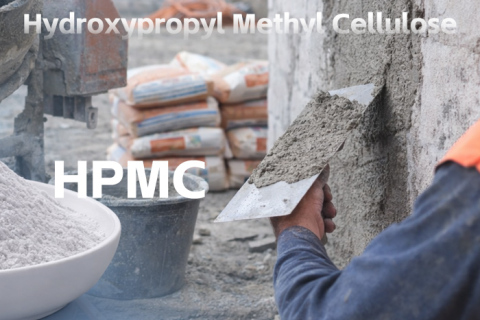
With the rapid development of modern building construction, dry-mix mortar systems such as tile adhesive, wall putty, and plaster mortar require stable workability, strong adhesion, and reliable water retention. Hydroxypropyl Methyl Cellulose HPMC has become a key functional additive to meet these performance demands.
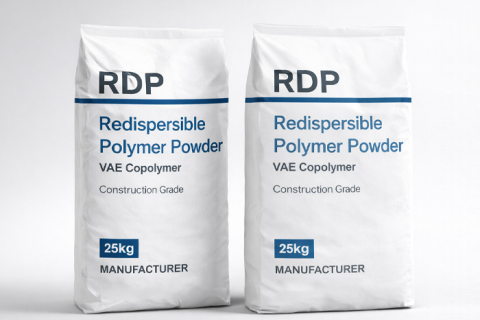
Redispersible Polymer Powder (RDP), especially VAE-based RDP, is a key functional additive in modern construction materials. As an experienced RDP manufacturer, we provide stable-quality products designed to improve adhesion, flexibility, and durability in cement-based systems used across the construction industry.

Industrial Grade Hydroxypropyl Methylcellulose (HPMC) is a versatile additive widely used in the construction materials industry. It provides exceptional performance characteristics for wall putty and tile adhesives, making it an indispensable key ingredient in these products.
VAE Re-dispersible Polymer Powder formed polymer film has good flexibility. The film is formed on the gap and surface of cement mortar particles to form a flexible connection. Thus, the brittle cement mortar becomes elastic. Mortar with redispersible emulsion powder is several times higher in tensile resistance than ordinary mortar.
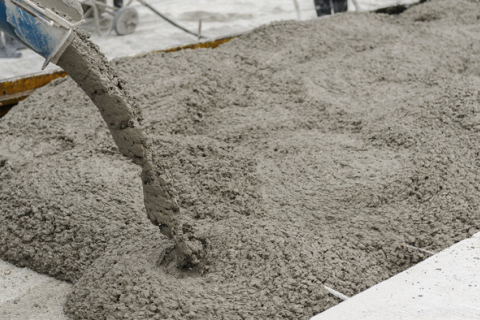
VAE Re dispersible Polymer Powder is a water-soluble redispersible powder that is a copolymer of ethylene and vinyl acetate, using polyvinyl alcohol as a protective colloid.
In recent years, with the continuous development of external insulation technology, hydroxypropyl methyl cellulose production technology progress, as well as hydroxypropyl methyl cellulose HPMC itself has excellent characteristics, hydroxypropyl methyl cellulose HPMC in the construction industry has been widely used. In order to investigate the interaction mechanism between HPMC and cement-based materials, this paper focuses on the improvement effect of HPMC on the cohesion of cement-based materials.