


Hydroxypropyl Methyl Cellulose CAS 9004-65-3: Solving the Most Common Dry Mix Mortar Failures in Construction
2026-06-08 17:09Tiles falling off walls six months after installation. Plaster cracking before the paint even goes on. Mortar that dries out before the worker finishes spreading it. These are not random site accidents. They are predictable failures that trace back to one missing or incorrectly specified ingredient in the dry mix mortar formula: Hydroxypropyl Methyl Cellulose. If your mortar, tile adhesive, or wall plaster is failing on site, this article explains exactly why HPMC powder is the solution and what to look for when sourcing it.
What Is Hydroxypropyl Methyl Cellulose
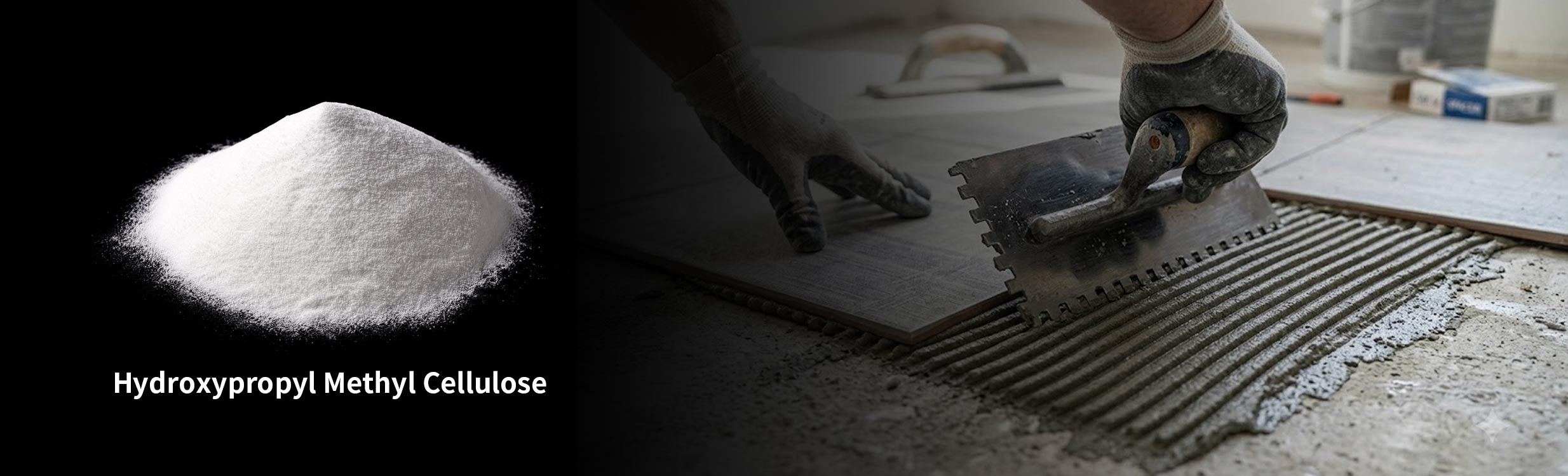
Hydroxypropyl Methyl Cellulose, universally known as HPMC powder, carries CAS number 9004-65-3. It is a non-ionic cellulose ether produced from natural cotton cellulose through alkalization and etherification with propylene oxide and methyl chloride. The result is a white, odorless powder that dissolves in cold water to form a transparent, viscous colloidal solution.
In construction applications, HPMC powder performs four critical functions simultaneously: water retention, thickening, improved workability, and adhesion enhancement. No single alternative additive replicates all four functions at once, which is why HPMC is present in virtually every high-performance dry mix mortar system produced globally.
The Four Pain Points HPMC Powder Solves
Mortar Drying Out Too Fast
This is the most universal complaint from tile setters, plasterers, and applicators working in warm and dry climates across Southeast Asia and the Middle East. Mortar mixed to the correct consistency loses workability within minutes on a hot substrate or under direct sunlight. Workers rush application to beat the drying time, resulting in poor coverage, weak bond lines, and tiles that fail under thermal cycling or load.
HPMC powder retains water within the mortar matrix by forming a film around cement particles that slows evaporation without affecting the chemical hydration process. At a dosage of 0.2 to 0.4 percent by weight of dry blend, HPMC extends the open time of tile adhesive mortar from under 10 minutes to 20 to 30 minutes depending on grade and ambient conditions. This gives applicators a controlled, predictable working window that eliminates the rushed application behavior that causes bond failures.
Tiles and Cladding Falling Off
Tile debonding is a warranty claim, a safety risk, and a reputational problem for every contractor and material supplier involved in a project. The failure mechanism is almost always insufficient bond strength between the adhesive mortar and the tile or substrate, combined with inadequate flexibility to accommodate thermal movement.
HPMC for tile adhesive mortar improves bond strength by increasing the contact area between the mortar and substrate surface through enhanced wettability and trowelability. A mortar without adequate HPMC does not spread uniformly under the tile, leaving air pockets that become debonding initiation points under load or temperature change. With correctly specified HPMC powder, tile adhesive achieves full coverage and maintains bond strength above the minimum 0.5 MPa required by EN 12004 standard for normal-use ceramic tile adhesives.
Plaster and Render Cracking After Application
Wall plaster and render that cracks during or shortly after application signals one of two problems: too much water was added to achieve workability because the mortar was too stiff, or the mortar dried unevenly due to poor water retention, creating differential shrinkage stress across the surface.
Both problems are solved by correct HPMC powder selection. The thickening function of HPMC allows formulators to achieve target application consistency at a lower water-cement ratio, reducing total shrinkage. The water retention function ensures uniform drying across the plaster surface, eliminating the differential moisture gradients that generate cracking stress. For gypsum-based plasters, HPMC grades with viscosity between 15000 and 30000 mps are typically specified. For cement-based render, grades between 30000 and 75000 mps provide the combination of workability and sag resistance required for vertical surface application.
Inconsistent Mortar Performance Between Batches
Dry mortar manufacturers and construction chemical producers in markets across India, Vietnam, Turkey, and Eastern Europe face a consistent operational problem: mortar performance varies between production batches even when the formula stays the same. The root cause is usually inconsistent HPMC powder quality from the supplier, specifically variation in viscosity grade, moisture content, or degree of substitution between deliveries.
A reliable dry mix mortar additive supplier provides HPMC powder with viscosity deviation below 10 percent from the specified grade, moisture content below 5 percent, and consistent particle size distribution for uniform dispersion in dry blending equipment. Batch-to-batch consistency in the raw material is the only way to achieve batch-to-batch consistency in the finished mortar product.
Selecting the Right HPMC Grade for Your Application
Different construction applications require different viscosity grades of Hydroxypropyl Methyl Cellulose CAS 9004-65-3. Tile adhesive for standard ceramic tiles typically uses grades between 40000 and 60000 mps. Heavy tile adhesive for large-format porcelain or natural stone requires higher viscosity grades above 60000 mps for adequate sag resistance. Wall putty and skim coat applications use grades between 10000 and 30000 mps for smooth spreadability and good surface finish. Self-leveling compounds require low-viscosity grades below 5000 mps to maintain the high flow needed for automatic leveling.
Why EastChem
EastChem is a trusted dry mix mortar additive supplier providing Hydroxypropyl Methyl Cellulose CAS 9004-65-3 to construction chemical manufacturers, dry mortar producers, and distributors in over 150 countries since 2012. Our manufacturing is certified under ISO 9001, ISO 14001, and ISO 45001 systems, and our products meet REACH compliance requirements for European market access.
Our HPMC powder range covers viscosity grades from 400 to 75000 mps in both standard and modified grades, including anti-sag modified grades for heavy tile adhesive and extended open time grades for hot climate applications across Southeast Asia and the Middle East. Active content, viscosity consistency, and moisture content are tested on every production batch before shipment.
Contact EastChem today to request a free sample of HPMC for tile adhesive mortar, technical data sheet, or factory pricing for your specific application and target market.