


VPEG-2400 and HPEG-2400: The Polycarboxylate Superplasticizer Monomer Guide for Concrete Admixture Manufacturers
2026-06-06 20:03If you are producing polycarboxylate superplasticizer and your finished product is inconsistent in water reduction rate, losing slump retention performance, or failing to meet the technical specifications your customers demand, the problem likely starts at the monomer selection stage. VPEG-2400 and HPEG-2400 are the two most widely used polycarboxylate superplasticizer monomer types for PCE synthesis, and understanding the difference between them determines the performance ceiling of every batch of admixture you produce.
What Are VPEG-2400 and HPEG-2400
Both VPEG-2400 and HPEG-2400 are polyether macromonomers with a molecular weight of 2400. They serve as the primary raw material in the free radical copolymerization process used to synthesize polycarboxylate superplasticizer. The number 2400 refers to the molecular weight of the polyethylene glycol side chain, which directly influences the steric hindrance effect of the finished PCE polymer and therefore its dispersing and slump retention performance in concrete.
HPEG-2400, also known as polyoxyethylene methallyl ether, has the chemical structure CH2=C(CH3)CH2O(CH2CH2O)nH with n between 10 and 60. It is synthesized from methallyl alcohol and ethylene oxide. The methallyl group provides moderate reactivity in free radical polymerization, producing a PCE with good initial dispersing effectiveness and workable viscosity at standard dosage levels.
VPEG-2400, also known as Vinyl Polyethylene Glycol 2400 or 4-hydroxybutyl vinyl polyethylene glycol ether, contains a vinyl functional group that offers higher reactivity in free radical copolymerization compared to the methallyl group in HPEG. This higher reactivity translates into a more uniform molecular weight distribution in the finished PCE polymer, which produces more consistent concrete performance across batches and cement types.
Both monomers are water soluble, non-toxic, and produce PCE admixtures that are environmentally friendly with no heavy metals, no chloride content, and low alkali levels.
Why Monomer Quality Determines Your PCE Performance
Concrete admixture manufacturers who source polycarboxylate superplasticizer monomer from inconsistent suppliers face a predictable set of problems. Double bond retention rate below 98 percent reduces the effective monomer available for polymerization, lowering the active content of the finished PCE and requiring higher dosages to achieve target water reduction rates. Inconsistent molecular weight distribution between batches produces PCE with variable performance, forcing your quality control team to adjust dosage recommendations for every production run. High residual moisture content in flake-form monomer disrupts the polymerization ratio and produces PCE with unpredictable slump loss behavior.
These are not minor quality variations. In concrete production, a PCE that loses effectiveness 30 minutes earlier than expected can cause a ready-mix truck to deliver concrete that is too stiff to pump or place, resulting in rejected loads, project delays, and damaged customer relationships for the admixture supplier.
Key Performance Advantages of VPEG-2400 and HPEG-2400 in PCE Synthesis
Water Reduction Rate
PCE synthesized from quality-grade VPEG-2400 or HPEG-2400 monomer achieves water reduction rates of 25 to 40 percent in standard concrete mixes. This is significantly higher than the 15 to 20 percent achievable with older generation naphthalene-based superplasticizers and requires dosages of only 0.1 to 0.3 percent by weight of cement to achieve full effect.
Slump Retention
The polyethylene glycol side chain with molecular weight 2400 provides a steric hindrance layer around cement particles that maintains workability for 60 to 120 minutes after mixing. For ready-mix concrete producers serving large urban construction markets across Southeast Asia and South Asia, where transit times regularly exceed 45 minutes, this slump retention performance is a primary specification requirement.
Low Dosage and High Efficiency
Because VPEG-2400 and HPEG-2400 produce PCE polymers with high active content and uniform molecular weight distribution, the finished admixture requires lower addition rates to achieve equivalent performance compared to PCE made from lower-grade monomers. This directly reduces the cost per cubic meter of concrete for your customers, which is a competitive advantage in price-sensitive markets including India, Vietnam, Indonesia, and Turkey.
Compatibility with Diverse Cement Types
PCE produced from VPEG-2400 or HPEG-2400 demonstrates broad compatibility with ordinary Portland cement, slag cement, fly ash blended cement, and sulfate-resistant cement. This compatibility range matters for admixture manufacturers supplying multiple markets with different standard cement types, as it reduces the need for market-specific formulation variants.
Synthesis Conditions
Both monomers can be polymerized with acrylic acid under a redox initiation system at temperatures below 60 degrees Celsius. This low-temperature synthesis process reduces energy consumption per batch, requires no specialized high-temperature reactor equipment, and allows production scale-up without significant capital investment. The reaction time from monomer to finished PCE is typically 3 to 5 hours depending on target molecular weight and solid content.
Applications of PCE Made from VPEG-2400 and HPEG-2400
PCE admixture synthesized from these monomers serves as a concrete water reducer raw material input for a wide range of construction applications. Ready-mix concrete plants use it as a standard water-reducing admixture for structural concrete across all strength grades. Precast concrete manufacturers use PCE for accelerated strength development and early demolding. Self-compacting concrete producers use it to achieve the high fluidity and segregation resistance required for complex formwork. Dry mortar manufacturers incorporate PCE powder into tile adhesive and self-leveling compound formulations for improved workability and water demand reduction.
For construction chemical distributors in Southeast Asia, Europe, and the broader Asian market, PCE made from VPEG-2400 and HPEG-2400 represents the upstream raw material basis for the fastest-growing segment of the global concrete admixture market.
Why EastChem
EastChem is a trusted PCE monomer supplier serving polycarboxylate superplasticizer manufacturers, construction chemical producers, and concrete admixture distributors in over 150 countries since 2012. Our manufacturing is certified under ISO 9001, ISO 14001, and ISO 45001 systems, and our products meet REACH compliance requirements for European market access.
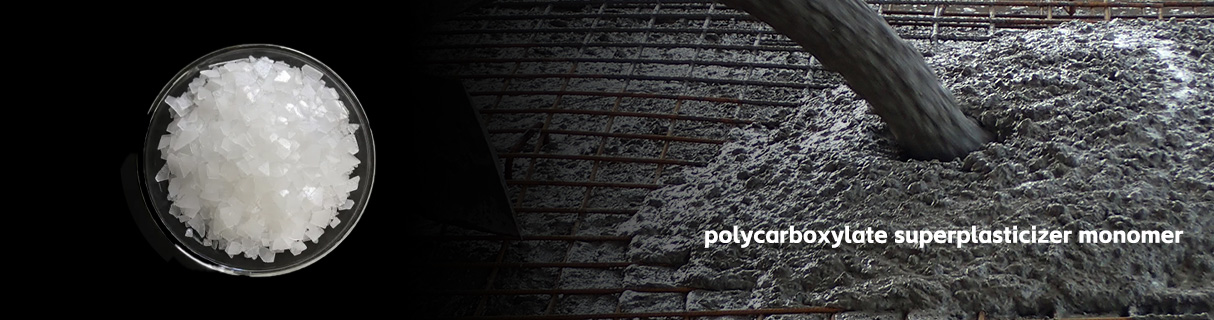
We supply VPEG-2400 and HPEG-2400 with double bond retention rate above 98 percent, consistent molecular weight at 2400, and low moisture content to ensure stable polymerization performance in your production process. Both products are available in flake and liquid forms to suit your synthesis setup and storage conditions.
Our technical team provides synthesis guidance, dosage recommendations, and compatibility evaluation support as standard. Qualified buyers can request a sample of VPEG-2400 or HPEG-2400 before committing to a supply contract.
Contact EastChem today to request specifications, pricing, or a free sample of our polycarboxylate superplasticizer monomer for your PCE production.