


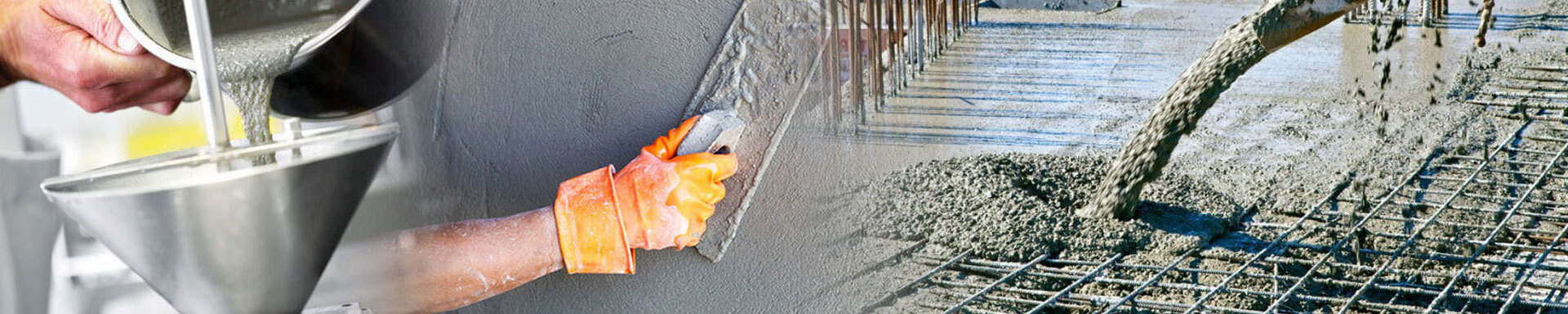
What Is Lithium Carbonate and Why Is It Used as a Cement Accelerator in Construction
2026-06-20 18:51Lithium Carbonate, carrying CAS number 554-13-2, is an inorganic lithium salt with the chemical formula Li2CO3. In construction chemistry, it functions as a lithium carbonate cement accelerator by speeding up the hydration reaction between cement and water, promoting early formation of calcium silicate hydrate phases that give cementitious systems their strength. The result is faster setting time, higher early compressive strength, and shorter waiting time before a repaired or newly placed surface can return to service.
Lithium carbonate is primarily used in construction chemistry as an accelerator in cementitious systems, increasing the reaction speed in the production and application of fast-setting cements, screeds, plasters, mortars, and tile adhesives. For construction chemical manufacturers and dry mortar producers across Southeast Asia, Europe, and Asia, it solves one of the most persistent operational problems in construction: the time gap between material placement and usable strength.
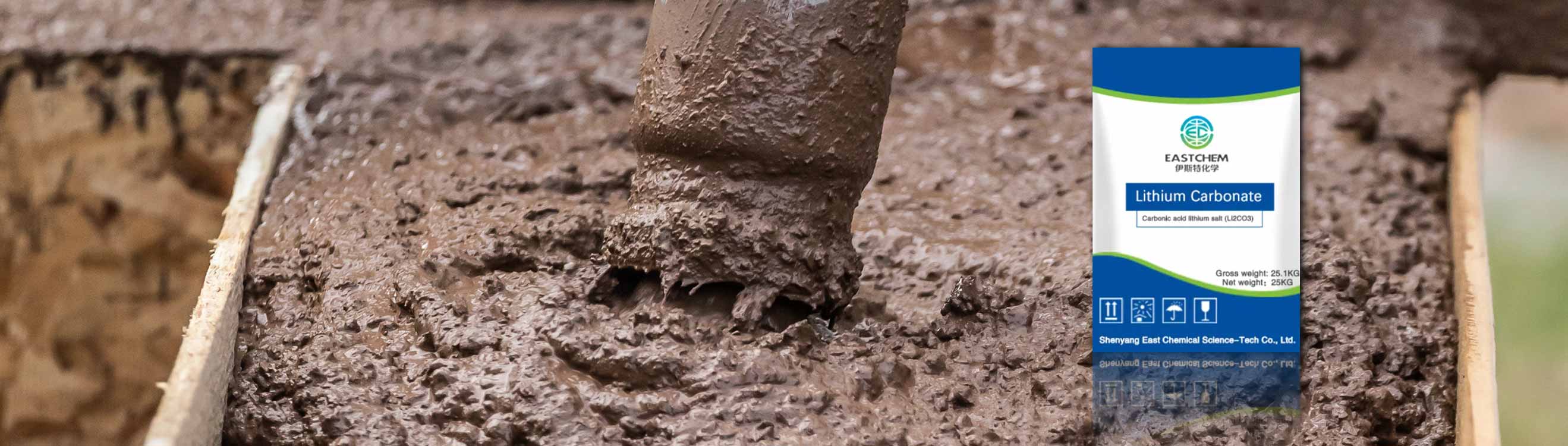
What Problems Does Lithium Carbonate Solve in Construction
Construction sites and dry mortar production facilities face three recurring problems that lithium carbonate directly addresses.
Setting Time Too Slow for Operational Requirements
Standard Portland cement mortar reaches initial set in 45 to 90 minutes and requires 24 hours or more to achieve handling strength. For fast-turnaround applications including airport runway repair, floor screed in occupied buildings, tile adhesive in commercial fit-out projects, and shotcrete in tunnel construction, this setting speed is operationally unacceptable. Every hour of extended setting time is lost working time, delayed project handover, or extended traffic closure.
Lithium carbonate cement accelerator at dosages of 0.1 to 0.5 percent by weight of cementitious content reduces initial setting time to 10 to 30 minutes depending on cement type, temperature, and dosage level. This accelerated setting allows floor screeds to accept foot traffic within 2 to 4 hours, tile adhesive to reach handling strength within 1 to 3 hours, and repair mortars to return to service within 30 to 60 minutes of placement.
Alkali Silica Reaction Risk from Conventional Accelerators
Many conventional cement accelerators contain sodium or potassium alkalis, which contribute to alkali silica reaction in concrete containing reactive silica aggregates. Alkali silica reaction causes progressive expansion and cracking of concrete structures over months and years, undermining structural integrity and producing expensive repair requirements long after the original construction is complete.
Lithium carbonate contains no sodium or potassium alkalis, which are known to promote alkali silica reaction in cementitious systems that contain reactive silica minerals, and it actively helps suppress the ASR reaction in concrete. For construction projects in markets where reactive aggregates are common, this property makes lithium carbonate the preferred accelerator over sodium and potassium-based alternatives.
Inconsistent Setting Across the Mix
Some accelerators produce uneven setting where material near the surface sets faster than the interior, creating differential strength development and internal stress. Lithium carbonate provides a uniform set throughout the mix, which is not achievable with competitive materials or broader particle size accelerators. This uniformity is particularly valuable in self-leveling compounds, shotcrete, and precast applications where consistent strength development across the entire cross-section is a quality requirement.
Key Construction Applications of Lithium Carbonate CAS 554-13-2
| Application | Function | Typical Dosage |
|---|---|---|
| Fast setting cement and grout | Reduces initial set from 60-90 min to 10-30 min | 0.1-0.5% by weight of cement |
| Self-leveling floor screed | Accelerates early strength, allows earlier floor covering installation | 0.1-0.3% by weight of dry blend |
| Tile adhesive mortar | Reduces open time to controlled working window, increases early bond strength | 0.05-0.2% by weight of dry blend |
| Shotcrete and gunite | Rapid set for tunnel lining and slope stabilization without alkali risk | 0.2-0.5% by weight of cement |
| Repair mortar | Fast return to service for road, runway, and structural repair | 0.1-0.4% by weight of cement |
| Waterproofing slurry | Accelerated crystallization of waterproofing compounds | 0.1-0.3% by weight of dry blend |
How Does Lithium Carbonate Accelerate Cement Hydration
Lithium carbonate accelerates cement hydration by releasing lithium ions into the mix water, which interact with aluminate phases in cement to promote rapid nucleation and growth of calcium silicate hydrate crystals. This mechanism is distinct from calcium chloride acceleration, which works through a different ionic pathway and introduces chloride that can corrode embedded steel reinforcement over time.
Lithium carbonate produces no chloride content and no harmful byproducts in the hydration reaction, making it suitable for reinforced concrete applications where chloride-induced corrosion is a design concern. This is a significant practical advantage over calcium chloride-based accelerators in markets where reinforced concrete repair and shotcrete applications require non-corrosive admixture specifications.
What Is the Effect of Temperature on Lithium Carbonate Performance
Lithium carbonate cement accelerator performance is temperature-dependent, as is all cementitious chemistry. At lower temperatures below 10 degrees Celsius, a higher dosage within the recommended range is required to maintain the target setting time. At temperatures above 30 degrees Celsius, dosage should be reduced or combined with appropriate retarder to prevent flash set. For dry mortar manufacturers producing products for diverse climate markets, this temperature sensitivity should be addressed in product technical data sheets with dosage guidance specific to the application temperature range.
Why Is Particle Size Important for Lithium Carbonate in Construction
Particle size directly affects the reactivity and dissolution rate of lithium carbonate in cementitious systems. Finer particle size provides greater surface area per gram, faster dissolution in mix water, and more uniform distribution of lithium ions throughout the cementitious matrix. This translates to more controlled and consistent accelerating effect across the mix. For fast setting mortar additive for construction applications where setting time consistency is critical, lithium carbonate with controlled particle size distribution delivers more predictable performance than broad-distribution technical grades.
Why EastChem
EastChem is a trusted lithium carbonate construction chemical supplier providing Lithium Carbonate CAS 554-13-2 to construction chemical manufacturers, dry mortar producers, and concrete admixture formulators across global markets. Our manufacturing is certified under ISO 9001, ISO 14001, and ISO 45001 systems, and our products meet REACH compliance requirements for European market access.
We supply lithium carbonate in controlled particle size grades suited for construction chemistry applications including fast-setting cement, self-leveling compound, tile adhesive, shotcrete, and repair mortar formulations. Purity, particle size distribution, and moisture content are tested on every production batch before shipment. Technical data sheets and dosage guidance for specific applications are provided as standard.
Contact EastChem today to request a free sample, technical data sheet, or pricing for Lithium Carbonate CAS 554-13-2 for your construction chemical formulation.
Frequently Asked Questions
What is the typical dosage of lithium carbonate as a cement accelerator?
Dosage ranges from 0.05 to 0.5 percent by weight of cementitious content depending on the application and target setting time. Self-leveling compounds and tile adhesive use lower dosages of 0.05 to 0.2 percent, while fast-setting repair mortar and shotcrete use higher dosages of 0.2 to 0.5 percent. Dosage should always be adjusted based on cement type, ambient temperature, and target setting time through trial mixing before full production.
Does lithium carbonate cause alkali silica reaction in concrete?
No. Lithium carbonate contains no sodium or potassium alkalis and does not contribute to alkali silica reaction. It is one of the few accelerators that can be safely used in concrete containing reactive silica aggregates, and research shows it actively suppresses ASR expansion rather than promoting it.
Can lithium carbonate be combined with other admixtures?
Yes. Lithium carbonate is typically used in combination with other dry mortar additives including HPMC for water retention, RDP powder for flexibility, and retarders for working time control in self-leveling and tile adhesive applications. Compatibility testing with specific formulations is recommended before full production to confirm that the combination of admixtures produces the target performance profile.
How should lithium carbonate be stored?
Lithium carbonate should be stored in a dry environment in sealed original packaging. It is hygroscopic and absorbs moisture from the air if left exposed, which can cause caking and reduce dissolution rate in mix water. Shelf life under proper storage conditions is 24 months.