


Why Your Tile Adhesive Is Failing in Hot Weather — And How HPMC Fixes It
2026-05-14 17:50If you are manufacturing tile adhesive for markets where summer temperatures exceed 35°C, and your contractors are reporting open time complaints, tile slippage, or adhesion failures on large-format installations — the problem is almost certainly your HPMC specification. Not your cement content. Not your aggregate grading. Your HPMC.
This article explains why, and what the correct specification looks like.
The Problem Every Tile Adhesive Manufacturer in a Hot Climate Faces
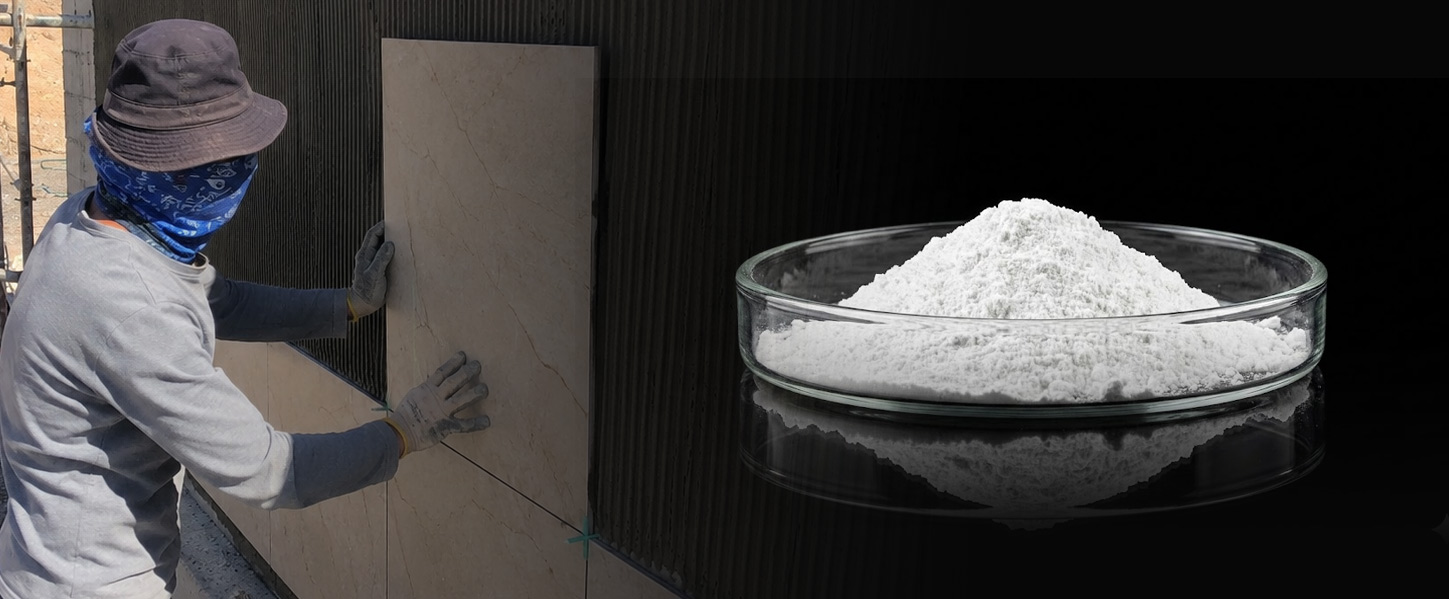
Tile adhesive applied to a sun-exposed masonry wall at 40°C ambient temperature loses its mixing water faster than the cement can hydrate. The substrate draws water from one side. Evaporation takes it from the other. Within 15 to 20 minutes of application, the adhesive stiffens to the point where tile repositioning is no longer possible and the bond layer has not developed anywhere near its design strength.
The result is predictable: contractors rush, tiles are placed without proper adjustment, large-format porcelain slides before the adhesive grabs, and bond failures appear within months as the under-hydrated cement matrix crumbles under thermal cycling.
HPMC — Hydroxypropyl Methyl Cellulose — is the additive that prevents this. Its polymer network in the aqueous phase of the fresh adhesive physically slows water migration to the substrate and evaporation from the surface, keeping the cement hydration reaction active long enough to build real adhesion strength. But only if the grade is correctly specified for the temperature conditions the product will actually encounter on site.
What Most Manufacturers Get Wrong
The single most common HPMC specification error in tile adhesive formulation is selecting a grade based on viscosity and price without verifying gel temperature.
HPMC 9004-65-3 is a thermally gelling polymer. Above a critical temperature — its gel point — it transitions from a dissolved, viscous state to a gel that can no longer function as a water retention agent. Standard construction grade HPMC has a gel temperature of approximately 58 to 62°C. Masonry wall surface temperatures in tropical and subtropical markets regularly exceed 60°C in direct afternoon sun. At these temperatures, HPMC water retention mortar performance collapses at the substrate interface — precisely where retention matters most — and the adhesive behaves as if no HPMC had been added at all.
The specification requirement for hot-climate tile adhesive is a gel temperature above 70°C — verified on the COA with every shipment. This is not a premium product feature. It is the minimum requirement for HPMC for tile adhesive that will be applied in markets where substrate surface temperatures can reach 60 to 65°C.
The Three HPMC Parameters That Determine Tile Adhesive Performance
Viscosity grade. For tile adhesive, 100,000 to 200,000 mPa·s produces the water retention and open time performance required for standard and large-format tile installation. Below 100,000 mPa·s, open time is insufficient in hot conditions. Above 200,000 mPa·s, workability becomes stiff and application effort increases without proportional performance benefit.
Gel temperature. As discussed above — must be above 70°C for any application in climates where substrate surface temperatures exceed 60°C. Non-negotiable.
Substitution consistency. Methoxyl and hydroxypropyl substitution levels determine gel temperature, solubility profile, and water retention efficiency. Batch-to-batch variation in substitution parameters produces inconsistent open time and workability even when viscosity measurements appear stable — the most common cause of unexplained quality complaints from contractors who are using the same formulation and application technique across different production batches.
Technical Reference
| Parameter | Specification |
|---|---|
| Chemical Name | Hydroxypropyl Methyl Cellulose |
| CAS Number | 9004-65-3 |
| Viscosity (2%, 20°C) | 100,000–200,000 mPa·s |
| Gel Temperature | ≥70°C |
| Methoxyl Content | 28–30% |
| Hydroxypropyl Content | 7–12% |
| Moisture Content | ≤5% |
| Recommended Dosage | 0.25–0.40% of dry mix |
What Correct HPMC Specification Delivers
| Performance Indicator | Standard Grade (58°C Gel) | Correct Grade (≥70°C Gel) |
|---|---|---|
| Open Time at 40°C | 12–18 min | 30–40 min |
| Water Retention Rate | 82–88% | ≥95% |
| Bond Strength (heat aged) | 0.4–0.6 N/mm² | ≥1.0 N/mm² |
| Large-Format Slip Resistance | Poor | Good |
| Batch Consistency | Variable | Stable |
The bond strength figure after heat aging is the most important data point for specifiers. EN12004 C2TE classification requires tensile adhesion above 1.0 N/mm² after heat aging at 70°C for 14 days — a test condition that directly simulates the thermal stress a facade tile adhesive experiences over years of service. Standard HPMC grades routinely fail this test. Correctly specified HPMC water retention mortar grades pass it consistently.
Why We Supply Differently
Every shipment of our HPMC for tile adhesive includes a full COA confirming viscosity, gel temperature, moisture content, and methoxyl and hydroxypropyl substitution levels — verified against agreed tolerance ranges on that specific production batch. If substitution parameters fall outside specification, the batch does not ship.
For tile adhesive manufacturers who have been experiencing hot-weather open time complaints or heat-aged bond strength failures and have not yet reviewed their HPMC 9004-65-3 specification in detail, this is where the investigation should start.