


- Home
- >
News
Hydroxyethyl Methyl Cellulose (HEMC) is an important cellulose ether widely used in dry mix mortar formulations. In tile adhesive systems, HEMC Powder acts as a multifunctional additive that improves water retention, workability, and adhesion performance. Tile adhesive requires stable consistency, sufficient open time, and strong bonding strength to ensure proper installation of ceramic or porcelain tiles. Construction Grade HEMC plays a critical role in achieving these performance requirements by optimizing mortar rheology and hydration behavior.
With the rapid development of infrastructure projects, residential housing, and commercial buildings worldwide, the demand for high-performance dry mix mortar additives continues to increase. Among these additives, HPMC (Hydroxypropyl Methyl Cellulose) plays a critical role in improving workability, water retention, and construction efficiency.
With the rapid development of modern construction systems, higher performance requirements are being placed on dry mix mortar, tile adhesive, and EIFS rendering systems. As a key functional additive, Redispersible Polymer Powder plays a critical role in improving bonding strength, flexibility, and durability.
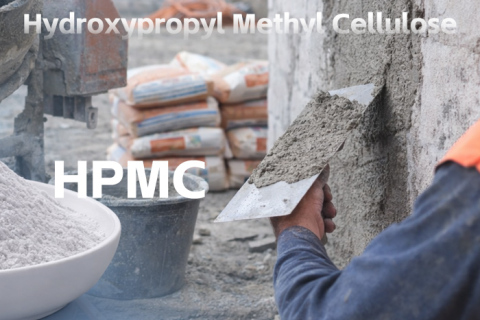
With the rapid development of modern building construction, dry-mix mortar systems such as tile adhesive, wall putty, and plaster mortar require stable workability, strong adhesion, and reliable water retention. Hydroxypropyl Methyl Cellulose HPMC has become a key functional additive to meet these performance demands.
In tile adhesive applications, sagging during application and short open time are persistent challenges for many construction material manufacturers and contractors. This is especially true for vertical installations, large-format tiles, and high-temperature environments, where tiles are prone to slipping and adjustment time is limited, directly affecting both construction efficiency and final bonding quality.
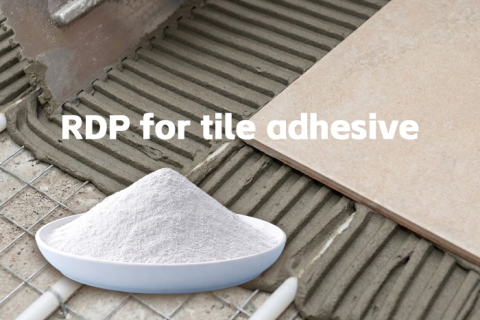
Unlike standard environments, heated floors subject the adhesive layer to constant thermal expansion and contraction. Without the intervention of a high-performance flexible tile adhesive additive, the rigid bond between the substrate and materials like granite or ceramics is prone to shear failure, leading to "hollow" tiles or catastrophic debonding.
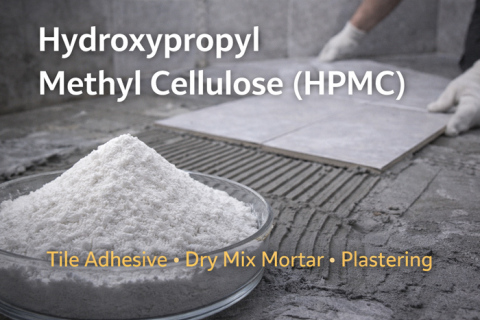
Hydroxypropyl Methyl Cellulose (HPMC) is a widely used cellulose ether in the construction industry. It plays a vital role in improving workability, water retention, and consistency of cement-based and gypsum-based materials. As a key HPMC for construction, it is commonly applied in tile adhesive, dry mix mortar, wall putty, plastering mortar, and self-leveling systems.
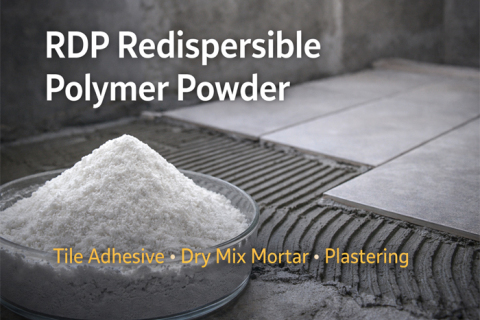
RDP Redispersible Polymer Powder is a key functional additive widely used in modern dry mix mortar systems. It significantly improves adhesion, flexibility, and durability of cement-based materials. In applications such as tile adhesive, wall putty, plaster mortar, and repair mortar, redispersible polymer powder for construction plays a critical role in enhancing overall performance and long-term reliability.
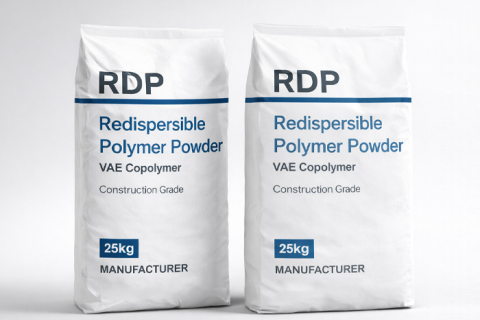
Redispersible Polymer Powder (RDP), especially VAE-based RDP, is a key functional additive in modern construction materials. As an experienced RDP manufacturer, we provide stable-quality products designed to improve adhesion, flexibility, and durability in cement-based systems used across the construction industry.
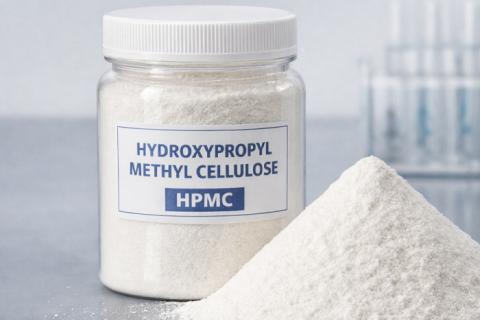
In modern construction, tile adhesive and cement-based mortars often dry too quickly, especially in hot or dry environments. This leads to major challenges for contractors and manufacturers:
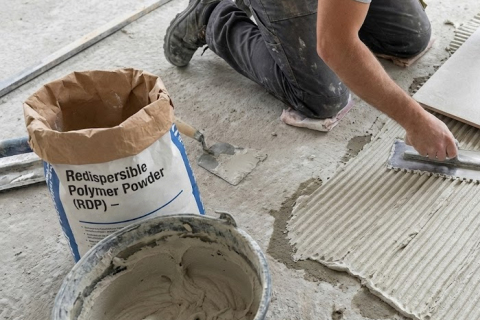
Redispersible Polymer Powder (RDP) is one of the most important polymer additives used in modern dry-mix mortar systems. It plays a key role in improving overall mortar performance, especially in tile adhesive mortar, repair mortars, and exterior wall systems.

Hydroxypropyl Methyl Cellulose (HPMC) is a key cellulose ether widely used in modern construction materials, especially in dry-mix mortar systems. Acting primarily as a water retention agent and rheology modifier, HPMC plays a critical role in improving application performance, consistency, and final quality of cement-based products.