


- Home
- >
News
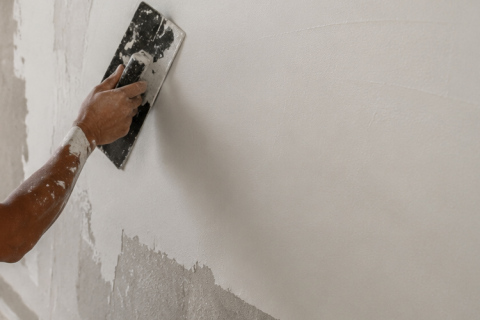
Wall putty is one of the highest-volume dry mix mortar products in residential and commercial construction markets across Southeast Asia, South Asia, and Europe. It is also one of the most competitive, with dozens of local and regional brands competing on price, workability, and surface finish quality. For wall putty manufacturers, the difference between a product that builds contractor loyalty and one that loses market share to a competitor often comes down to a single ingredient: Hydroxypropyl Methyl Cellulose.
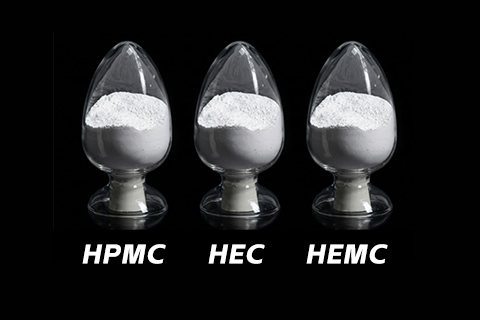
Walk into any dry mix mortar formulation discussion and the same question comes up repeatedly: should this product use HPMC, HEC, or HEMC? All three are cellulose ethers, all three provide water retention and thickening, and all three are sold by suppliers claiming their grade is the best fit. For dry mortar manufacturers and construction chemical formulators across Southeast Asia, Europe, and Asia, choosing the wrong cellulose ether means reformulation, wasted trial batches, and finished products that underperform in the field. This article explains the real chemical differences between Hydroxypropyl Methyl Cellulose, Hydroxyethyl Cellulose, and Hydroxyethyl Methyl Cellulose, and which one fits which application.
A self-leveling compound that bubbles, cracks, or fails to flow evenly across the floor surface is not a minor inconvenience. It means ripping out the entire pour, grinding the substrate, and starting over. For flooring contractors and dry mortar manufacturers across Southeast Asia, Europe, and Asia, the cost of a failed self-leveling pour is measured in wasted material, lost labor, project delays, and damaged customer relationships. In most cases, the failure traces back to one incorrectly specified or inconsistently supplied ingredient: Hydroxypropyl Methyl Cellulose.
If you are formulating dry mix mortar for markets where summer ambient temperatures regularly exceed 35°C — and you have been using HPMC cellulose ether as your standard water retention agent — there is a performance argument for HEMC that most formulators have not fully evaluated.
Most wall putty manufacturers select HPMC on two criteria: viscosity and price. This is understandable — viscosity is the most visible specification on any HPMC cellulose ether datasheet, and price is always a factor in a cost-sensitive product category. The problem is that viscosity alone predicts wall putty performance only partially — and in the cases where it fails to predict it, the failure shows up on a customer's wall, not in a laboratory. This article is for wall putty producers who want to understand what actually drives field performance, and what to look for in an HPMC specification beyond the viscosity number.
Self-leveling compound is one of the few dry mix mortar products where getting the HPMC specification wrong produces an immediate, visible failure — not one that takes months to appear. Too much viscosity and the compound does not self-level. Too little and it flows but bleeds, segregates, and produces a weak, dusty surface. The margin between these two failure modes is narrow, and Hydroxypropyl Methyl Cellulose is the additive that defines where that margin sits.
In dry mix mortar production, most performance problems are invisible until they appear on a construction site. Cracking that shows up three weeks after application. Tiles that delaminate six months after installation. Render that dusts off under finger pressure. These failures rarely trace back to cement quality or aggregate grading. In the majority of cases, they trace back to HPMC cellulose ether — either the wrong grade, the wrong dosage, or an inconsistent supply that performed differently batch to batch without anyone catching it at the production stage.
Gypsum plaster has displaced cement-sand render as the interior wall finishing material of choice across much of Asia, the Middle East, and Eastern Europe. Its faster setting, smoother finish, and lighter weight make it the practical preference for developers and contractors working under tight construction schedules. But gypsum is a less forgiving system than cement when it comes to additive selection. The wrong HPMC cellulose ether grade does not just reduce performance — it can actively disrupt the gypsum hydration reaction in ways that produce setting failures, surface defects, and application problems that are difficult to diagnose without understanding the underlying chemistry.
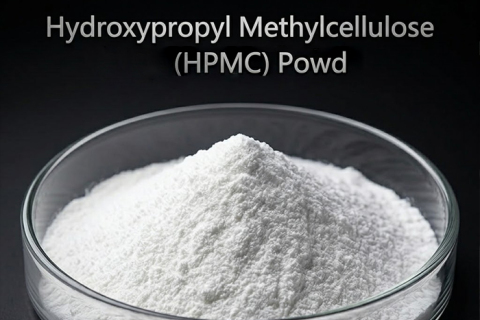
Tile adhesive looks simple on paper. Cement, sand, a few additives, mix with water. But anyone who has watched a large-format tile slide down a wall thirty minutes after installation knows that the chemistry underneath matters enormously. The additive that makes or breaks tile adhesive performance in real construction conditions is HPMC cellulose ether — and not all grades perform the same way.
This article explores how these three additives function individually, how they interact within a mortar system, and why their combined use delivers results that no single component can achieve alone.
Self-leveling mortar is widely used in modern construction to create smooth and level flooring surfaces before installing tiles, vinyl flooring, or wooden floors. However, cracking is a common issue that may affect the durability of flooring systems. Understanding the causes of cracking and using proper additives such as Hydroxypropyl Methyl Cellulose HPMC can significantly improve mortar performance.
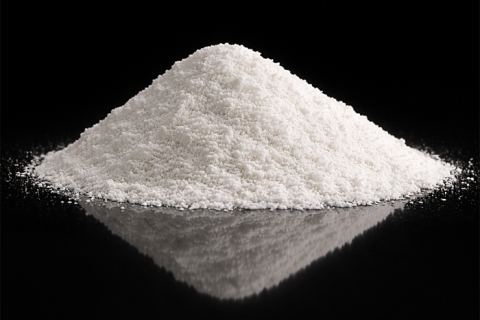
Hydroxyethyl Methyl Cellulose (HEMC) is an important cellulose ether widely used in dry mix mortar formulations. In tile adhesive systems, HEMC Powder acts as a multifunctional additive that improves water retention, workability, and adhesion performance. Tile adhesive requires stable consistency, sufficient open time, and strong bonding strength to ensure proper installation of ceramic or porcelain tiles. Construction Grade HEMC plays a critical role in achieving these performance requirements by optimizing mortar rheology and hydration behavior.