


- Home
- >
News
Self-leveling compound is one of the few dry mix mortar products where getting the HPMC specification wrong produces an immediate, visible failure — not one that takes months to appear. Too much viscosity and the compound does not self-level. Too little and it flows but bleeds, segregates, and produces a weak, dusty surface. The margin between these two failure modes is narrow, and Hydroxypropyl Methyl Cellulose is the additive that defines where that margin sits.
In dry mix mortar production, most performance problems are invisible until they appear on a construction site. Cracking that shows up three weeks after application. Tiles that delaminate six months after installation. Render that dusts off under finger pressure. These failures rarely trace back to cement quality or aggregate grading. In the majority of cases, they trace back to HPMC cellulose ether — either the wrong grade, the wrong dosage, or an inconsistent supply that performed differently batch to batch without anyone catching it at the production stage.
Gypsum plaster has displaced cement-sand render as the interior wall finishing material of choice across much of Asia, the Middle East, and Eastern Europe. Its faster setting, smoother finish, and lighter weight make it the practical preference for developers and contractors working under tight construction schedules. But gypsum is a less forgiving system than cement when it comes to additive selection. The wrong HPMC cellulose ether grade does not just reduce performance — it can actively disrupt the gypsum hydration reaction in ways that produce setting failures, surface defects, and application problems that are difficult to diagnose without understanding the underlying chemistry.
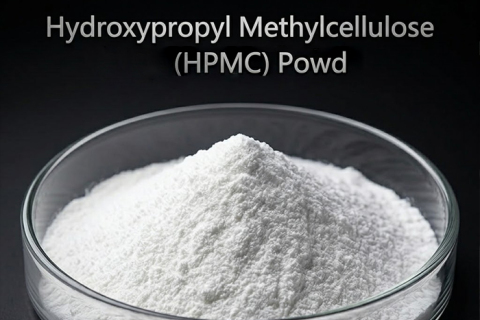
Tile adhesive looks simple on paper. Cement, sand, a few additives, mix with water. But anyone who has watched a large-format tile slide down a wall thirty minutes after installation knows that the chemistry underneath matters enormously. The additive that makes or breaks tile adhesive performance in real construction conditions is HPMC cellulose ether — and not all grades perform the same way.
This article explores how these three additives function individually, how they interact within a mortar system, and why their combined use delivers results that no single component can achieve alone.
Self-leveling mortar is widely used in modern construction to create smooth and level flooring surfaces before installing tiles, vinyl flooring, or wooden floors. However, cracking is a common issue that may affect the durability of flooring systems. Understanding the causes of cracking and using proper additives such as Hydroxypropyl Methyl Cellulose HPMC can significantly improve mortar performance.
Hydroxyethyl Methyl Cellulose (HEMC) is an important cellulose ether widely used in dry mix mortar formulations. In tile adhesive systems, HEMC Powder acts as a multifunctional additive that improves water retention, workability, and adhesion performance. Tile adhesive requires stable consistency, sufficient open time, and strong bonding strength to ensure proper installation of ceramic or porcelain tiles. Construction Grade HEMC plays a critical role in achieving these performance requirements by optimizing mortar rheology and hydration behavior.
With the rapid development of infrastructure projects, residential housing, and commercial buildings worldwide, the demand for high-performance dry mix mortar additives continues to increase. Among these additives, HPMC (Hydroxypropyl Methyl Cellulose) plays a critical role in improving workability, water retention, and construction efficiency.
In today’s construction industry, the demand for high-performance dry mix mortar continues to increase. Contractors expect better strength, improved workability, enhanced durability, and cost-efficient formulations. To achieve these goals, manufacturers rely heavily on optimized Dry Mix Mortar Additives, especially the combination of PCE Powder (Polycarboxylate Superplasticizer Powder) and HPMC (Hydroxypropyl Methyl Cellulose).
In modern dry mix mortar and construction systems, a single additive is no longer enough to meet performance demands. The combination of Polycarboxylate Superplasticizer Powder (PCE Powder), Redispersible Polymer Powder (RDP), and Hydroxypropyl Methyl Cellulose HPMC creates a balanced formulation that improves strength, workability, and durability. Among these additives, PCE Powder for Dry Mix Mortar plays the core role in water reduction and strength development.
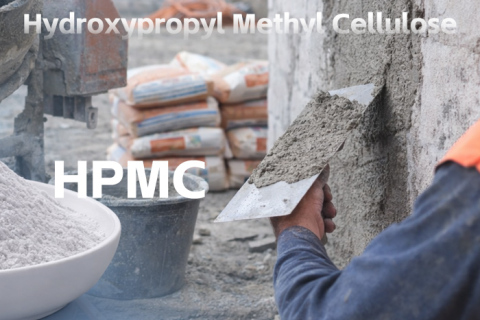
With the rapid development of modern building construction, dry-mix mortar systems such as tile adhesive, wall putty, and plaster mortar require stable workability, strong adhesion, and reliable water retention. Hydroxypropyl Methyl Cellulose HPMC has become a key functional additive to meet these performance demands.
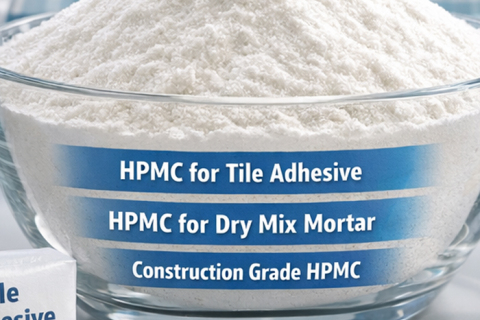
In tile adhesive applications, sagging during application and short open time are persistent challenges for many construction material manufacturers and contractors. This is especially true for vertical installations, large-format tiles, and high-temperature environments, where tiles are prone to slipping and adjustment time is limited, directly affecting both construction efficiency and final bonding quality.