


- Home
- >
News
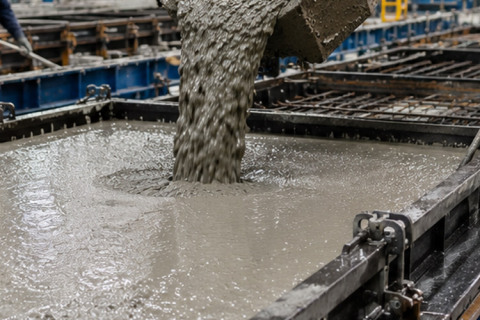
For PCE admixture manufacturers supplying precast concrete producers across Southeast Asia, Europe, and Asia, choosing between HPEG monomer and TPEG monomer is not a procurement decision. It is a product development decision that determines whether your admixture meets precast specifications or falls short.
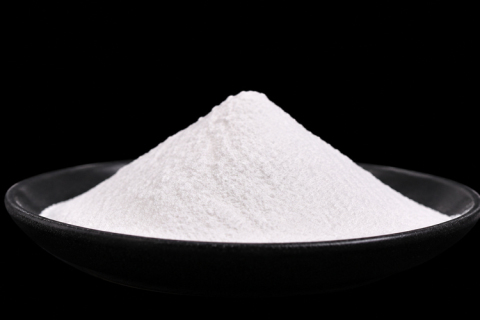
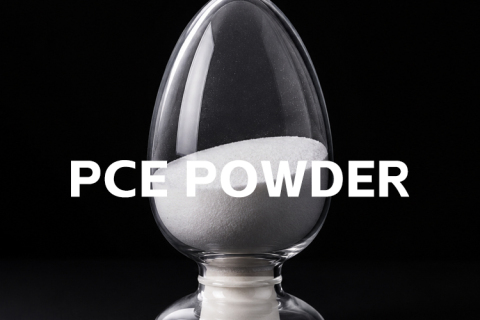
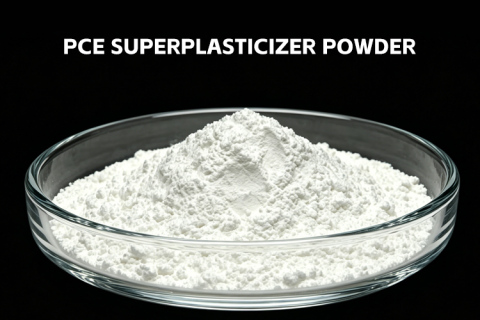
If you are importing Polycarboxylate Superplasticizer Powder for resale to concrete admixture producers or dry mix mortar manufacturers, product grade selection and supplier quality verification are the two decisions that determine whether your customers reorder or switch to a competitor after the first shipment. PCE powder is not a commodity. It is a performance chemical where grade, active content, and batch consistency directly affect the concrete or mortar your customer produces. This guide covers what importers and distributors need to know before placing the first order.
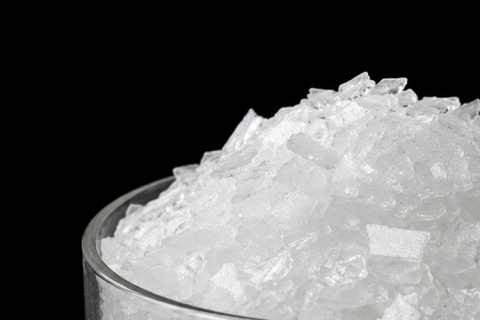
Choosing between HPEG monomer and TPEG monomer is one of the first decisions a polycarboxylate superplasticizer manufacturer makes when setting up or scaling a PCE production line. Both are polyether macromonomers used as polycarboxylate superplasticizer raw material in free radical copolymerization with acrylic acid to produce PCE admixtures. Both deliver high water reduction rates and good slump retention in concrete. But their chemical structures, reactivity profiles, and synthesis behavior differ in ways that directly affect production efficiency, finished PCE performance, and the range of applications your admixture can serve.
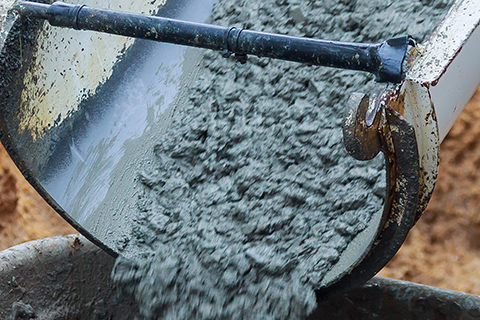
Concrete batching plant operators do not have time to dissolve powder or prepare admixture solutions before every production cycle. Ready-mix concrete producers running continuous batching operations need a liquid concrete water reducing admixture that doses accurately, disperses instantly at the point of mixing, and delivers consistent slump and water reduction from the first truck to the last. Polycarboxylate Superplasticizer Liquid is the standard solution for concrete plants across Southeast Asia, South Asia, Europe, and the broader Asian market where production speed, dosing precision, and slump retention over transport time are non-negotiable operational requirements.
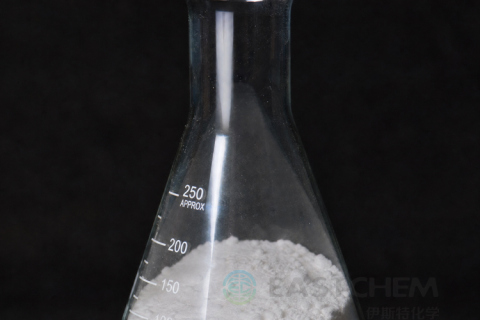
When concrete fails to flow, pump, or reach required strength, the admixture choice is often the root cause. For construction professionals across Southeast Asia, Europe, and Asia, Polycarboxylate Superplasticizer Powder has become the standard solution for high-performance concrete and dry mix mortar systems. This article explains what PCE powder does, where it is applied, and how to choose the right concrete admixture supplier.
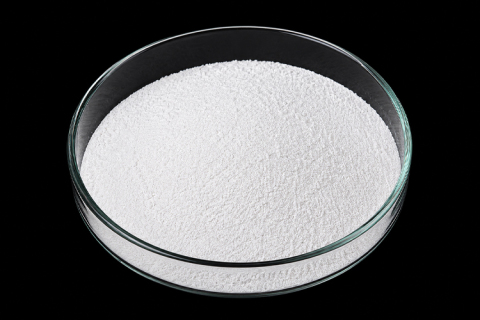
Mass concrete is defined not by its strength requirement but by its thermal risk. Any concrete placement where the cross-section is large enough for heat of hydration to generate a temperature differential between the core and the surface above 20 to 25°C is at risk of thermal cracking — and thermal cracking in a dam foundation, a thick transfer slab, or a nuclear structure base mat is a structural problem that cannot be patched after the fact.
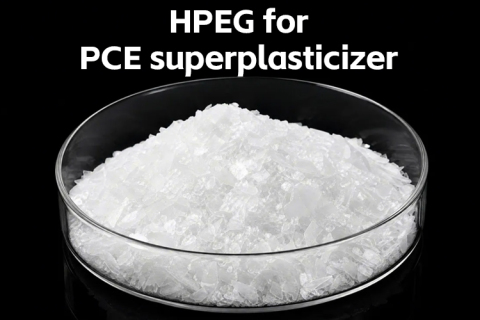
n modern concrete production, achieving a balance between workability, water reduction, and strength development remains a key challenge for admixture manufacturers. Many producers of polycarboxylate-based superplasticizers face issues such as inconsistent dispersion, unstable slump retention, and limited adaptability across different cement types. These problems become more obvious in high-strength concrete, pumped concrete, and ready-mix systems where performance stability is critical.
Underwater concrete placement is one of the most unforgiving applications in construction. Concrete placed through a tremie pipe into a water-filled cofferdam, foundation pit, or marine structure cannot be vibrated, cannot be inspected during placement, and cannot be remediated if it segregates or loses workability before the pour is complete. The admixture has to work correctly the first time, under conditions — hydrostatic pressure, water contact, extended placement time — that expose every weakness in a mix design.
Self-compacting concrete is one of the most technically demanding mix designs in modern construction. It must flow freely under its own weight to fill complex formwork and pass through congested reinforcement without vibration — while simultaneously resisting segregation and bleeding that would compromise the homogeneity of the hardened structure. These two requirements pull in opposite directions, and balancing them demands an admixture with precision-engineered dispersing characteristics that standard superplasticizers cannot reliably deliver.
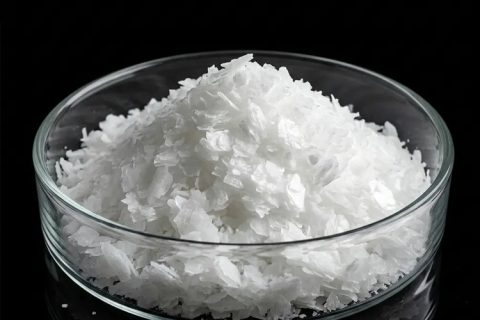
Behind every high-performance polycarboxylate superplasticizer used in modern concrete construction sits a single critical raw material decision: which polyether macromonomer to use, and at what molecular weight. HPEG TPEG monomer selection is the variable that determines the water reduction efficiency, slump retention profile, and cement compatibility of the finished PCE admixture — and it is a decision that most admixture producers revisit every time they enter a new market or encounter a new cement type. This article examines how HPEG and TPEG polyether macromonomer grades perform in real construction admixture applications, and what differentiates a reliable polycarboxylate superplasticizer monomer supplier from one that creates production headaches.
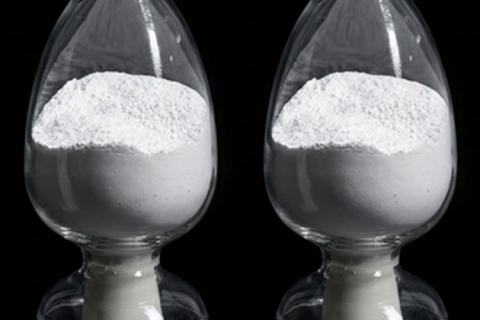
Precast concrete production operates on a fundamentally different logic from site-cast construction. The entire business model depends on rapid mold turnover — stripping forms early, cycling molds multiple times per day, and maintaining dimensional consistency across hundreds of identical elements. Every hour saved between casting and stripping is an hour of additional production capacity. In this environment, PCE superplasticizer powder is not simply a workability aid. It is a production efficiency tool that directly determines how many cycles a precast plant can run per shift.
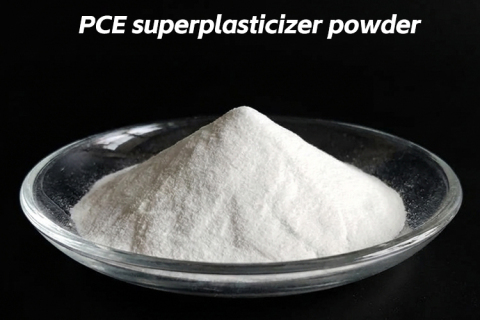
High-strength concrete is not simply regular concrete with more cement. It is a precision-engineered material where every component — cement type, aggregate grading, supplementary cementitious materials, and admixture selection — must work together to achieve compressive strengths above 60 MPa while maintaining the workability required for placement and consolidation. In this context, PCE superplasticizer powder is not an optional performance enhancer. It is the admixture that makes high-strength concrete practically achievable at commercial scale.