


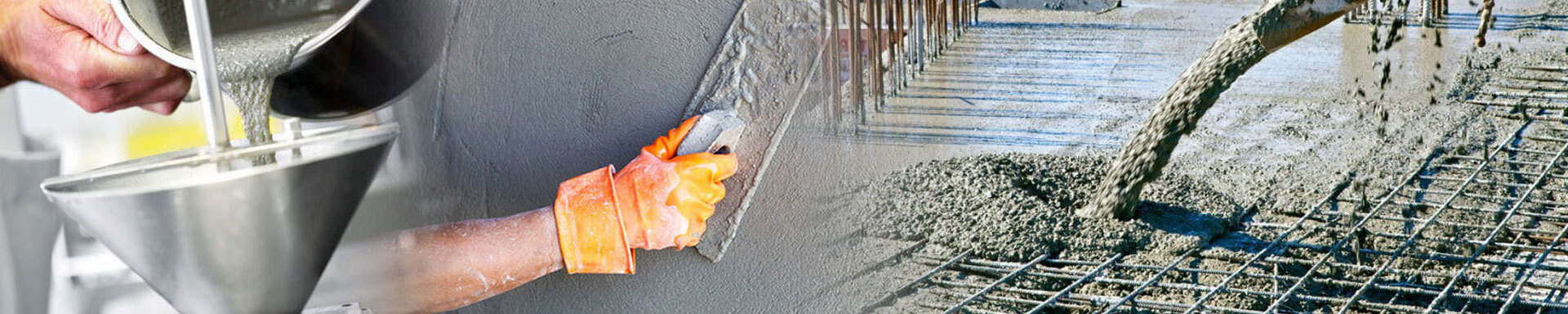
HPEG and TPEG Monomers: The Core Raw Material Behind Every High-Performance Polycarboxylate Superplasticizer
2026-04-23 17:40Behind every high-performance polycarboxylate superplasticizer used in modern concrete construction sits a single critical raw material decision: which polyether macromonomer to use, and at what molecular weight. HPEG TPEG monomer selection is the variable that determines the water reduction efficiency, slump retention profile, and cement compatibility of the finished PCE admixture — and it is a decision that most admixture producers revisit every time they enter a new market or encounter a new cement type.
This article examines how HPEG and TPEG polyether macromonomer grades perform in real construction admixture applications, and what differentiates a reliable polycarboxylate superplasticizer monomer supplier from one that creates production headaches.
What HPEG and TPEG Actually Are
Both HPEG and TPEG are polyethylene glycol-based macromonomers used as the backbone raw material in free-radical polymerization synthesis of polycarboxylate ether superplasticizers. The key structural difference is the terminal group: HPEG carries a hydroxyl end group, while TPEG carries a different terminal structure that influences its reactivity profile and the steric hindrance characteristics of the resulting PCE polymer chain.
In practical terms, this difference translates directly into admixture performance. HPEG TPEG for PCE superplasticizer synthesis are not interchangeable — each produces a PCE with a distinct performance fingerprint suited to different concrete applications.
HPEG vs TPEG: Performance Differences That Matter on Site
| Performance Indicator | HPEG-Based PCE | TPEG-Based PCE |
|---|---|---|
| Water Reduction Rate | 25–35% | 22–30% |
| Initial Workability | Very High | High |
| Slump Retention (60 min, 35°C) | Moderate | Excellent |
| Early Strength Development | Fast | Moderate |
| Reactivity in Synthesis | High | Moderate |
| Best Application | Ready-mix, high-strength concrete | Precast, SCC, long-haul ready-mix |
HPEG delivers higher initial water reduction and faster early strength — making it the preferred polyether macromonomer concrete admixture raw material for standard ready-mix operations and high-strength structural concrete where 3-day and 7-day strength targets are critical.
TPEG produces a PCE with superior slump retention over time. For precast plants where fresh concrete must remain workable through extended casting cycles, or for ready-mix operations supplying sites more than 60 minutes from the batching plant, TPEG-based PCE maintains target slump where HPEG-based systems show measurable loss.
Technical Parameters
| Parameter | HPEG 2400 | HPEG 3000 | TPEG 2400 | TPEG 3000 |
|---|---|---|---|---|
| Molecular Weight (Da) | 2,400±200 | 3,000±200 | 2,400±200 | 3,000±200 |
| Appearance | White flake / liquid | White flake / liquid | White flake / liquid | White flake / liquid |
| Esterification Rate | ≥98% | ≥98% | ≥98% | ≥98% |
| Moisture Content | ≤0.5% | ≤0.5% | ≤0.5% | ≤0.5% |
| Hydroxyl Value | Per spec | Per spec | Per spec | Per spec |
Why Monomer Consistency Determines Admixture Quality
For PCE admixture producers, the monomer is the single largest cost input and the single largest quality variable in the production process. Inconsistency in molecular weight distribution between batches produces PCE with different viscosity, water reduction rate, and slump retention profiles — even when the synthesis process is unchanged. This variation shows up as unpredictable concrete performance on site, which damages the admixture producer's relationship with their concrete customers.
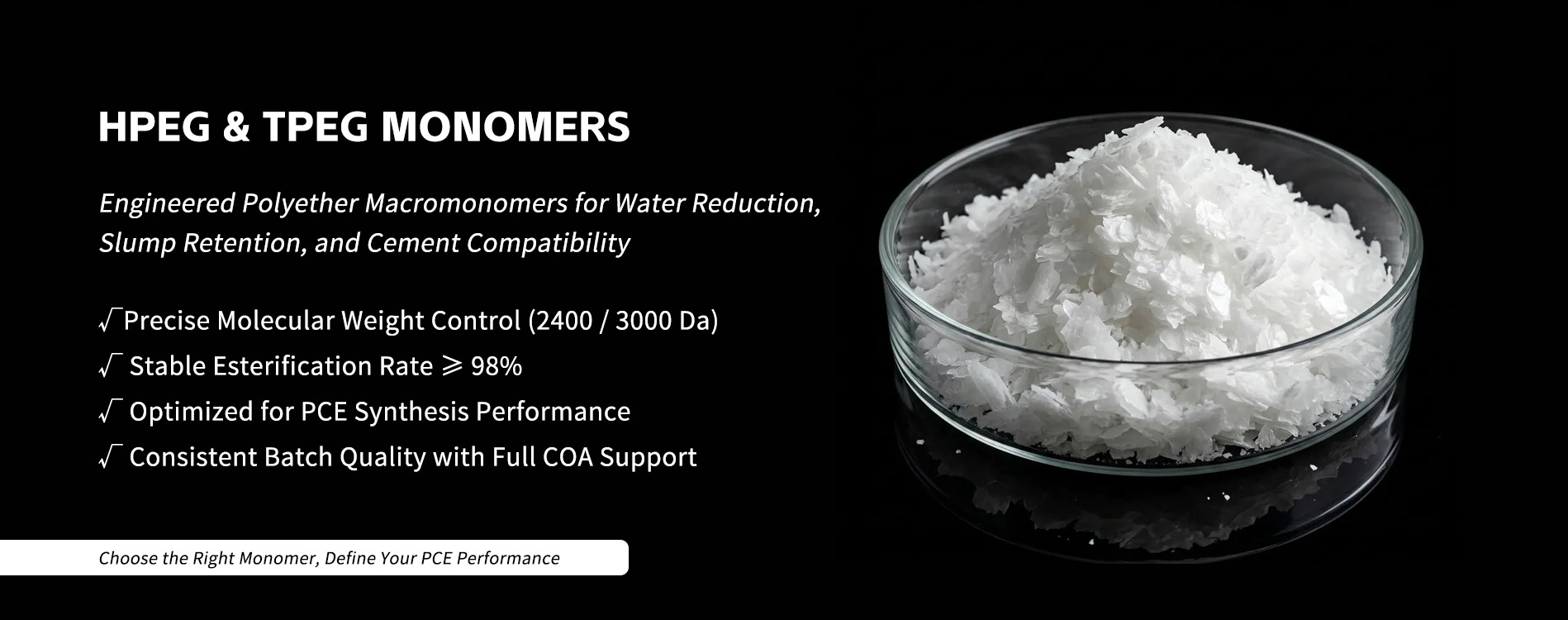
A reliable polyether monomer concrete admixture supplier provides verified molecular weight distribution data with every batch COA — not just a nominal molecular weight figure. Esterification rate consistency is equally critical: low esterification rate means unreacted monomer in the synthesis, producing a weaker PCE polymer with lower water reduction efficiency per unit of admixture used.
As a dedicated HPEG TPEG monomer supplier, we supply both grades across molecular weight ranges of 2400 and 3000 Da, with full COA documentation confirming molecular weight, esterification rate, moisture content, and hydroxyl value on every shipment. Our technical team provides synthesis process support for admixture producers switching grades or optimizing existing formulations.
Conclusion
For polycarboxylate superplasticizer monomer producers, HPEG and TPEG are not commodity inputs — they are the chemistry that defines what the finished admixture can and cannot do in concrete. Choosing the right grade for the target application, and sourcing from a supplier who can guarantee batch-to-batch consistency, is the foundation of a reliable admixture product line.