


How Magnesium Phosphate Cement Solved a Critical Floor Repair Problem in a Southeast Asian Food Processing Facility
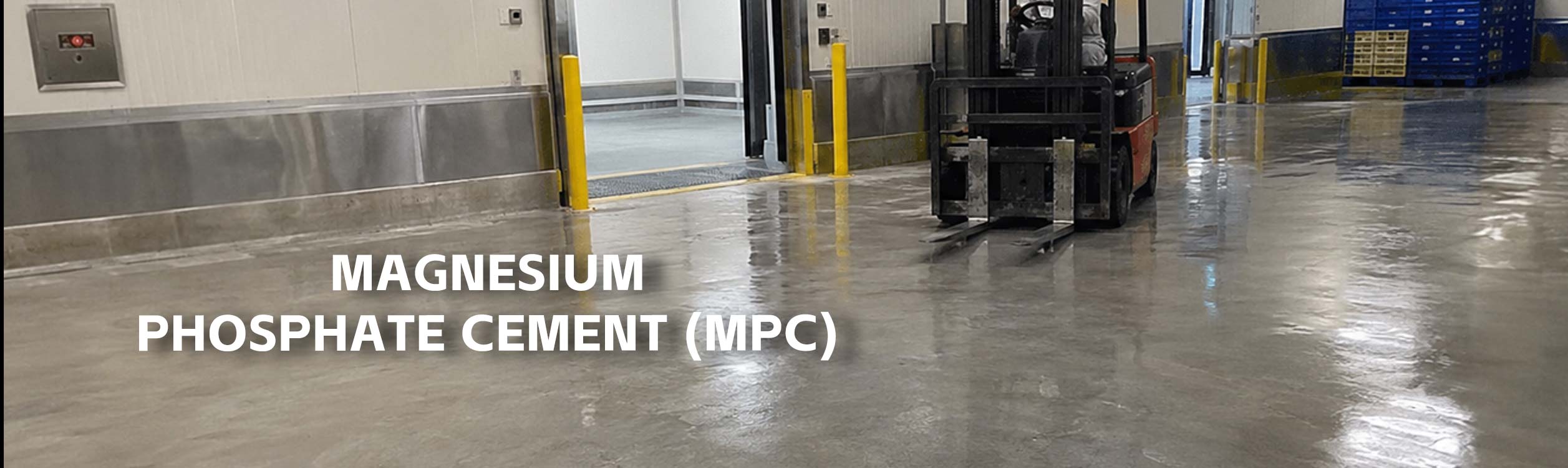
2026-07-28 16:24A food processing facility operating three continuous production shifts in Central Java, Indonesia faced a concrete floor failure that standard repair materials could not solve within the operational constraints of the facility. The main production floor in the chilled protein processing area had developed spalling damage and a network of surface cracks across a 40 square meter zone adjacent to the primary chiller entry point. The damage had been caused by a combination of thermal cycling from repeated chiller door opening and closing, forklift traffic from cold storage transport operations, and chemical attack from cleaning agents used in the twice-daily washdown program.
The Challenge
The facility maintenance manager had attempted two repair cycles using Portland cement based repair mortar over the previous fourteen months. Both repair attempts had failed within six to eight weeks of completion. The first failure was debonding of the repair patch from the existing concrete substrate, driven by differential thermal movement between the fresh repair mortar and the existing slab under the chiller temperature cycling. The second failure was surface cracking within the repair area during the first month of service, caused by drying shrinkage in the repair mortar combined with the mechanical stress of forklift traffic before full strength development was achieved.
Both repair cycles had required 48 to 72 hours of floor closure, which forced the facility to reduce production capacity in the chilled processing area during each repair period. The cumulative production loss across two repair cycles exceeded the cost of the repair materials and labor combined. A third repair failure was operationally unacceptable.
The facility's maintenance contractor identified two non-negotiable requirements for the next repair attempt. The repaired floor had to return to full production use within 4 hours of repair completion, not 48 to 72 hours. And the repair material had to achieve adequate bond strength to resist the thermal cycling stress that had caused the first repair to delaminate. Standard Portland cement repair mortar could meet neither requirement.
The Solution
After researching rapid setting repair materials for industrial floor applications, the maintenance contractor contacted EastChem for a technical proposal. EastChem recommended Magnesium Phosphate Cement as the only commercially available repair material that could satisfy both the 4-hour return to service requirement and the bond strength requirement for thermal cycling resistance in a chilled processing environment.
MPC for industrial floor repair reaches 30 MPa compressive strength at 1.5 hours and achieves bond strength to existing concrete of 3.5 MPa, more than double the 1.0 to 1.5 MPa achievable with Portland cement repair at equivalent substrate preparation. The acid-base reaction chemistry of MPC produces a dimensional stability that Portland cement cannot match: MPC exhibits slight volumetric expansion of approximately 0.1 percent after hardening rather than the 0.04 to 0.08 percent shrinkage that had opened gaps between the previous Portland cement repairs and the surrounding existing floor slab, allowing cleaning chemical penetration and progressive edge deterioration.
For the chilled floor environment specifically, MPC hardening at temperatures as low as minus 20 degrees Celsius without special curing means that the repair could proceed during a standard 4-hour maintenance window without heating the substrate or protecting the fresh repair from the chiller environment during the critical early strength development period.
EastChem supplied a sample quantity with full technical documentation and provided application guidance covering substrate preparation, mixing procedure, setting time adjustment using the borax retarder system, and finishing technique for compliance with the facility's HACCP floor hygiene requirements.
The Application
The repair was executed during a scheduled overnight maintenance window. The repair area was saw-cut to clean vertical edges, all loose and contaminated concrete removed by grinding, and the substrate dampened before rapid hardening repair mortar for factory floor placement. Setting time was adjusted to 20 minutes working time using the recommended borax addition to allow the repair crew to place and finish the mortar across the full 40 square meter repair area in two sections.
The repair mortar reached compressive strength above 25 MPa within 1.5 hours of placement, confirmed by rebound hammer testing at 90 minutes. The repair area was returned to production use at 4 hours after placement, within the maintenance window and without any production schedule disruption. Surface texture was matched to the surrounding existing floor finish using a broom drag during the workable period, satisfying the HACCP surface roughness requirements for food contact zone floors.
The Results
The repaired floor area was monitored over a six-month period following the fast setting concrete repair for food processing plant installation. No debonding, edge cracking, or surface deterioration was recorded during this period, including through the facility's peak production season where forklift traffic frequency and cleaning chemical exposure were both at annual maximums.
The maintenance contractor reported the elimination of the recurring repair cost and production loss that the two previous Portland cement repair cycles had generated. The facility maintenance manager extended the MPC repair specification to two additional damaged floor zones in the facility's raw material receiving area and included MPC as the standard repair material specification for all future concrete floor repair work requiring return to service within a standard maintenance window.
What the Customer Said
"We had tried twice with conventional repair mortar and failed twice. The floor was back in production in four hours with MPC and has not needed any attention in six months. The difference in repair material performance was not marginal. It was complete."
Maintenance Contractor, Food Processing Facility, Central Java, Indonesia
Why EastChem
EastChem is a trusted MPC repair material supplier for industrial facilities providing Magnesium Phosphate Cement to infrastructure contractors, industrial facility maintenance teams, and construction chemical distributors across global markets. Our manufacturing is certified under ISO 9001, ISO 14001, and ISO 45001 systems, and our products meet REACH compliance requirements for European market access. Full technical documentation including mix design, setting time adjustment, and application guidance is provided as standard. Samples are available before supply contract commitment.
Contact EastChem today to request a sample, technical data sheet, or pricing for Magnesium Phosphate Cement for your industrial floor repair or infrastructure maintenance requirements.
Email: info@eschemy.com
WhatsApp: +86 13504015521
FAQ
Why does MPC bond better to existing concrete than Portland cement repair mortar?
MPC achieves bond strength to existing concrete of 3.5 MPa through a combination of chemical adhesion from the phosphate reaction products and mechanical interlock from surface roughening. Portland cement repair mortar relies primarily on mechanical interlock and achieves 1.0 to 1.5 MPa under standard substrate preparation. The higher bond strength of MPC is particularly important in restrained repair geometries and environments with thermal cycling, where differential movement stress at the repair interface would progressively debond lower-strength repair materials.
How does MPC perform in food processing facility environments with daily chemical cleaning?
MPC is chemically stable under dilute cleaning agent exposure typical of food processing facility washdown programs. The crystalline magnesium potassium phosphate hydrate matrix formed during MPC hardening is resistant to the mild acids, alkalis, and detergent solutions used in standard HACCP cleaning programs. The low porosity of MPC compared to Portland cement repair mortar also reduces chemical penetration into the repair patch, extending service life under regular chemical cleaning cycles.
What is the minimum repair section thickness for MPC in industrial floor applications?
MPC can be placed in sections as thin as 10 to 15 mm for surface repair and feathering at patch edges. For structural repairs requiring load-bearing capacity equivalent to the original slab, minimum section thickness of 25 to 40 mm is recommended to ensure adequate depth of bond to the substrate and sufficient repair cross-section for the compressive and tensile loads the repair will experience under forklift and production equipment traffic. Contact us for specific thickness recommendations based on your floor loading and substrate condition.