


PCE Powder vs Naphthalene vs Melamine Superplasticizer: Which High Range Water Reducer Is Right for Your Concrete
2026-07-11 17:10Three generations of superplasticizer chemistry are currently available to concrete admixture producers and ready-mix concrete operators across Southeast Asia, Europe, and Asia: naphthalene-based, melamine-based, and polycarboxylate-based. All three reduce water demand in concrete. All three improve workability at lower water-cement ratios. But their performance differences in water reduction efficiency, slump retention, dosage requirement, and compatibility with modern concrete mix designs are significant enough that choosing the wrong generation for your application produces concrete that underperforms specifications or costs more than necessary to produce. This article compares all three on the parameters that matter most for concrete production decisions.
What Are the Three Superplasticizer Types
Polycarboxylate Superplasticizer Powder, carrying CAS 25133-97-5, is a third-generation high range water reducer produced by copolymerization of polycarboxylate ether monomers with acrylic acid. It works through a combination of electrostatic repulsion and steric hindrance, achieving water reduction rates of 25 to 40 percent at dosages of 0.1 to 0.3 percent by weight of cement.
Naphthalene superplasticizer is a second-generation product produced by sulfonation and condensation of naphthalene with formaldehyde. It works through electrostatic repulsion only, achieving water reduction rates of 15 to 25 percent at dosages of 0.5 to 1.5 percent by weight of cement.
Melamine superplasticizer is also a second-generation product produced by sulfonation of melamine-formaldehyde condensate. It works through electrostatic repulsion similarly to naphthalene, achieving water reduction rates of 15 to 20 percent at dosages of 0.8 to 2.0 percent by weight of cement.
Full Performance Comparison
| Parameter | PCE Powder CAS 25133-97-5 | Naphthalene Superplasticizer | Melamine Superplasticizer |
|---|---|---|---|
| Water reduction rate | 25-40% | 15-25% | 15-20% |
| Dosage by weight of cement | 0.1-0.3% | 0.5-1.5% | 0.8-2.0% |
| Slump retention at 60 min | Good to excellent | Poor to moderate | Moderate |
| Slump retention at 90 min | Good with SR grade | Poor | Poor |
| Chloride content | Zero | Low | Zero |
| Alkali content | Low | Medium to high | Low |
| Color of finished concrete | No effect | Slight darkening | No effect |
| Compatibility with fly ash and slag | Excellent | Good | Good |
| Cost per kg | Higher | Lower | Medium |
| Cost per unit water reduction | Lower | Higher | Medium |
When Naphthalene Superplasticizer Remains the Right Choice
Naphthalene superplasticizer retains genuine advantages in specific applications despite being an older technology. For mass concrete where heat of hydration management is the priority and slump retention over extended periods is not required, naphthalene at lower cost per kilogram reduces material cost in large-volume placements. For concrete produced and placed immediately at a nearby site without transit time, the poor slump retention of naphthalene is not a limiting factor.
In markets where PCE raw material supply is unreliable or where the price premium for PCE cannot be passed through to the concrete buyer, naphthalene remains a practical choice for standard concrete grades below C35 where its water reduction performance is adequate. The higher dosage requirement increases cost per cubic meter compared to PCE, but the lower product cost per kilogram partially offsets this for producers with high price sensitivity.
The critical limitations of naphthalene become disqualifying in three situations: when slump retention over 45 to 60 minutes is required for ready-mix transit, when high strength concrete above C45 requires water-cement ratios below 0.40, and when fly ash or slag content above 30 percent of cementitious material causes retardation sensitivity that naphthalene admixtures cannot adequately address.
When Melamine Superplasticizer Is the Right Choice
Melamine superplasticizer produces lighter colored concrete than naphthalene, which makes it the preferred choice for architectural concrete, precast facades, and white cement concrete where appearance is a specification requirement. Its zero chloride content makes it suitable for prestressed concrete and applications where chloride-induced corrosion risk must be minimized.
For grout and repair mortar applications in watertight structures and post-tensioned concrete systems, melamine superplasticizer has historically been specified for its light color and zero chloride content. However, in most of these applications, PCE powder now delivers superior water reduction at lower dosage with equivalent or better chloride-free performance, making melamine primarily relevant where specific appearance requirements or established specifications favor its use.
When PCE Powder Is the Right Choice
Polycarboxylate Superplasticizer Powder CAS 25133-97-5 is the correct specification in the majority of modern concrete production applications for five reasons that second-generation superplasticizers cannot match.
Higher water reduction at lower dosage produces concrete with water-cement ratios of 0.28 to 0.35 achievable at standard workability, enabling concrete grades C60 and above that are not reliably achievable with naphthalene or melamine at practical dosage levels. For high-rise construction, bridge engineering, and infrastructure projects across Southeast Asia and Europe where high strength concrete is routinely specified, PCE powder is the only admixture that consistently meets these specifications.
Superior slump retention in the high range water reducer comparison is the second decisive advantage. PCE in slump retention grade maintains workability for 60 to 120 minutes after mixing compared to 20 to 30 minutes for naphthalene and 30 to 45 minutes for melamine. For ready-mix concrete plants where transit time exceeds 45 minutes and pumping distances exceed 200 meters, PCE is the only admixture that reliably prevents slump loss complaints from construction sites.
Lower effective dosage cost despite higher price per kilogram means PCE powder at 0.1 to 0.3 percent dosage delivers equivalent or greater water reduction than naphthalene at 0.5 to 1.5 percent or melamine at 0.8 to 2.0 percent. The cost per unit water reduction achieved, rather than the cost per kilogram of admixture, is the economically correct comparison metric. On this basis PCE vs naphthalene superplasticizer cost comparison consistently favors PCE for concrete grades above C35.
Compatibility with supplementary cementitious materials including fly ash, slag, and silica fume at high replacement rates is significantly better for PCE than for second-generation admixtures. As concrete mix designs incorporate higher proportions of industrial byproducts for sustainability and cost reasons, PCE compatibility with these materials becomes a practical production requirement rather than a theoretical advantage.
Zero chloride content and low alkali contribution eliminate corrosion risk in reinforced and prestressed concrete applications where second-generation admixtures with higher alkali content can contribute to alkali silica reaction risk.
Why EastChem
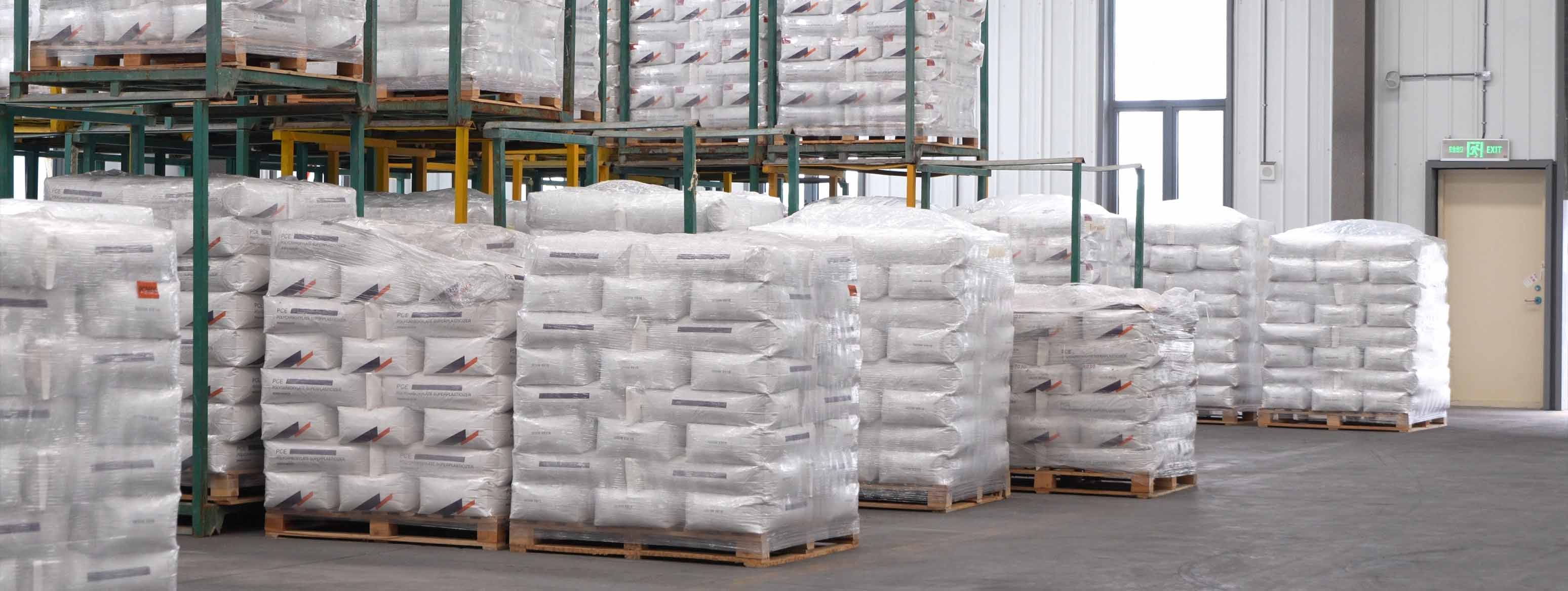
EastChem is a trusted polycarboxylate superplasticizer powder supplier providing Polycarboxylate Superplasticizer Powder CAS 25133-97-5 in high water reduction and slump retention grades to concrete admixture producers, ready-mix concrete operators, and construction chemical distributors across global markets. Our manufacturing is certified under ISO 9001, ISO 14001, and ISO 45001 systems, and our products meet REACH compliance requirements for European market access. Active content above 95 percent is tested and certified on every production batch.
Contact EastChem today to request a free sample of PCE powder, technical data sheet, or pricing for your concrete admixture production or ready-mix operation requirements.
Frequently Asked Questions
Can PCE powder be mixed with naphthalene superplasticizer in the same concrete batch?
Combining PCE and naphthalene in the same concrete batch is generally not recommended without compatibility testing. The two admixtures interact differently with cement particle surfaces and their combined effect on setting time and workability is unpredictable without trial mixing. For concrete plants switching from naphthalene to PCE, a complete formulation change with dosage optimization is preferable to partial blending of the two admixture types.
Why is PCE powder more expensive per kilogram than naphthalene superplasticizer?
PCE powder requires more complex raw material synthesis from polyether monomers and acrylic acid copolymerization compared to the simpler sulfonation chemistry of naphthalene production. However, the effective dosage of PCE is 5 to 10 times lower than naphthalene per cubic meter of concrete, meaning the cost per cubic meter of concrete produced is frequently lower with PCE despite the higher cost per kilogram of product.
Is PCE powder suitable for all concrete strength grades?
PCE powder is suitable for concrete grades from C25 to C100 and above. For standard grades below C30 where water reduction requirements are modest and slump retention over long periods is not required, naphthalene superplasticizer may be economically competitive. For grades above C35 and for any application requiring slump retention beyond 45 minutes, PCE powder is the technically and economically superior choice.