


- Home
- >
News
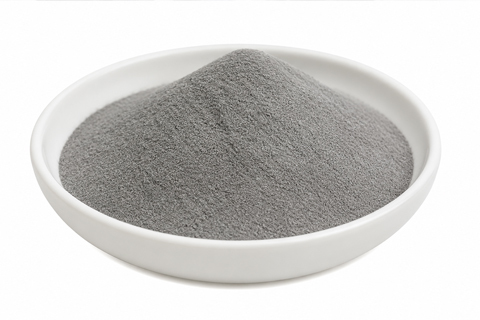
When a concrete structure needs to return to service in hours rather than days, standard Portland cement is the wrong material. It cannot reach structural strength in under 24 hours. It cannot harden at sub-zero temperatures. It cannot bond reliably to existing concrete at the tensile strength levels required for structural repair. Magnesium Phosphate Cement solves all three of these limitations simultaneously, making it the standard rapid hardening repair material for infrastructure, industrial, and cold-climate construction applications worldwide.
Industrial floors fail under conditions that standard repair materials cannot handle. A food processing facility running three shifts cannot close a production line for 48 hours while Portland cement cures. A cold storage warehouse cannot maintain the above-zero temperatures that conventional repair mortars require to develop strength. A pharmaceutical plant cannot tolerate the surface dusting and shrinkage cracking that accompany fast-set Portland systems in critical hygiene zones.
Every hour a runway is closed costs an airport money it cannot recover. Diverted flights, delayed departures, ground crew overtime, and airline compensation claims accumulate quickly once a closure extends beyond the minimum maintenance window. For airport pavement engineers, the repair material decision is not purely technical — it is an operational and financial calculation where time-to-reopening carries a direct cost that must be weighed against material performance and durability.
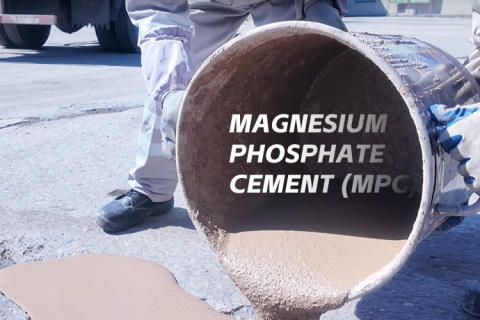
When a section of airport runway, highway interchange, or industrial floor requires emergency repair, ordinary Portland cement is not an option. Its minimum 24-hour strength development cycle means closing a critical asset for a full day or more — a cost that frequently exceeds the repair cost itself. Magnesium Phosphate Cement was developed precisely for these situations. Its rapid hardening chemistry delivers structural strength within hours, not days, without the shrinkage cracking and durability trade-offs that define conventional fast-setting alternatives.
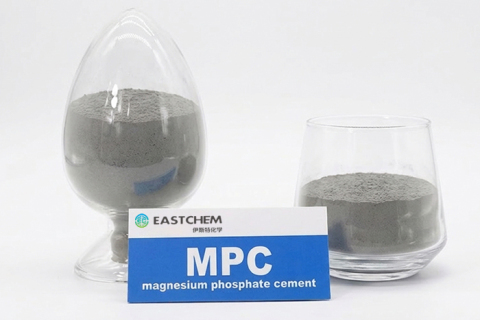
Most concrete repair jobs don't fail because of bad workmanship. They fail because the material wasn't built for the conditions. Standard cement takes days to cure. The job site can't wait days. So contractors patch it, reopen it too early, and watch it deteriorate in three months. Then they do it again. It's not a workmanship problem — it's a materials problem.
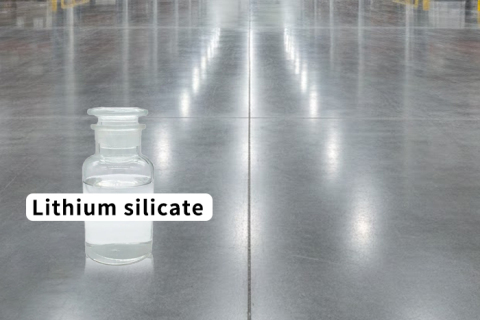
As the global construction industry shifts towards sustainable and low-maintenance infrastructure, the demand for advanced chemical treatments has reached a new peak. Today, Lithium Silicate stands at the forefront of this evolution, offering a superior alternative to traditional sodium-based solutions.
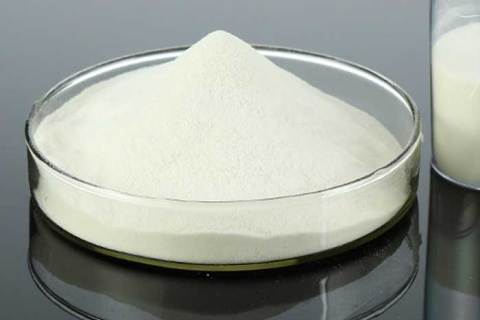
In the competitive world of construction, choosing the right materials can make all the difference. Hydroxypropyl Methylcellulose (HPMC) is not just another additive; it's a strategic partner in achieving exceptional results for ready dry mix mortars.